


 Contact Us
 Appliances
 Agri Inputs
 Auto Components & Accessories
 Beauty & Personal Care
 Electronics
 Fashion
 Grocery
 Gift Cards
 Home & kitchen
 Health & Wellness
 Vehicles & Automotives
 Books & Stationary
 Pet Care
 Toys & Games
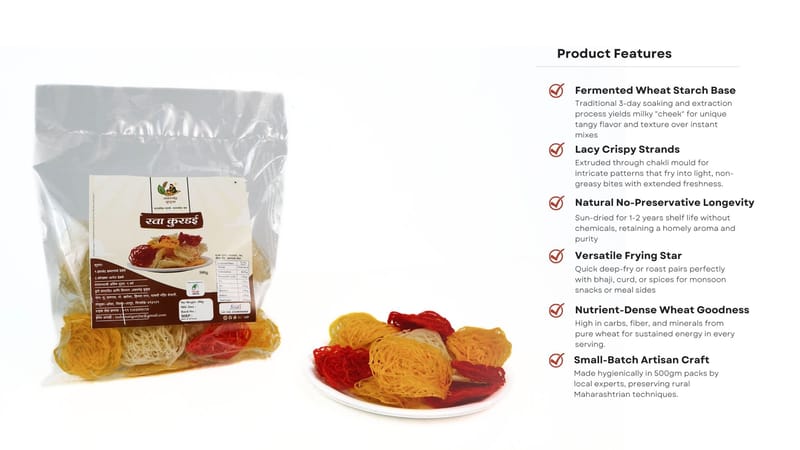
A summer ritual pressed into a coil Rava Kurdai is not available in every season because it cannot be made in every season. The pressing, shaping, and sun-drying that the process requires all depend on strong, dry summer heat — the kind that arriv...
Read MorePopular Categories
Support
Language
Our apps
A summer ritual pressed into a coil
Rava Kurdai is not available in every season because it cannot be made in every season. The pressing, shaping, and sun-drying that the process requires all depend on strong, dry summer heat — the kind that arrives in Maharashtra between March and May and does not stay long. Families who grew up making or eating it know it as a summer kitchen activity: the dough pressed through a mould onto mats, the coils laid out to dry in the courtyard, the smell of semolina warming in the sun. Annsneh Foods' Rava Kurdai captures that same process in a 500-gram pack — made in small batches during the season, dried without preservatives, and stored for use through the rest of the year.
What it is made from and how
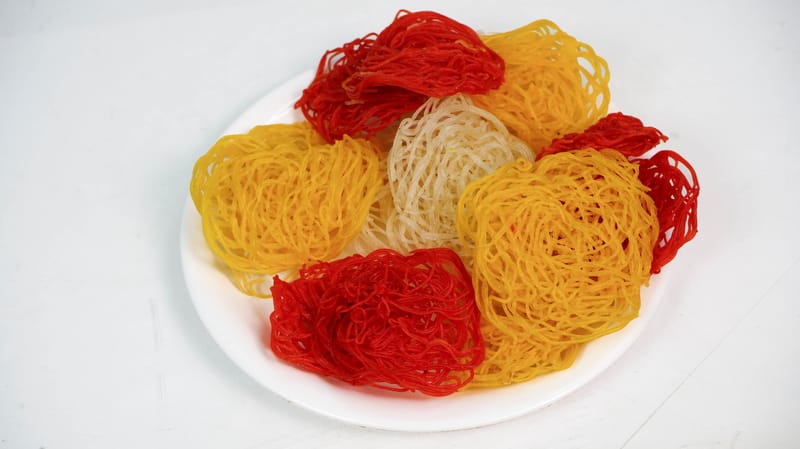
The ingredients are simple: semolina, water, and salt. The process is what gives this kurdai its character. The rava is mixed with water and salt into a smooth, pliable dough, then pressed through a chakli mould to create the fine, lacy spiral strands that are the defining feature of a well-made kurdai. The extruded coils — delicate, tightly wound nests of thin semolina strands — are then laid out to sun-dry completely over several days until they are fully hard and shelf-stable.
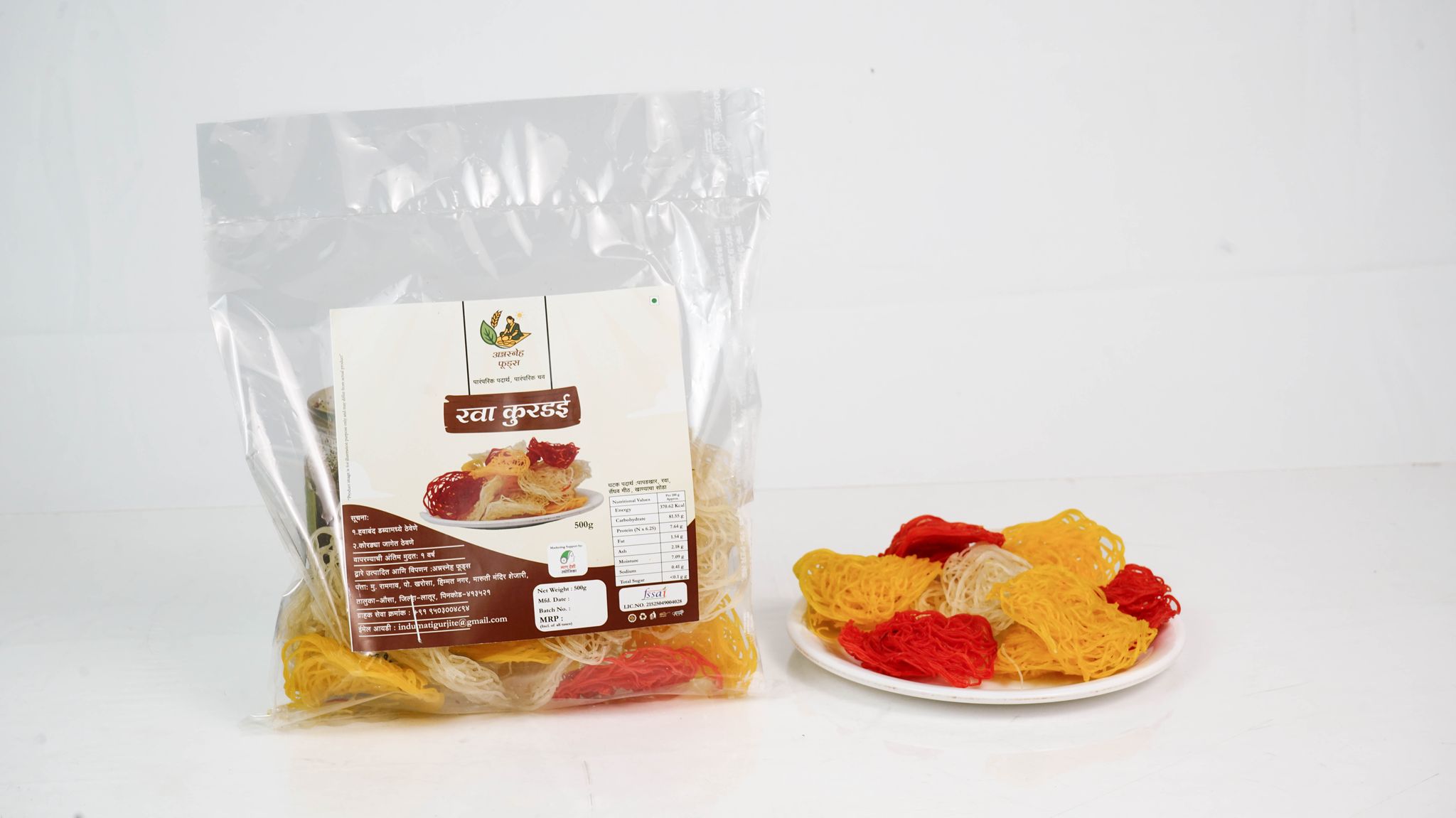
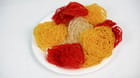
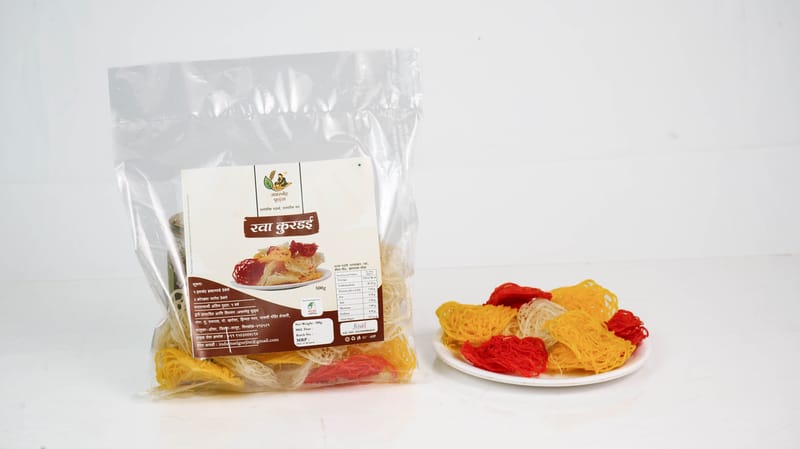
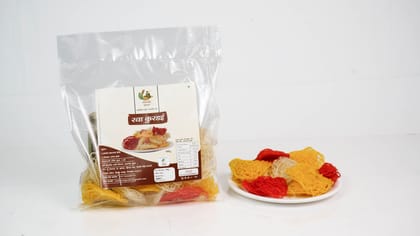
The result is a product that holds its shape through months of storage, fries cleanly without absorbing excess oil, and delivers a light, crisp texture that is distinct from rice-based papads or ordinary chaklis. The natural cream-white, golden, and red colour variations visible in the pack reflect different batches or seasonings — each coil uniform in form, each slightly individual in the way handmade things are.
How to cook it
Deep-frying is the most straightforward method — a few seconds in hot oil is enough. The coils puff slightly, turn golden, and become crisp throughout without becoming greasy, provided the oil is at the right temperature before the kurdai goes in. They can also be dry-roasted in a pan with a little oil for a lighter, less oily result.
Once fried or roasted, they are eaten as a side with dal-rice, bhakri, or a simple vegetable bhaji. They work alongside curd and a spoon of thecha as a quick monsoon snack — the crunch against the cool curd is the appeal. In larger gatherings and festive meals, a bowl of fried kurdai on the table serves the same function as papad — a textural counterpoint to the rest of the meal — but with a flavour and lightness that is distinctively its own.
Why rava kurdai is different from rice-based variants
Rice kurdai and rava kurdai are related but not the same. Rice-based kurdais have a lighter, more neutral flavour and a more uniform puff when fried. Rava kurdai has a slightly more substantial bite, a mild natural tang from the semolina, and a denser crunch that holds up longer on the plate. It also pairs better with strongly flavoured accompaniments — the wheat base has enough body to sit alongside spicy chutneys and thecha without being overwhelmed.
The one-year shelf life, achieved through sun-drying alone with no chemical preservatives, is also practically significant. A single summer batch of kurdai, made and dried properly, can last a household through to the following summer.
Why small-batch and handmade matters
Factory-produced papad and fryums are made to a consistent machine specification. Rava kurdai made in small batches by hand has minor natural variations in strand thickness, coil size, and colour — variations that are the evidence of the process rather than defects in it. Annsneh Foods makes this product in 500-gram packs, hygienically packed, with the same traditional technique that has been used in Maharashtrian households for generations.
Specifications
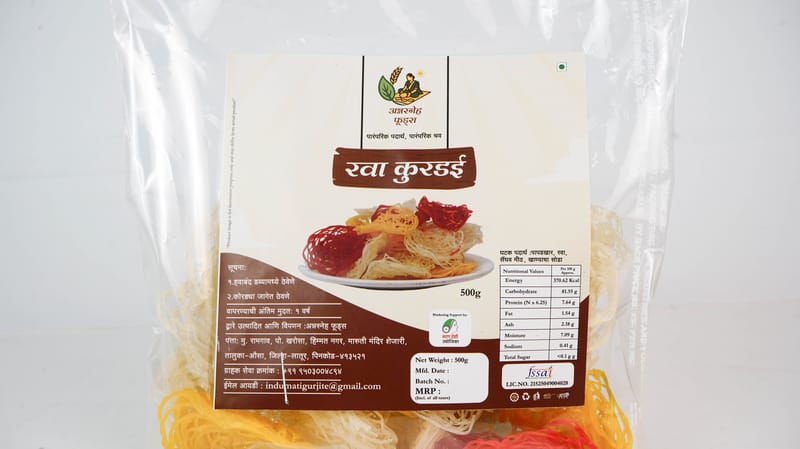
Ingredients: Semolina, water, salt
Net Weight: 500 g
Shelf Life: 1 year from date of manufacture
Preservatives: None
Preparation: Sun-dried, extruded through chakli mould
Colours available: White, Orange, Red, Yellow
Cooking method: Deep-fry or dry-roast
Storage
Store in a cool, dry place away from moisture and direct sunlight. Keep the pouch sealed or transfer to an airtight container after opening. Do not expose to humidity — moisture will soften the dried kurdai and reduce shelf life. Properly stored in dry conditions, it keeps well for up to one year without loss of quality.
About the Entrepreneur
Indumati Tai makes rava kurdai by hand in a traditional method. Initially her mother used to make it. She learned this art of making rava kurdai from her mother and has preserved that craft.
Through Mann Deshi, her kurdai gained online marketing reach.
| Country of origin | India |
|---|---|
| cancellable | yes |
| time to ship | 2 days |
| seller pickup return | yes |
| return window | 2 days |
| contact details consumer care | Vanita Shinde,[email protected],9607589078 |
| nutritional info | Sajji khar, semolina, rock salt, baking soda, etc |
| additives info | Sajji khar, semolina, rock salt, baking soda, etc |
| brand owner FSSAI license no | 21525049004028 |
| other FSSAI license no | 21525049004028 |
| importer FSSAI license no | 21525049004028 |
| imported product country of origin | IN |
Other Products from seller Mann Deshi Udyojika Private Limited
Check Estimated Delivery Date

Sold By: Mann Deshi Udyojika Private Limited
Vendor Source:Mann Deshi Udyojika Private Limited