


 Contact Us
 Appliances
 Agri Inputs
 Auto Components & Accessories
 Beauty & Personal Care
 Electronics
 Fashion
 Grocery
 Gift Cards
 Home & kitchen
 Health & Wellness
 Vehicles & Automotives
 Books & Stationary
 Pet Care
 Toys & Games
The thing people reach for after a full meal In most Indian households, the meal does not end with the last bite of food. There is something after — a small piece of saunf, a mukhwas, an amla candy pulled from a jar on the kitchen counter. It is n...
Read MorePopular Categories
Support
Language
Our apps
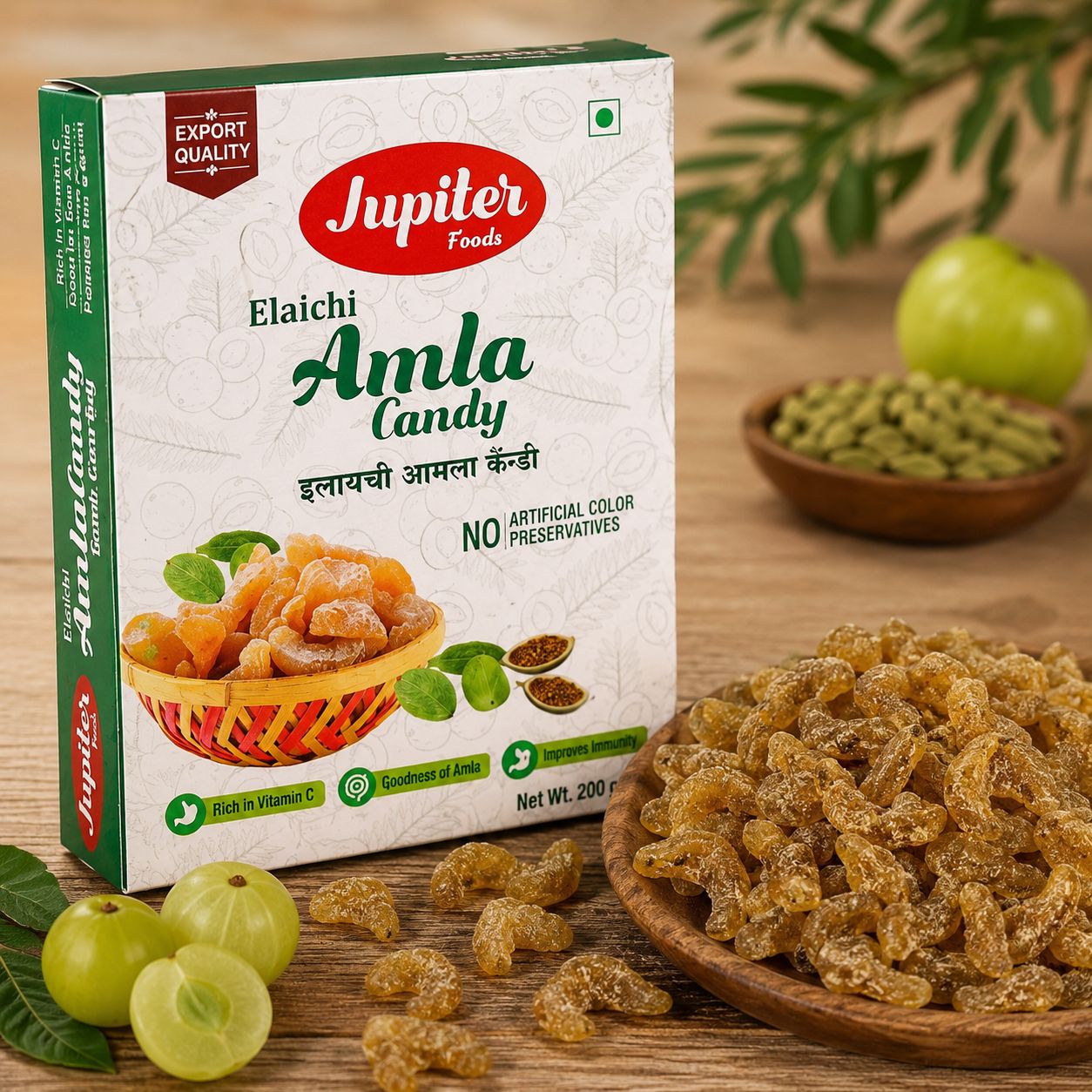
Elaichi Amla Candy
The thing people reach for after a full meal
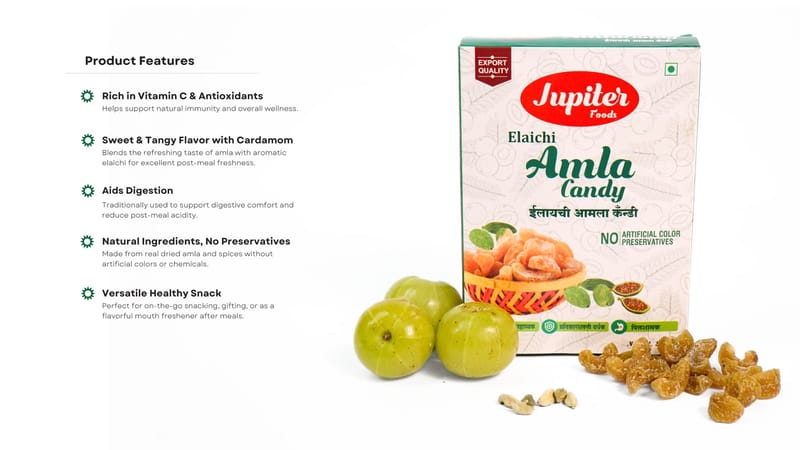
In most Indian households, the meal does not end with the last bite of food. There is something after — a small piece of saunf, a mukhwas, an amla candy pulled from a jar on the kitchen counter. It is not quite dessert and not quite medicine. It is the thing that settles the stomach, freshens the mouth, and signals that the meal is properly finished. Jupiter Foods' Elaichi Amla Candy fits exactly into that moment. Made from dried amla sweetened with sugar and flavoured with cardamom, it is a small, familiar thing done well — without artificial colour, without preservatives, and without the chemical aftertaste that follows many commercially produced mouth fresheners.
What it is made from
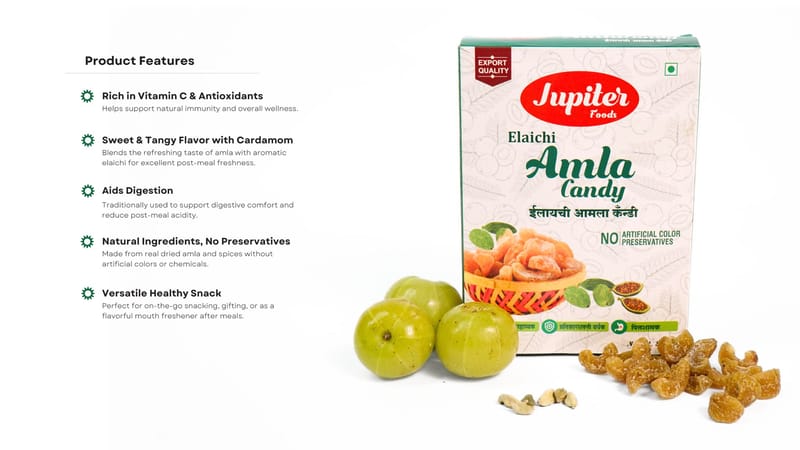
The candy is made from three ingredients: amla, sugar, and cardamom powder. Amla — Indian gooseberry — is one of the most nutritionally concentrated fruits grown in India. It is exceptionally high in Vitamin C, contains a range of antioxidants, and has been used in Ayurvedic practice for centuries as a digestive, an immunity support, and a general tonic. The tangy, slightly astringent flavour of fresh amla is what gives the candy its character — the sweetness from the sugar balances it without masking it, and the cardamom adds a warm, aromatic top note that makes the overall flavour feel considered rather than simply sweet.
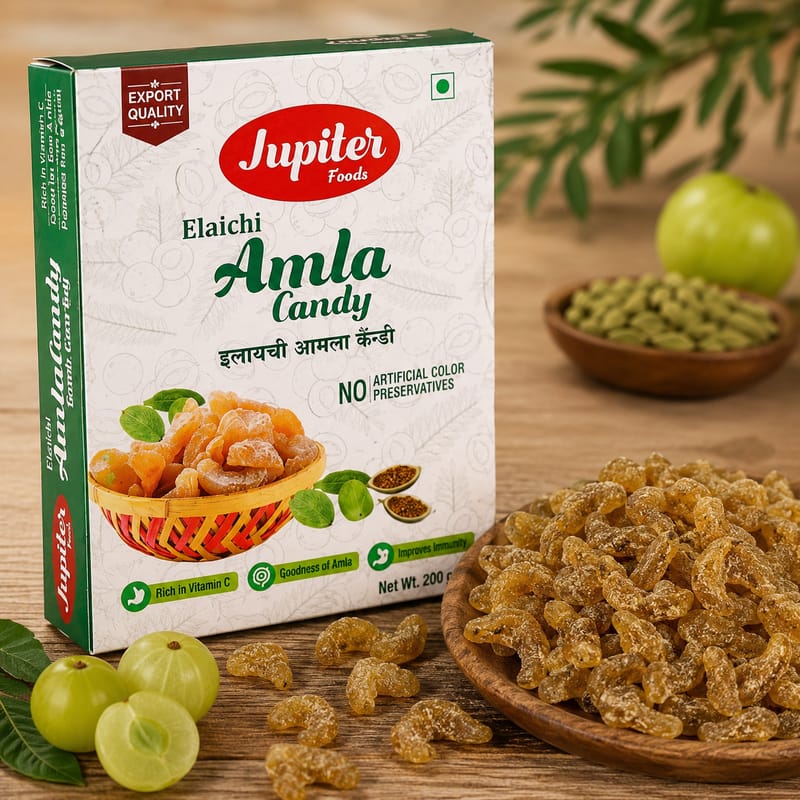
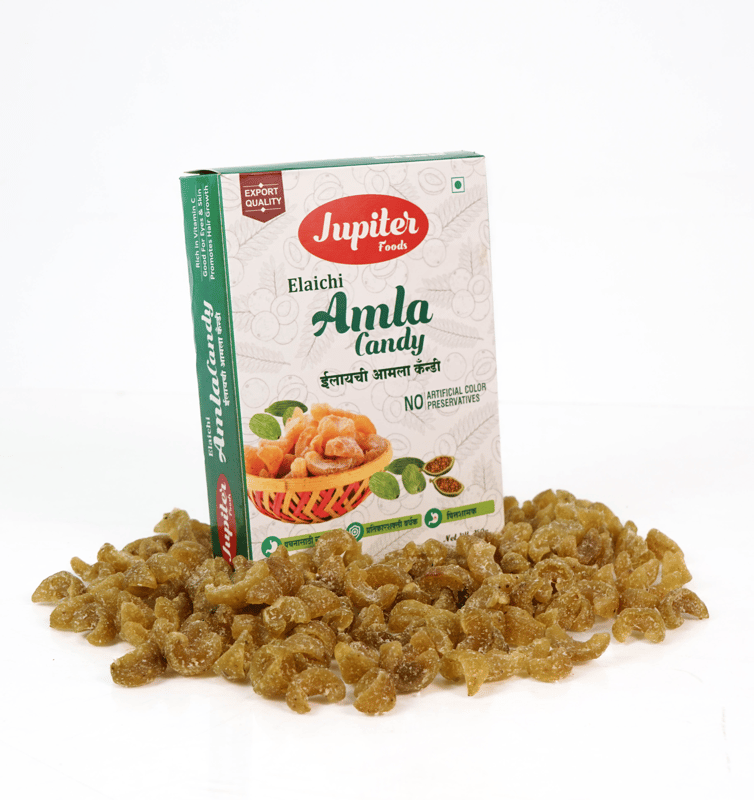
The pieces are dried and crystallised — small, irregular amber-brown chunks with a slightly textured surface where the sugar has set. They are firm to bite, not hard, and the flavour releases gradually as the piece dissolves rather than all at once.
How to eat them and when
The most natural use is after meals — one or two pieces as a digestive and mouth freshener. The combination of amla's acidity and cardamom's warmth has traditionally been used to reduce post-meal heaviness and support digestion, and the candy format makes this easy to consume without preparation. It works as well after a heavy non-vegetarian meal as after a simple dal-rice.
As a between-meal snack, the candy offers something genuinely different from a biscuit or a sweet — lower in refined carbohydrates, naturally flavoured, and satisfying without being filling. For children, it is a more nutritionally honest alternative to synthetic fruit candies, with the same appeal of something sweet and slightly sour. For older adults managing digestion or immunity, it is an easy daily addition that does not require any change in routine.
The pack also gifts well — compact, clearly labelled, export quality, and the kind of product that travels without needing refrigeration. A box slipped into a gift hamper alongside other foods, or given on its own during festive visits, is a considered and practical choice.
Why no preservatives matters here
Amla candy is widely available at low price points across India, but most commercial versions use artificial colours to achieve a consistent appearance and chemical preservatives to extend shelf life significantly. Jupiter Foods uses natural ingredients only — the amber colour of the candy comes from the amla and sugar, not from dye, and the nine-month shelf life is achieved through proper drying and airtight packaging rather than added chemicals. The difference is visible in the colour of the candy, which is a natural golden-brown rather than bright orange or red, and in the flavour, which tastes like actual amla rather than amla flavouring.
Specifications
Ingredients: Amla, sugar, cardamom powder
Net Weight: 250 g
Shelf Life: 9 months from date of manufacture
Artificial colours: None
Preservatives: None
Suitable for: All ages; post-meal digestive, daily snack, gifting
Packaging: Retail carton box, export quality
Storage
Store in a cool, dry place away from direct sunlight and moisture. Keep the box closed after opening to prevent the candy from absorbing humidity, which can cause the sugar coating to become sticky. Do not refrigerate. Consume within 9 months of manufacture for best flavour and texture.
About the Entrepreneur
Sandhya Ghanwat has been in the amla candy business for five years. Initially she worked from home in a household manner. As the demand for amla candy in the market grew, production started increasing and she acquired a dehydration machine. Around this time she received support from Mann Deshi, gained information through their workshops, and got help with marketing. Sandhya Tai is currently running a manufacturing unit in Tasgaon, Satara taluka, where amla candy is made naturally, without preservatives and without artificial colours.
| Country of origin | India |
|---|---|
| cancellable | yes |
| time to ship | 2 days |
| seller pickup return | yes |
| return window | 2 days |
| contact details consumer care | Vanita Shinde,[email protected],9607589078 |
| nutritional info | Indian Gooseberry (Amla) Sugar (QS), Glucose, Black Salt, Rock Salt, Cardamom Powder. |
| additives info | Indian Gooseberry (Amla) Sugar (QS), Glucose, Black Salt, Rock Salt, Cardamom Powder. |
| brand owner FSSAI license no | 21522039001716 |
| other FSSAI license no | 21522039001716 |
| importer FSSAI license no | 21522039001716 |
| imported product country of origin | IN |
Other Products from seller Mann Deshi Udyojika Private Limited
Check Estimated Delivery Date

Sold By: Mann Deshi Udyojika Private Limited
Vendor Source:Mann Deshi Udyojika Private Limited