


 Contact Us
 Appliances
 Agri Inputs
 Auto Components & Accessories
 Beauty & Personal Care
 Electronics
 Fashion
 Grocery
 Gift Cards
 Home & kitchen
 Health & Wellness
 Vehicles & Automotives
 Books & Stationary
 Pet Care
 Toys & Games
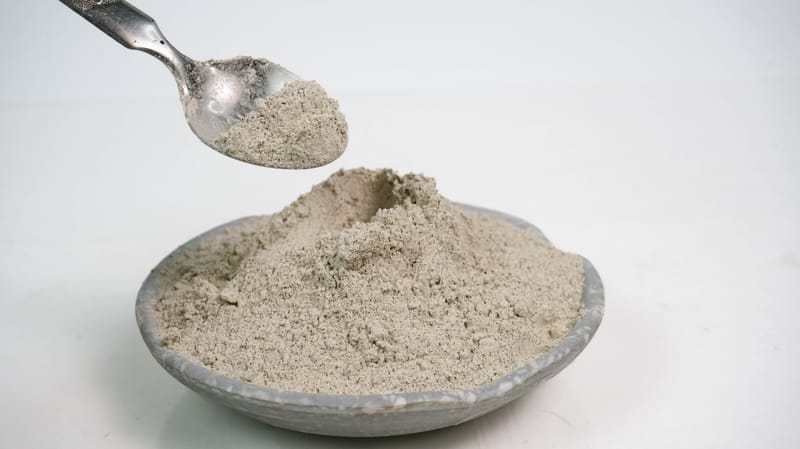
A flour that was never a trend — it was always just food Horse gram has been grown and eaten across the Deccan plateau for centuries. It appeared in meals long before anyone called it a superfood — as pithla on a bhakri, as a thin soup on winter m...
Read MorePopular Categories
Support
Language
Our apps
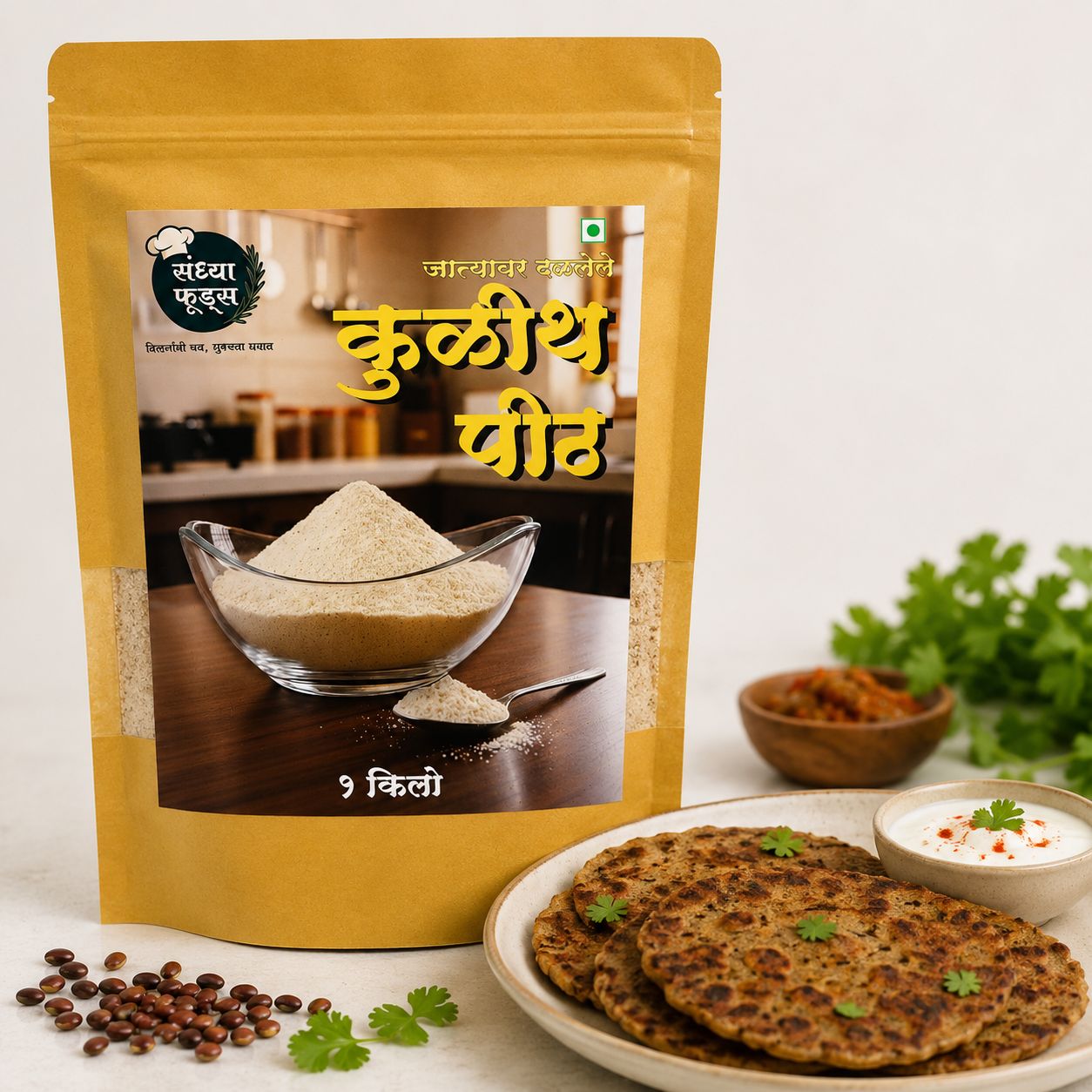
Horse Gram Flour
A flour that was never a trend — it was always just food
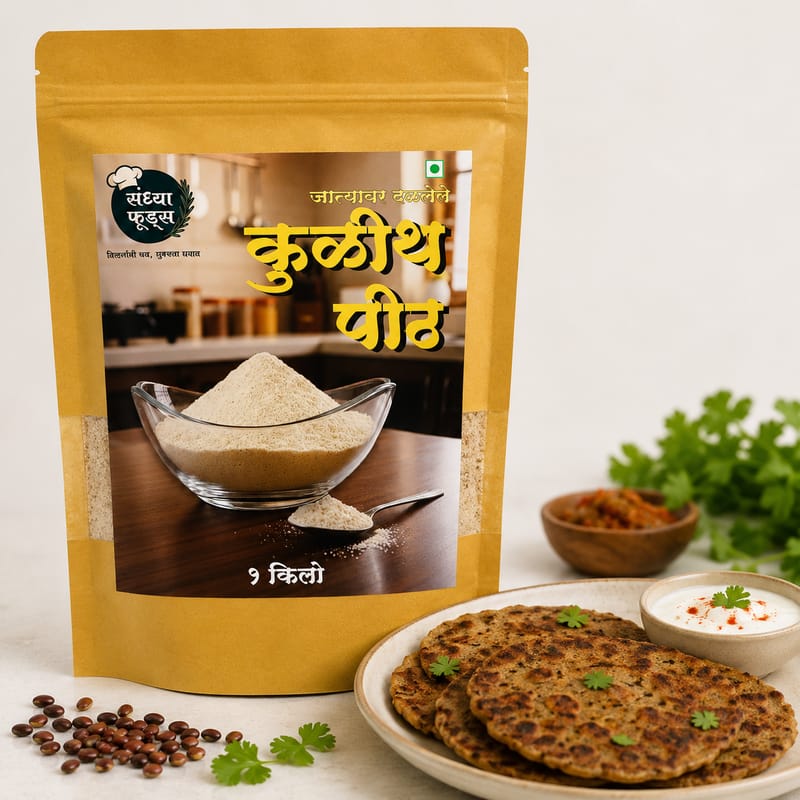
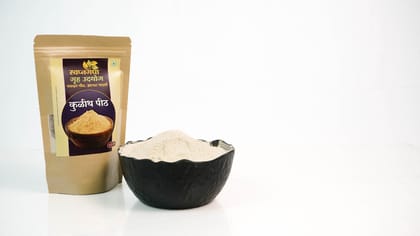
Horse gram has been grown and eaten across the Deccan plateau for centuries. It appeared in meals long before anyone called it a superfood — as pithla on a bhakri, as a thin soup on winter mornings, as a simple dal that filled a meal without fuss. In many Maharashtra households, kulith pithla is not a health decision. It is just what gets made. Sandhya Foods' Kulith Pith is finely milled horse gram flour, made from a single ingredient — kulith — with nothing added and nothing removed. It is the same flour, made the same way, available in a pack that keeps it fresh.
What kulith actually is
Kulith, or horse gram, is a small, hard legume that grows well in dry, rain-fed conditions across Maharashtra, Karnataka, and the Konkan region. It is one of the most nutritionally dense pulses grown in India — higher in protein than many more widely consumed lentils, and significantly richer in iron, calcium, and fibre than refined flours of any kind. It has been used in Ayurvedic practice for digestive support, kidney health, and as a warming food in cold months.
Unlike many grains and pulses that have been rediscovered by urban wellness markets, kulith never disappeared from rural Maharashtrian kitchens. It remained in regular use precisely because it works — as food, as flavour, and as nourishment.
How it is made
The flour is made from whole kulith that is cleaned and milled without chemical treatment, bleaching, or the addition of preservatives. The milling process is kept simple to preserve the natural oils and nutrients in the grain. The resulting flour has a fine texture with a slightly coarse matte finish — pale grey-cream in colour, with the mild, earthy aroma that distinguishes freshly milled legume flour from older, stale stock.
At one kilogram per pack, it is sized for regular household use rather than occasional cooking.
How to use it
The most direct use is kulith pithla — the flour is stirred into a hot tempering of oil, mustard, curry leaves, and onion, then water is added and cooked until thick. It comes together quickly, in under ten minutes, and pairs naturally with jowar or bajra bhakri. The flavour is earthier and more substantial than besan pithla, with a slightly nutty depth that works particularly well with a drizzle of ghee.
Beyond pithla, the flour works well in thin soups and gravies where a legume-based thickener adds both body and nutrition. It can be mixed with other flours for flatbreads, used to make thick porridge for young children and older adults, and incorporated into spiced fritters where its dense protein content gives more staying power than refined flour alternatives. For those managing blood sugar or weight, its low glycaemic impact and high fibre content make it a practical everyday flour rather than a supplement.
What makes it worth using regularly
Refined flour products dominate most kitchen shelves because they are cheap, consistent, and familiar. Kulith pith requires slightly more attention in cooking — it needs to be stirred properly and cooked through — but what it returns in flavour, nutrition, and satiety is considerably more. It is free from additives, preservatives, and artificial enhancement. The nutrition it offers — protein, iron, calcium, fibre — comes from the grain itself, not from fortification.
For households looking to reduce dependence on refined carbohydrates without abandoning the flavours and cooking methods they already know, kulith pith is one of the most practical places to start.
Specifications
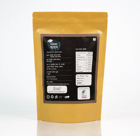
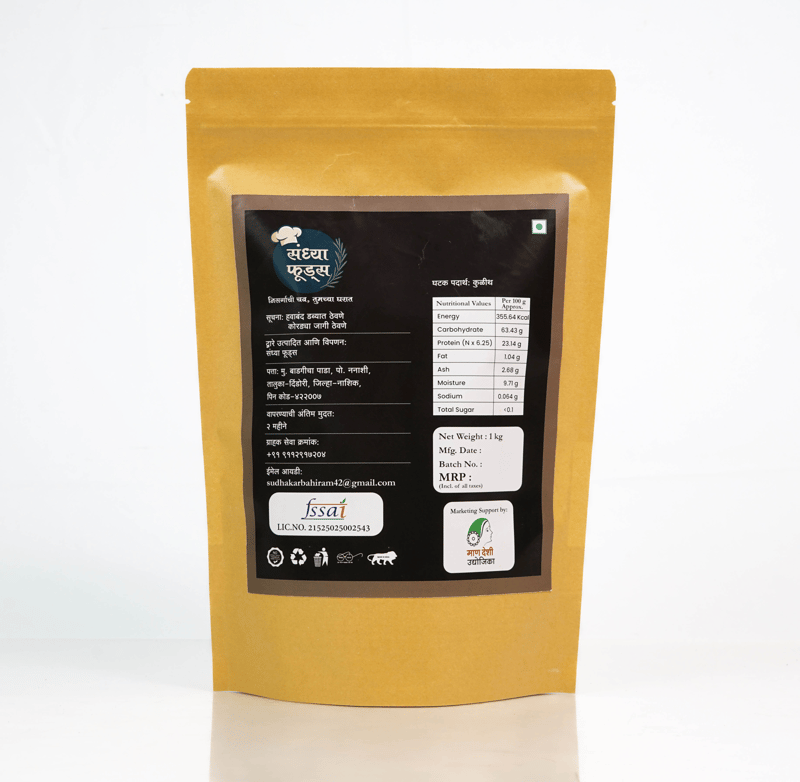
Ingredient: 100% kulith (horse gram)
Net Weight: 1 kg
Shelf Life: 2 months from date of manufacture
Additives: None
Preservatives: None
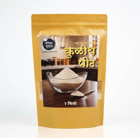
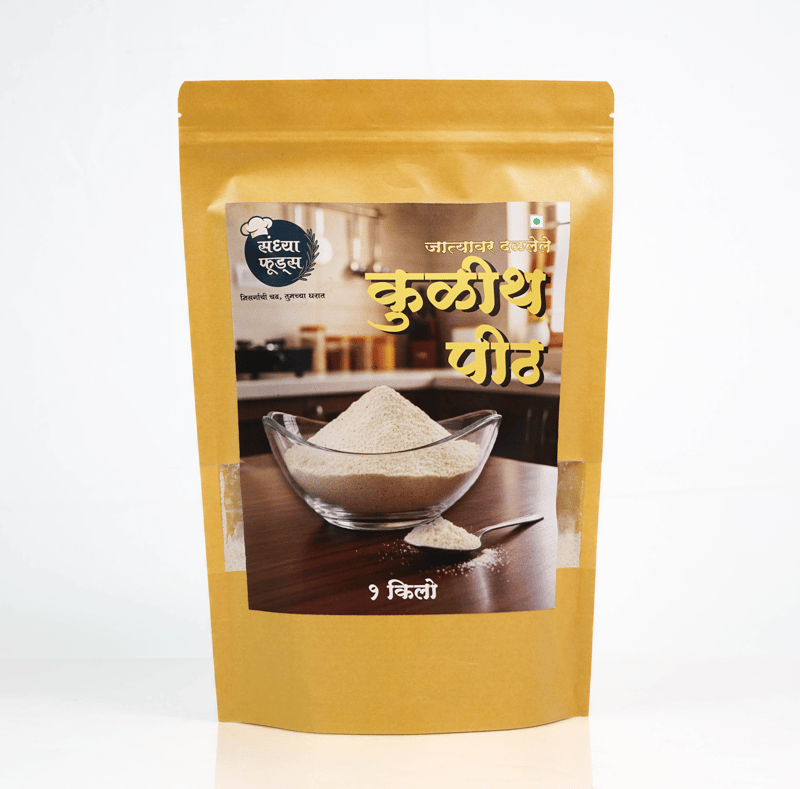
Packaging: Resealable yellow kraft stand-up pouch
Storage
Store in a cool, dry place away from direct sunlight and moisture. Keep the pouch tightly sealed between uses. Transfer to an airtight container once opened if not using frequently. Do not store near strong-smelling spices as the flour can absorb odours. Use within 2 months of manufacture for best flavour and nutritional quality.
About the Entrepreneur
Rekha lives in a tribal area. Since horse gram (kulith) is a type of grain not known in urban areas, Rekha Tai decided to make kulith flour. It is important for health and is a traditional dish in Maharashtra. Through Mann Deshi, her business reached everyone.
| Country of origin | India |
|---|---|
| cancellable | yes |
| time to ship | 2 days |
| seller pickup return | yes |
| return window | 2 days |
| contact details consumer care | Vanita Shinde,[email protected],9607589078 |
| manufacturer or packer name | Sandhya Foods |
| manufacturer or packer address | Mann Deshi Foundation, Shop No. 106, 107, Harivishva Appartment, Opposite Saint Philomena School, Jail Road,Nashik-422101 |
| common or generic name of commodity | Horse Gram Flour |
| month year of manufacture packing import | 46143 |
| imported product country of origin | IN |
Other Products from seller Mann Deshi Udyojika Private Limited
Check Estimated Delivery Date

Sold By: Mann Deshi Udyojika Private Limited
Vendor Source:Mann Deshi Udyojika Private Limited