


 Contact Us
 Appliances
 Agri Inputs
 Auto Components & Accessories
 Beauty & Personal Care
 Electronics
 Fashion
 Grocery
 Gift Cards
 Home & kitchen
 Health & Wellness
 Vehicles & Automotives
 Books & Stationary
 Pet Care
 Toys & Games


There is a particular kind of object that sits on a shelf in an Indian home for years — not because anyone thinks about it daily, but because removing it would leave a gap that nothing else quite fills. It is usually something handmade, something ...
Read MorePopular Categories
Support
Language
Our apps
Pigeon Showpiece
Key Attributes
| Country of origin | India |
|---|---|
| colour | #FFFFFF |
| brand | Tuljabhavani Bamboo Marchant |
There is a particular kind of object that sits on a shelf in an Indian home for years — not because anyone thinks about it daily, but because removing it would leave a gap that nothing else quite fills. It is usually something handmade, something that depicts a living thing with enough care that it holds its presence in a room. A pair of birds, leaning into each other, perched on a mossy stone — the kind of image that needs no explanation and carries no occasion.
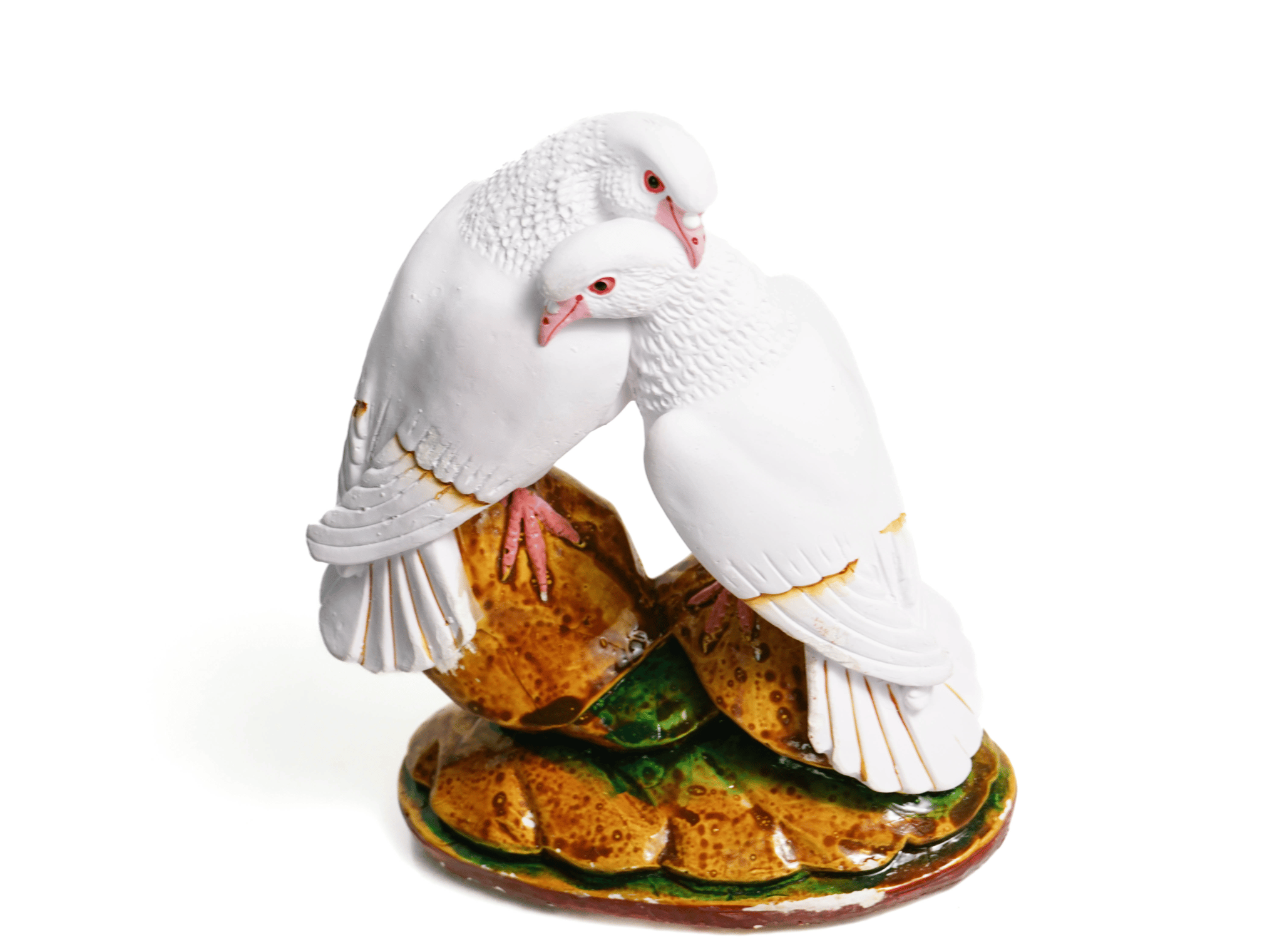
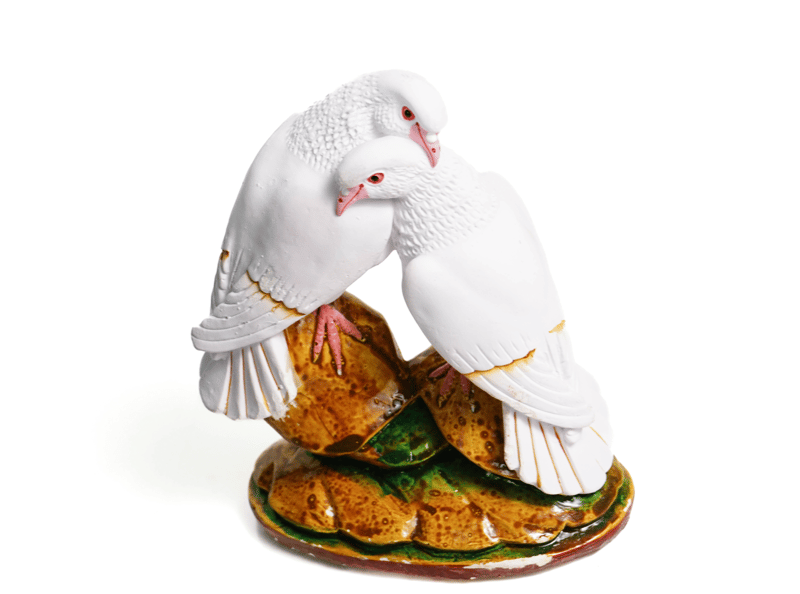
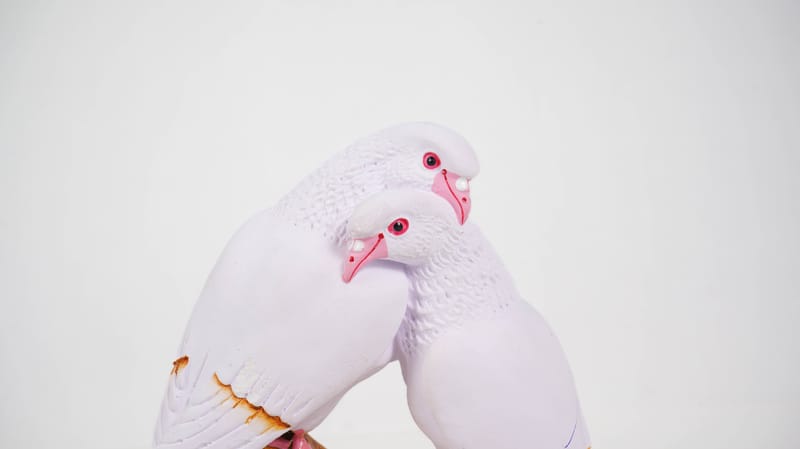
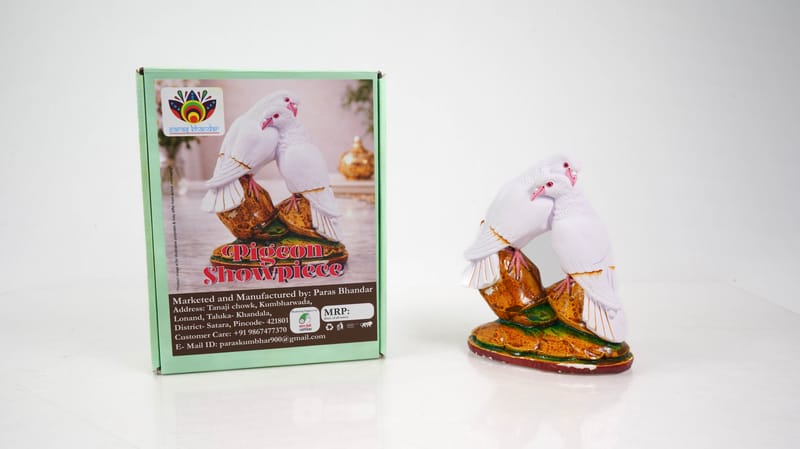
This Pigeon Showpiece by Paras Bhandar is that kind of object. Two white pigeons, sculpted from clay, pressed close together in a resting posture that reads as companionship without being sentimental about it. It is a skilled piece of work — the kind that takes time to model, patience to paint, and a steady hand to finish.
Material and Making
The showpiece is made from soil — natural clay, shaped by hand and fired to set the form. Clay has been the material of choice for figurative sculpture in India for centuries, from temple offerings to decorative pieces for the home. It is dense, stable, and when fired and painted well, holds its detail and colour for years without degrading.
The weight of the piece — 750 grams — reflects the solid construction. It does not feel fragile or hollow. It sits firmly on a surface without needing a stand or support, and the base is wide and flat enough to be stable on a shelf, a console table, or a sideboard.
The Sculpted Detail
The two pigeons are modelled with close attention to the actual form of the bird. The feathers across the body and wings are individually textured — each one suggested by a pressed or carved line in the clay surface, giving the white-painted birds a dimensional, lifelike quality that a smooth finish would not achieve. The wing tips and tail feathers are layered, fanning out slightly at the edges in the way feathers actually do when a bird is at rest.
The beaks and feet are painted in pink, the eyes in red with a dark pupil — the precise colouring of a white pigeon. These small colour details, applied with a fine brush, are what give the piece its believability. Without them, the birds would read as decorative. With them, they read as observed.
The base on which the birds perch is modelled to suggest rounded river stones or seed pods, glazed in amber, burnt brown, and deep green — a rich, earthy palette that grounds the white birds above and adds visual depth to the overall composition. The glaze on the base catches light differently from the matte white of the birds, creating a natural contrast that makes the whole piece feel resolved and complete.
Where It Works
The Pigeon Showpiece suits a living room shelf, a mantelpiece, a study desk, a pooja room side shelf, or an entrance console where a decorative object of substance is needed. Its palette — white, amber, green, brown — is neutral enough to work in most interior colour schemes without demanding attention or clashing with existing décor.
It also works well as a gift. A pair of birds together carries associations of companionship, loyalty, and peace across most Indian cultural contexts, making this a considered and appropriate gift for a new home, a wedding, an anniversary, or simply as a gesture of goodwill. It is the kind of gift that does not get stored away — it gets placed somewhere visible.
In Vastu tradition, pigeons and doves are associated with positive energy, harmony in relationships, and peace within the household, adding a layer of meaning for buyers who hold these associations.
Specifications
Material: Natural clay (soil), hand-shaped and fired
Finish: Hand-painted — matte white on birds, glazed amber and green on base
Eye and beak detail: Hand-painted in red and pink
Feather texture: Hand-carved or pressed detail across body and wings
Base: Glazed, multi-toned, wide oval form for stability
Size: 20*18
Net Weight: 500 g
Care
Wipe with a soft dry cloth to remove dust. Do not submerge in water or expose to prolonged moisture, as clay construction can be affected by sustained dampness. Handle by the base rather than by the birds when moving or repositioning. Keep away from edges where it could be knocked over, as fired clay will chip or crack on hard impact. Not suitable for outdoor display.
About the Entrepreneur
Sunita's business is quite traditional – she proudly carries forward the heritage of her parents and in-laws. After connecting with Mann Deshi, the shop got a name and started the business under the name 'Parasmaniware'. Sunita is very happy that handmade pottery from her own soil is reaching all people, and is very joyful that she has reached this point with the cooperation of Mann Deshi.
| Country of origin | India |
|---|---|
| colour | #FFFFFF |
| brand | Tuljabhavani Bamboo Marchant |
| material | soil |
| colour name | #FFFFFF |
| cancellable | yes |
| time to ship | 2 days |
| seller pickup return | yes |
| return window | 2 days |
| contact details consumer care | Vanita Shinde,[email protected],8652116011 |
| manufacturer or packer name | Paras Bhandar |
| manufacturer or packer address | Manndeshi Foundation Keshavrao Patil Vyapar Sankul, Satara Jilha Madhyvarti Sahakari Grahak Sangh Ltd. Market yard Radhika Road Satara 415008 |
| common or generic name of commodity | Pigeon Showpiece |
| month year of manufacture packing import | 46143 |
| imported product country of origin | IN |
Other Products from seller Mann Deshi Udyojika Private Limited


Check Estimated Delivery Date

Sold By: Mann Deshi Udyojika Private Limited
Vendor Source:Mann Deshi Udyojika Private Limited