


 Contact Us
 Appliances
 Agri Inputs
 Auto Components & Accessories
 Beauty & Personal Care
 Electronics
 Fashion
 Grocery
 Gift Cards
 Home & kitchen
 Health & Wellness
 Vehicles & Automotives
 Books & Stationary
 Pet Care
 Toys & Games
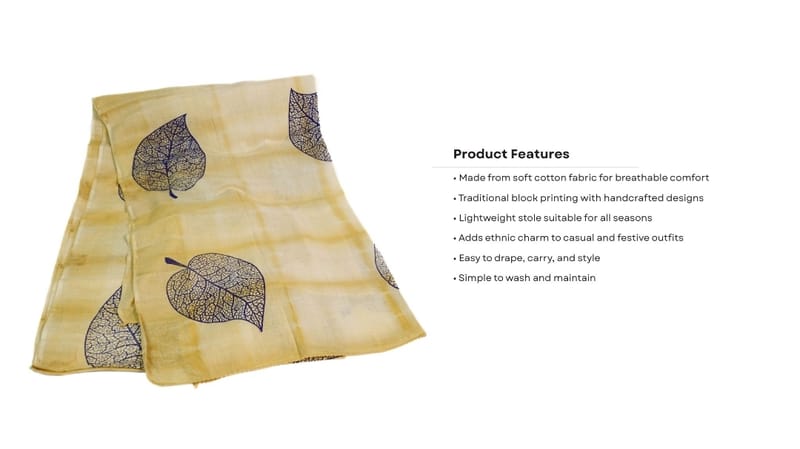
The print that looks like a leaf held up to the light A skeleton leaf — stripped of everything except its vein structure — is one of those natural forms that is more intricate than anything designed from scratch. Every branching vein, every sub-ve...
Read MorePopular Categories
Support
Language
Our apps
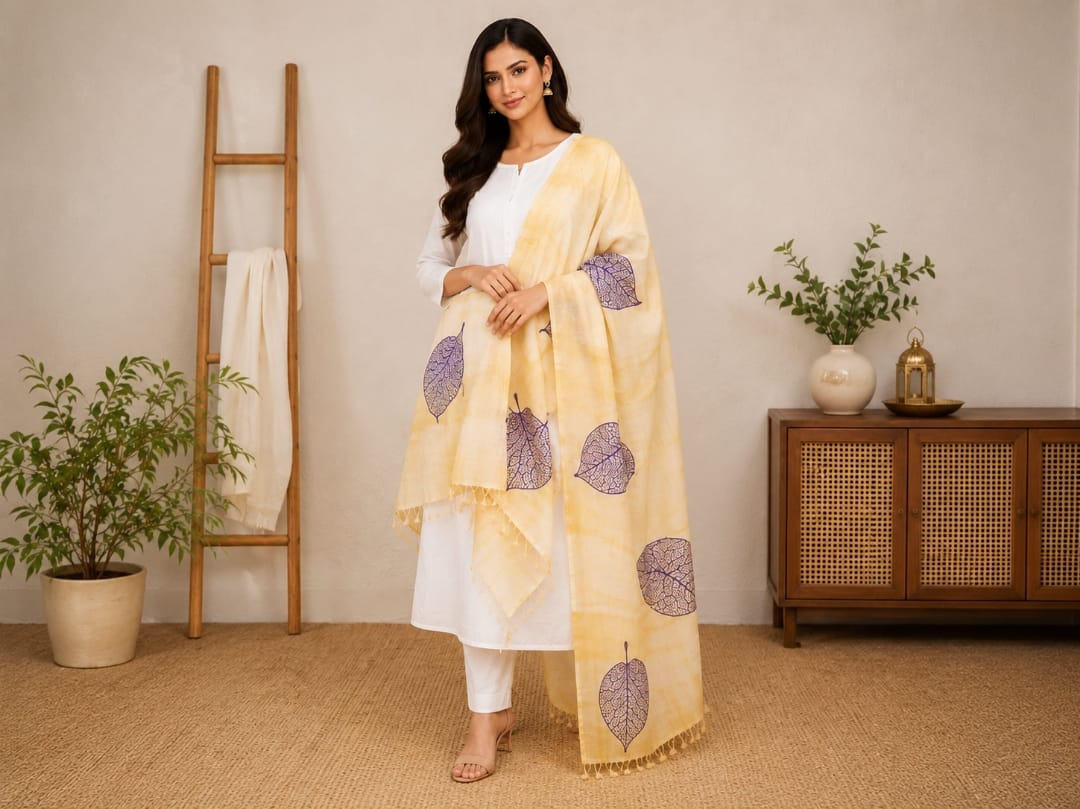
Hand Block Printed Dupatta
Key Attributes
| Country of origin | India |
|---|---|
| gender | female |
| brand | Vastrani TFJ |
| colour | #FFFDD0 |
| size | 2 meter |
The print that looks like a leaf held up to the light
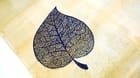
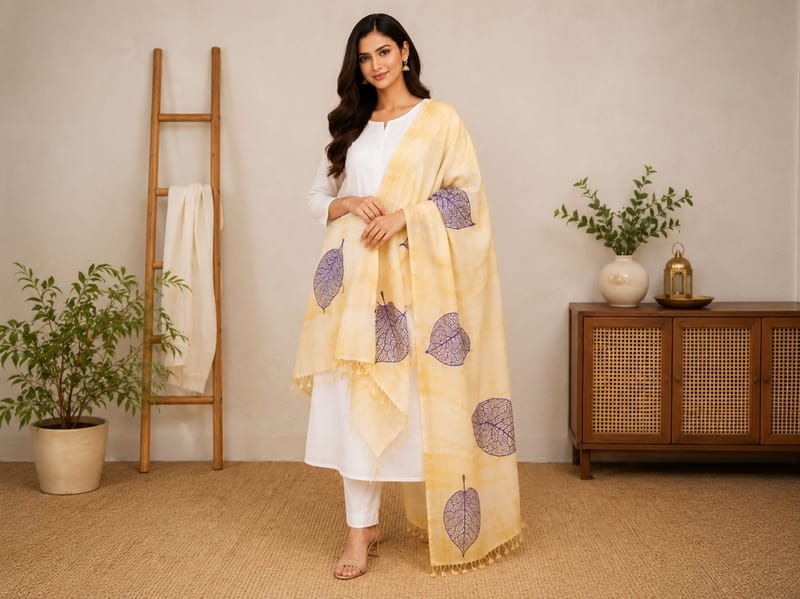
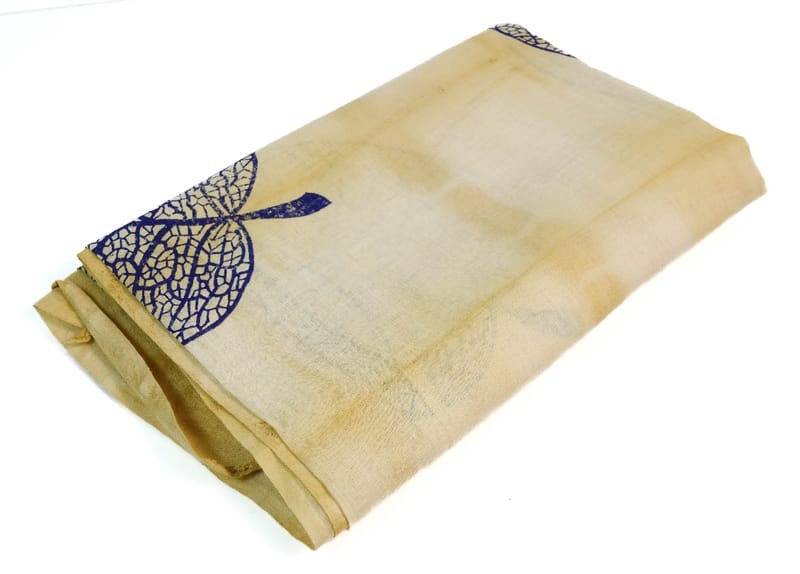
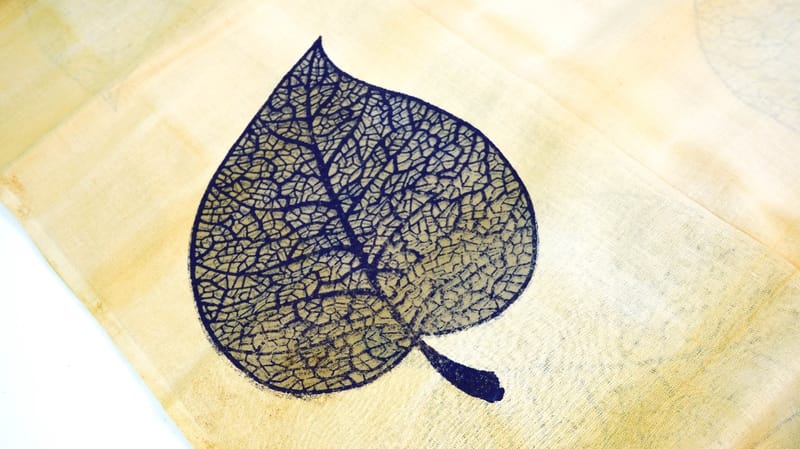
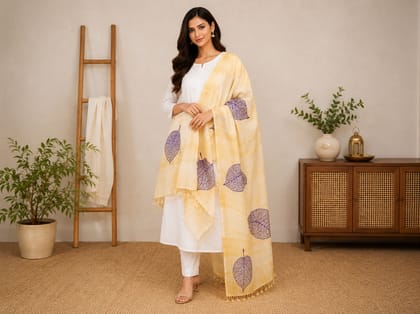
A skeleton leaf — stripped of everything except its vein structure — is one of those natural forms that is more intricate than anything designed from scratch. Every branching vein, every sub-vein, every delicate tracery of the internal network is present. Transferring that level of detail onto fabric using a hand-carved wooden block requires a block cut with exceptional precision, ink applied at exactly the right consistency, and a hand steady enough to press and release cleanly without smudging the finer lines. Vastrani TFJ's Hand Block Printed Dupatta carries this motif in deep indigo on a warm natural cream cotton — large leaves placed generously across the length of the dupatta, each impression slightly individual, each one made by a hand rather than a machine.
The fabric
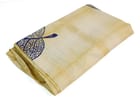
The dupatta is made from fine cotton — a lightweight, slightly sheer weave in the mulmul or cotton voile range that drapes softly and moves with the body rather than holding a stiff shape. The base colour is natural cream or ecru, with a warm golden-amber wash or natural dye variation across the surface that gives the fabric an organic, slightly uneven ground tone. This unevenness is not a defect — it is the character of hand-processed natural cotton, and it is what gives the base its warmth and depth against the cool indigo of the print.
At 50 grams, the dupatta is light enough to wear through a full day without feeling burdened by it — the kind of weight that allows it to be loosely draped, tied, or folded without adding bulk to an outfit.
The block print
The skeleton leaf motif is printed in deep indigo — a colour with its own long history in Indian textile printing, traditionally derived from the indigo plant and used across block printing traditions in Rajasthan, Gujarat, and across India for centuries. On this dupatta, the indigo is applied in a single impression per leaf, with the full venation detail of the block transferred onto the cotton in one clean press.
The motifs are large — each leaf occupying a significant portion of the fabric's width — and placed with generous spacing that allows the natural ground of the fabric to breathe between them. The result is a design that is bold in its motif but restrained in its overall composition: the leaf is the only design element, and the fabric and dye do the rest.
Each block print impression is slightly individual — the pressure of the hand, the ink absorption of that particular area of fabric, and the natural variation in the cotton's surface all contribute minor differences from one motif to the next. These variations are what separate a block printed dupatta from a screen or digital print, and they are visible on close inspection in the way the ink sits within the cotton fibres.
How to wear it
This dupatta works across a wide range of outfit combinations. Draped over a kurta and churidar in indigo, navy, or white, the botanical print reads as a considered pairing. Over a plain white or cream cotton saree, the indigo leaf motif on a matching base adds pattern without colour contrast. For fusion wear — a linen jacket, wide-leg trousers, or even a formal kurta — a loosely folded dupatta across the shoulder adds the traditional element without the formality of embroidered or embellished accessories.
The natural cream and indigo colour palette is one of the most versatile in Indian textiles — it works in warm months and cool ones, suits multiple skin tones, and does not clash with the jewellery or other accessories typically worn alongside ethnic outfits.
Why block print endures
Printed dupattas are widely available at low prices through digital and screen printing. Block printing survives not because it is cheaper — it is not — but because the result is different in a way that is apparent in person. The ink sits in the fabric differently. The slight variation across repeats creates a rhythm that feels alive rather than mechanical. And the knowledge required to carve a block that transfers the complexity of a skeleton leaf's venation without losing its finest lines is a specific skill that takes years to develop. Buying a block printed dupatta is buying the time and skill of that process — and wearing something that shows it.
Specifications
Fabric: Fine cotton (mulmul or cotton voile)
Base colour: Natural cream/ecru with amber wash
Print: Hand block printed skeleton leaf motif in deep indigo
Print technique: Hand-carved wooden block
Length: 2 metres
Net Weight: 50 g
Drape: Lightweight, slightly sheer, soft fall
Care
Hand wash separately in cold water with a mild detergent for the first few washes, as indigo block print may release slight colour initially. Do not soak for long periods. Dry in shade — direct sunlight can fade natural indigo over time. Iron on medium heat while slightly damp for best results. Do not dry clean.
About the Entrepreneur
Vaishali Tai has been painting various designs on dupattas herself for 5 to 6 years. Vaishali Tai had a beautiful talent for painting. She gave a self-made dupatta as a gift to her friend. Her friend then suggested the idea of starting a business, and Mann Deshi provided proper guidance at the right time. This is how her business started.
| Country of origin | India |
|---|---|
| gender | female |
| brand | Vastrani TFJ |
| colour | #FFFDD0 |
| size | 2 meter |
| fabric | cotton,thred, |
| colour name | #FFFDD0 |
| cancellable | yes |
| time to ship | 2 days |
| seller pickup return | yes |
| return window | 2 days |
| contact details consumer care | Vanita Shinde,[email protected],9607589078 |
| manufacturer or packer name | Vastrani TFJ |
| manufacturer or packer address | Manndeshi Foundation. Shop no. 106, 107, Harivishva Appartment, Opposite Saint Philomena School, Jail road, Nashik Road, Nashik |
| common or generic name of commodity | Hand Block Printed Dupatta |
| month year of manufacture packing import | 2026-01-01 23:28 |
| imported product country of origin | IN |
Other Products from seller Mann Deshi Udyojika Private Limited



Check Estimated Delivery Date

Sold By: Mann Deshi Udyojika Private Limited
Vendor Source:Mann Deshi Udyojika Private Limited