


 Contact Us
 Appliances
 Agri Inputs
 Auto Components & Accessories
 Beauty & Personal Care
 Electronics
 Fashion
 Grocery
 Gift Cards
 Home & kitchen
 Health & Wellness
 Vehicles & Automotives
 Books & Stationary
 Pet Care
 Toys & Games
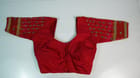
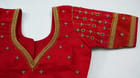
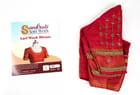
Red silk, gold zari, and the kind of work that takes time A red silk blouse is not a neutral choice. It carries the specific weight of bridal occasions, temple rituals, and the kind of dressing that is done once and remembered. When it is embroide...
Read MorePopular Categories
Support
Language
Our apps
Aariwork Blouse
Key Attributes
| Country of origin | India |
|---|---|
| gender | female |
| brand | Sanskriti Aariwork |
| colour | #FF0000 |
| size | 30 |
Red silk, gold zari, and the kind of work that takes time
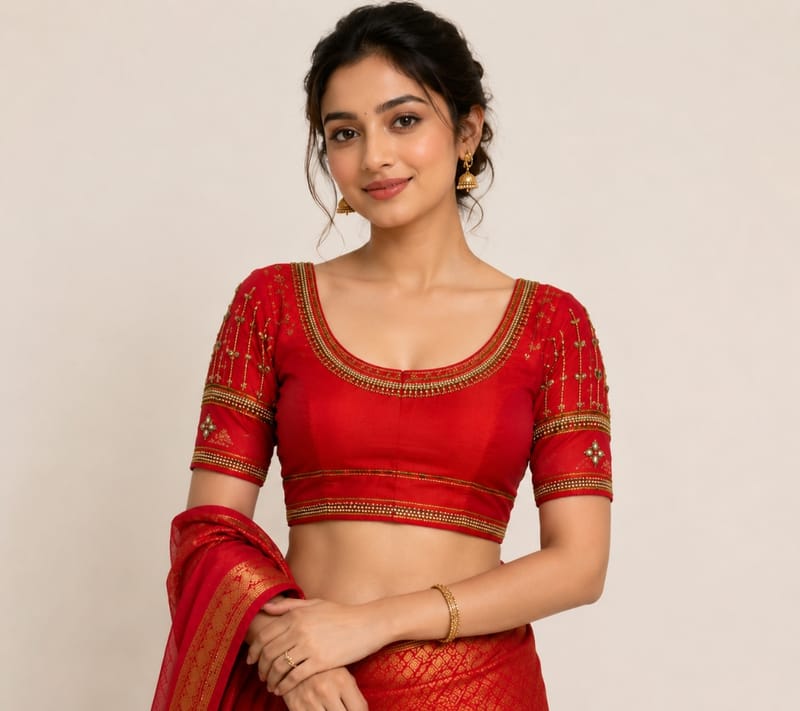
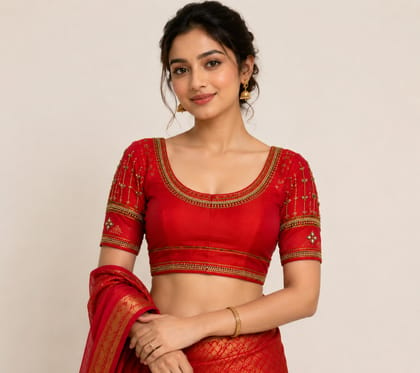
A red silk blouse is not a neutral choice. It carries the specific weight of bridal occasions, temple rituals, and the kind of dressing that is done once and remembered. When it is embroidered by hand and finished with woven zari panels at the hem, the blouse stops being an accessory to the saree and becomes a considered garment in its own right. Sanskriti Aariwork's Aariwork Blouse is made in that register — deep crimson tapeta silk, hand-embroidered with aari needle and kundan, finished with a gold zari neckline border and brocade panels at the hem and cuffs that give it the full character of bridal occasion wear.
The fabric
The blouse is made from tapeta silk — a fabric known for its smooth surface, firm drape, and the subtle iridescent sheen that distinguishes it from flat matte silks. In deep crimson, tapeta silk has a particular depth of colour that changes slightly with movement and light, which makes it especially suited to embroidery work where the ground fabric is meant to be visible between the motifs. The firmness of tapeta also supports the weight of hand embroidery and beadwork without puckering or pulling at the stitch points, which matters in a blouse that carries dense work across the neckline and sleeves.
The embroidery and embellishments
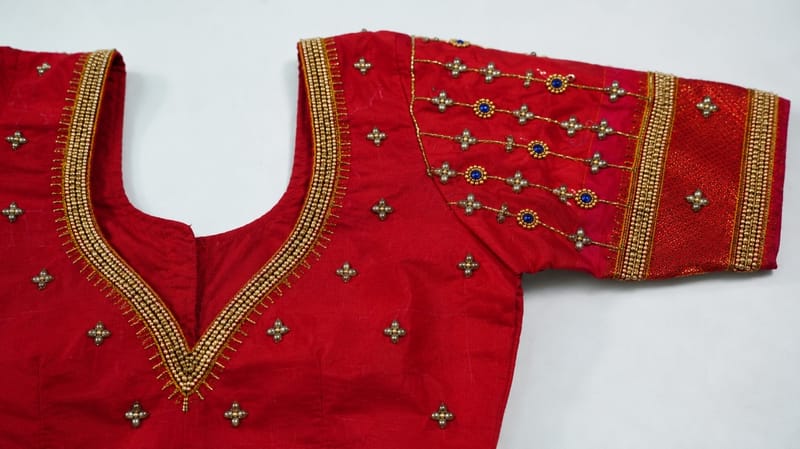
The neckline border is worked in a dense gold zari chain stitch that follows the full curve of the deep U-neckline — tight, even, and substantial enough to frame the neckline without requiring additional trim. This is the most prominent feature of the blouse, visible from the front at any distance.
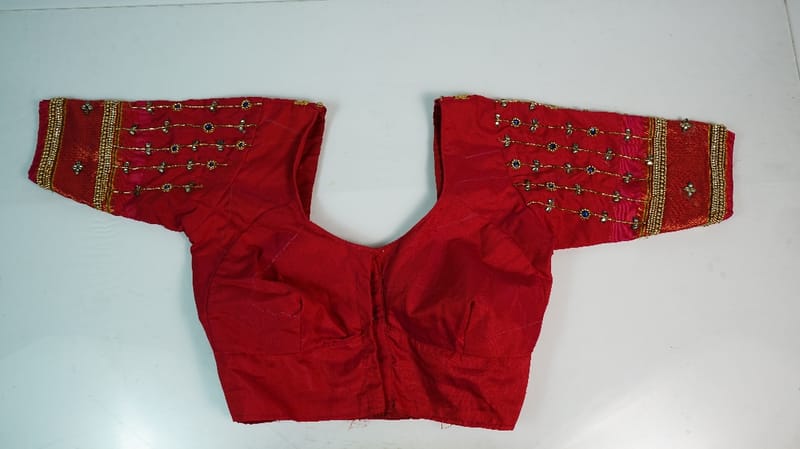
Across the sleeves, the embroidery is finer and more restrained in character — thin trailing vine stems in metallic thread with small blue kundan stone flower centres and silver-tone metallic bud details scattered in diagonal lines across the fabric. This style of embellishment — known as jadoshi work — uses a combination of aari chain stitch for the stems and individually set stones or beads for the centres. The effect is delicate rather than heavy: the sleeve embroidery adds richness without competing with the neckline border or the brocade hem.
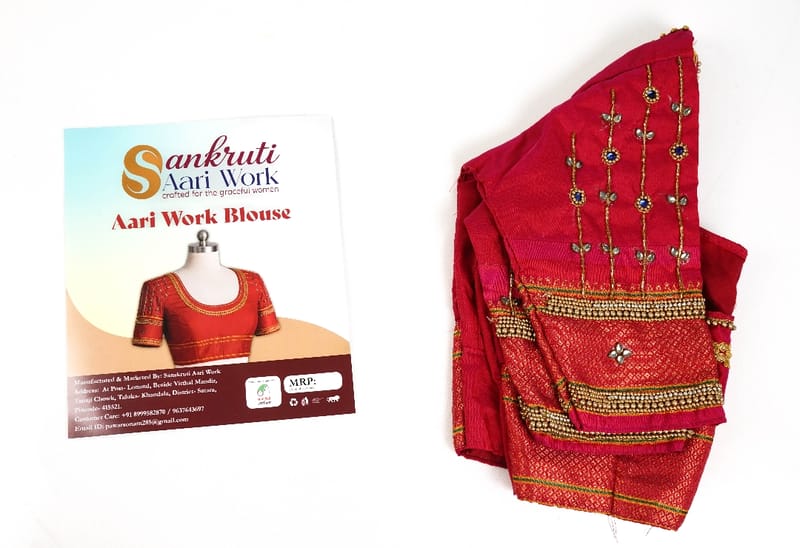
The hem of the blouse and the cuffs of the sleeves are finished with a wide band of deep red woven zari brocade — a separate fabric panel with a dense gold geometric or floral weave that transitions the silk body into a woven border. This detail gives the blouse its specific Maharashtrian or South Indian bridal character, echoing the border structure of a Paithani or Kanjivaram saree in the blouse itself.
What makes this combination work
The skill in this blouse lies in how three different techniques — aari embroidery, kundan setting, and woven zari brocade — are brought together on a single garment without any one of them overwhelming the others. The neckline border anchors the front. The sleeve embroidery adds movement. The brocade hem grounds the silhouette. On a solid red silk base, this layering reads as coherent and rich rather than overcrowded.
When and how to wear it
This blouse is designed for the occasions where red silk and gold are appropriate and expected — bridal functions, wedding receptions, Akha Teej, Diwali, Navratri, and temple occasions. It pairs most naturally with silk sarees in complementary colours: a deep green, navy, or ivory Paithani or Kanjivaram, where the red blouse provides the colour anchor and the gold zari on both saree and blouse reads as a unified scheme. With a plain red silk saree, the embellishments on the blouse become the focal point of the entire outfit.
At 300 grams, the blouse is heavier than an unembroidered silk blouse, which is expected given the density of the work — but not uncomfortable for the duration of a wedding function or formal occasion.
Specifications
Fabric: Tapeta silk (deep crimson)
Embroidery: Aari chain stitch, jadoshi work
Embellishments: Blue kundan stones, silver metallic thread buds, gold zari neckline border
Hem and cuff panels: Woven red-and-gold zari brocade
Colours: White, Orange, Blue, Pink, Black, Maroon, Yellow, Baby Pink, Lavender
Sizes: 30, 32, 34, 36, 38
Net Weight: 300 g
Neckline: Deep U-shape with gold zari border
Sleeve: Short sleeve with trailing vine and kundan embroidery
Occasions: Bridal wear, weddings, receptions, festive functions
Care
Dry clean only — the combination of tapeta silk, aari embroidery, set kundan stones, and woven zari brocade panels requires professional cleaning to preserve all elements. Do not hand wash or machine wash. Store folded in soft muslin or a clean cloth bag, away from moisture, humidity, and direct sunlight. Avoid hanging for extended periods as the weight of the embellishments can stretch the silk at the shoulders. If pressing is needed, iron on the lowest silk setting on the reverse side only, with a pressing cloth between the iron and the fabric surface.
About the Entrepreneur
Sonam has been doing aari work for the past three years. Having had a love for art from the beginning, Sonawane had great interest in tailoring work. After connecting with Mann Deshi, she took aari work training through Mann Deshi's workshops. Orders for aari-embroidered blouses needed for ceremonies and weddings started coming in, and now Sonam proudly says that she is a Mann Deshi entrepreneur.
| Country of origin | India |
|---|---|
| gender | female |
| brand | Sanskriti Aariwork |
| colour | #FF0000 |
| size | 30 |
| fabric | TAPETA SILK,SHUDAR BIDS,KUNDAN,JADOSHI,MOTI |
| colour name | #FF0000 |
| cancellable | yes |
| time to ship | 2 days |
| seller pickup return | yes |
| return window | 2 days |
| contact details consumer care | Vanita Shinde,[email protected],9607589078 |
| manufacturer or packer name | Sanskriti Aariwork |
| manufacturer or packer address | Manndeshi Foundation Keshavrao Patil Vyapar Sankul, Satara Jilha Madhyvarti Sahakari Grahak Sangh Ltd. Market yard Radhika Road Satara 415006 |
| common or generic name of commodity | Aariwork Blouse |
| month year of manufacture packing import | 2026-01-01 23:27 |
| imported product country of origin | IN |
Other Products from seller Mann Deshi Udyojika Private Limited



Check Estimated Delivery Date

Sold By: Mann Deshi Udyojika Private Limited
Vendor Source:Mann Deshi Udyojika Private Limited