


 Contact Us
 Appliances
 Agri Inputs
 Auto Components & Accessories
 Beauty & Personal Care
 Electronics
 Fashion
 Grocery
 Gift Cards
 Home & kitchen
 Health & Wellness
 Vehicles & Automotives
 Books & Stationary
 Pet Care
 Toys & Games

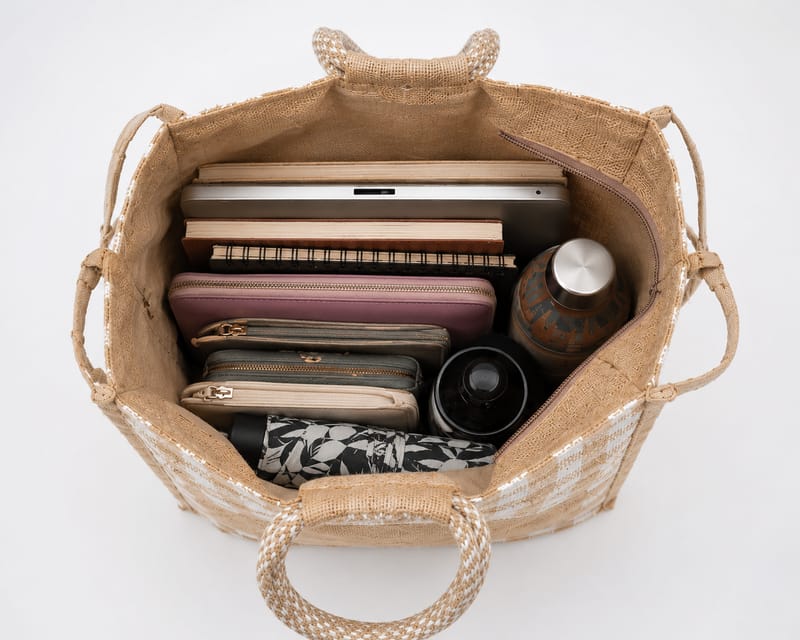
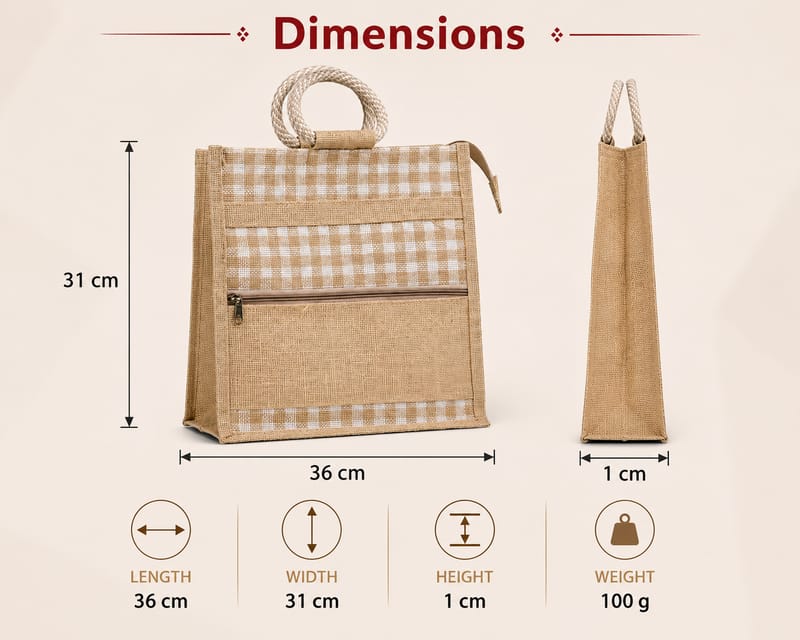
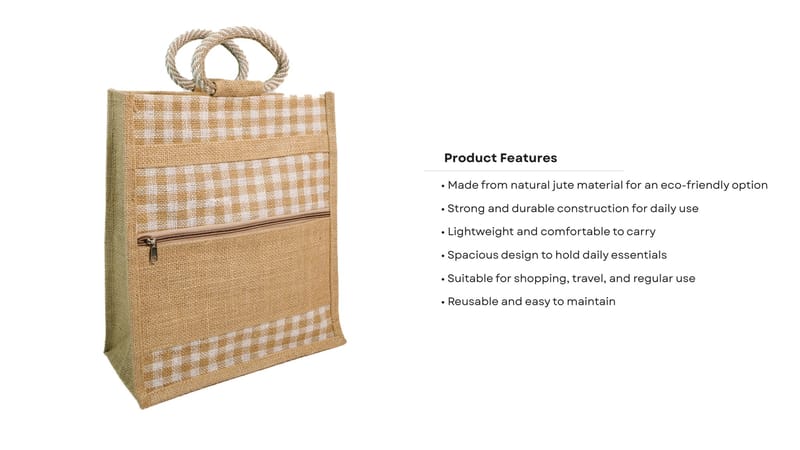
The bag that does the work without making a fuss The shift away from plastic bags in Indian daily life has been happening gradually — partly through regulation, partly through genuine preference for something better. The difficulty is that most al...
Read MorePopular Categories
Support
Language
Our apps
Key Attributes
| Country of origin | India |
|---|---|
| gender | female |
| brand | Dhanashree Fashion House |
| colour | #483131 |
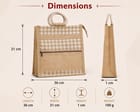
| size | 50*32 cm |
The bag that does the work without making a fuss
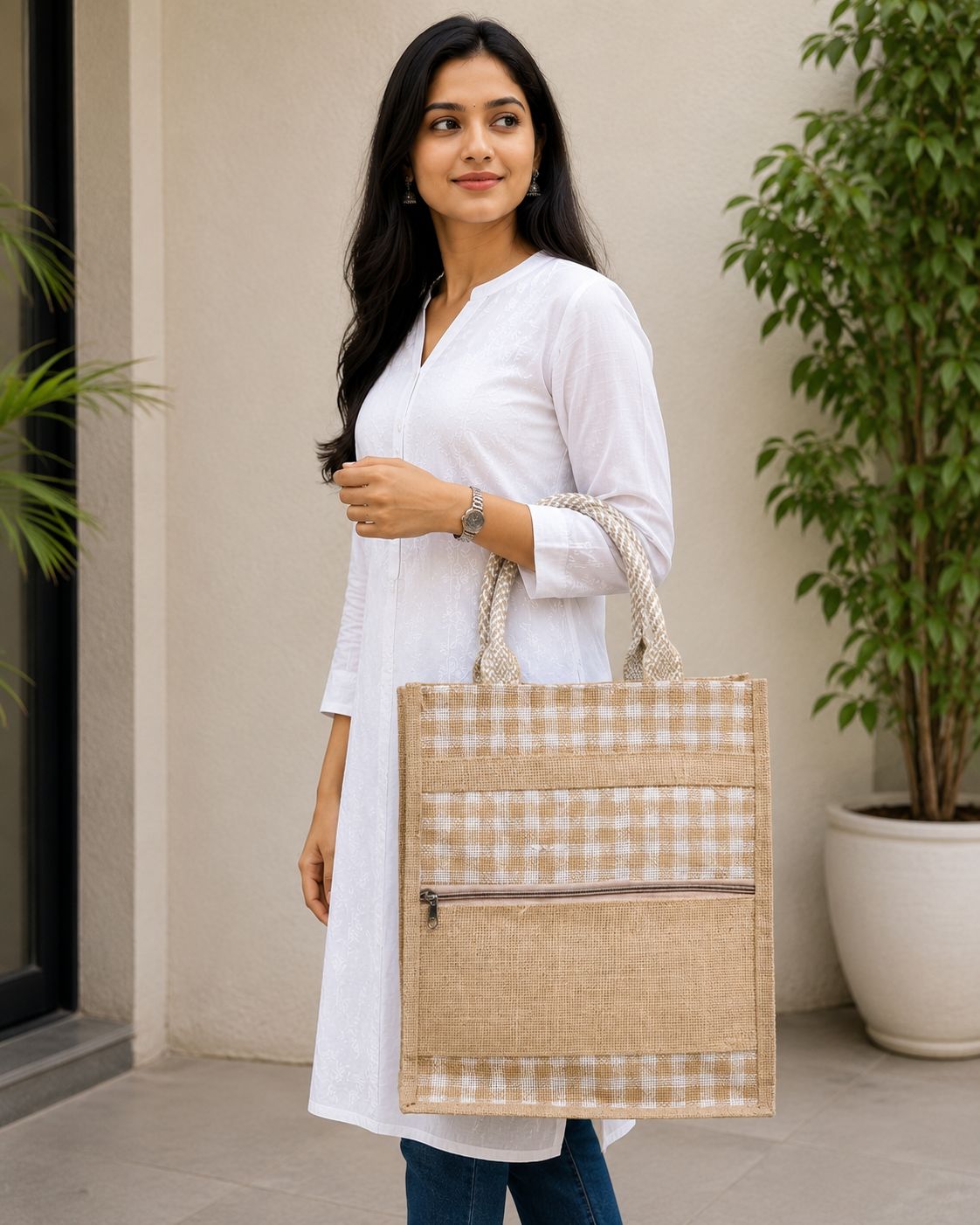
The shift away from plastic bags in Indian daily life has been happening gradually — partly through regulation, partly through genuine preference for something better. The difficulty is that most alternatives ask for a compromise: paper bags that cannot handle weight, thin cotton bags that lose their shape, synthetic totes that are no more biodegradable than the plastic they replaced. Dhanashree Fashion House's Jute Bag asks for no such compromise. It is made from natural jute, structured to hold its form, fitted with a proper zip pocket, and finished with rope handles that are comfortable to grip through a full load of groceries or a day's worth of essentials.
What it is made from
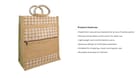
The bag is constructed from natural jute cloth — the same plant-based fibre that has been grown, processed, and woven across India for centuries. Jute is one of the strongest natural fibres available, with a load-bearing capacity that far exceeds what a daily-use bag requires. It is breathable, which prevents moisture from accumulating inside the bag around fresh produce or packed food. It is fully biodegradable and does not leave microplastic residue when it eventually wears out — which, with proper use, takes years.
The zipper is a cotton-lined chain runner — smooth in operation, secured at both ends, and reinforced at the attachment points where the fabric meets the zip tape. The handles are thick twisted rope in natural twine, looped over the top of the bag and stitched firmly into the sides. They are wide enough in diameter to sit comfortably in the hand when the bag is full without cutting into the palm.
The design
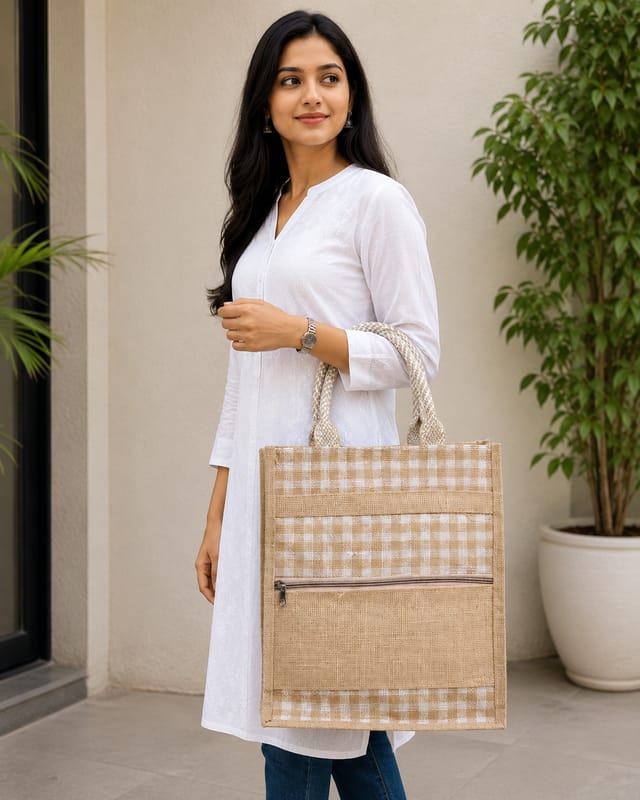
The bag's surface carries white gingham check bands woven or printed in horizontal rows across the top, centre, and lower sections of the jute body. The check breaks the natural tan of the jute without obscuring it — the result is a bag that looks considered and put-together rather than purely utilitarian. The pattern is subtle enough to work with everyday clothing without demanding attention.
The bag is structured — flat base, straight sides, and sufficient depth to carry grocery items, lunch containers, documents, or a combination of daily essentials. A front exterior zip pocket sits across the lower half of the front panel, offering secure access to frequently needed smaller items: a phone, keys, wallet, or transit pass, without needing to open the main compartment.
Where to use it
The most immediate use is the one it is clearly built for: daily shopping. Vegetable markets, grocery stores, weekend bazaars, and supermarket runs all demand a bag that can hold irregular shapes and varied weights without losing form. This bag does that. It also works as an everyday carry bag — to the office, to the market, to a family visit — where its structured shape keeps contents organised and its natural material ages well rather than degrading visibly.
For gifting, particularly at weddings, festivals, and corporate occasions, a well-made jute bag with a contained design is a practical and considered choice — one that the recipient will actually use rather than set aside.
Why jute outperforms the alternatives over time
Synthetic tote bags are cheaper to produce and initially appear comparable. Over months of daily use, however, synthetic handles stretch, printed designs crack and peel, and the material itself does not breathe. Jute becomes slightly softer with use while retaining its structural integrity. The rope handles of this bag are built to the same standard as the body — they will not fray or weaken at the attachment point under normal daily load. At 150 grams, the bag is light enough that its own weight does not add to the burden of carrying it when full.
Specifications
Material: Natural jute cloth, cotton-lined chain zipper
Handle: Twisted rope in natural twine
Design: White gingham check bands on natural jute base
Pocket: Front exterior zip pocket
Colours: Golden, Off White
Size: 50*32 cm
Net Weight: 150 g
Closure: Open top main compartment; front zip pocket
Suitable for: Daily shopping, office carry, travel, gifting
Care
Wipe clean with a damp cloth and mild soap for surface marks. Allow to air dry fully in shade before storing or reusing. Do not machine wash or soak — prolonged water exposure can weaken the jute fibres and affect the zip lining. Store in a dry place when not in use. Do not overload beyond reasonable daily use weight to preserve the handle stitching over time.
About the Entrepreneur
Dhanashri has been in the bag business for the past ten years, making jute and various other types of bags. Since this has been her business for many years, she used to receive offline orders, but after joining Mann Deshi her product went online and now she also receives online orders. Through Mann Deshi, her business has gained a new identity online.
| Country of origin | India |
|---|---|
| gender | female |
| brand | Dhanashree Fashion House |
| colour | #483131 |
| size | 50*32 cm |
| fabric | JUTE COLTH,CHAIN RANAR |
| colour name | #483131 |
| cancellable | yes |
| time to ship | 2 days |
| seller pickup return | yes |
| return window | 2 days |
| contact details consumer care | Vanita Shinde,[email protected],9607589078 |
| manufacturer or packer name | Dhanashree Fashion House |
| manufacturer or packer address | Manndeshi Foundation Keshavrao Patil Vyapar Sankul, Satara Jilha Madhyvarti Sahakari Grahak Sangh Ltd. Market yard Radhika Road Satara 415004 |
| common or generic name of commodity | Jute Bag |
| month year of manufacture packing import | 46143 |
| imported product country of origin | IN |
Other Products from seller Mann Deshi Udyojika Private Limited





Check Estimated Delivery Date

Sold By: Mann Deshi Udyojika Private Limited
Vendor Source:Mann Deshi Udyojika Private Limited