


 Contact Us
 Appliances
 Agri Inputs
 Auto Components & Accessories
 Beauty & Personal Care
 Electronics
 Fashion
 Grocery
 Gift Cards
 Home & kitchen
 Health & Wellness
 Vehicles & Automotives
 Books & Stationary
 Pet Care
 Toys & Games

The gudhi deserves to be dressed well On Gudhi Padwa morning, the bamboo pole goes up at the entrance before anything else — topped with a copper or silver kalash, strung with neem and flowers, and dressed in a length of bright fabric. This is the...
Read MorePopular Categories
Support
Language
Our apps
Key Attributes
| Country of origin | India |
|---|---|
| gender | female |
| brand | Sanskruti by Shital |
| colour | #66FF00 |
| size | 1meter |
The gudhi deserves to be dressed well
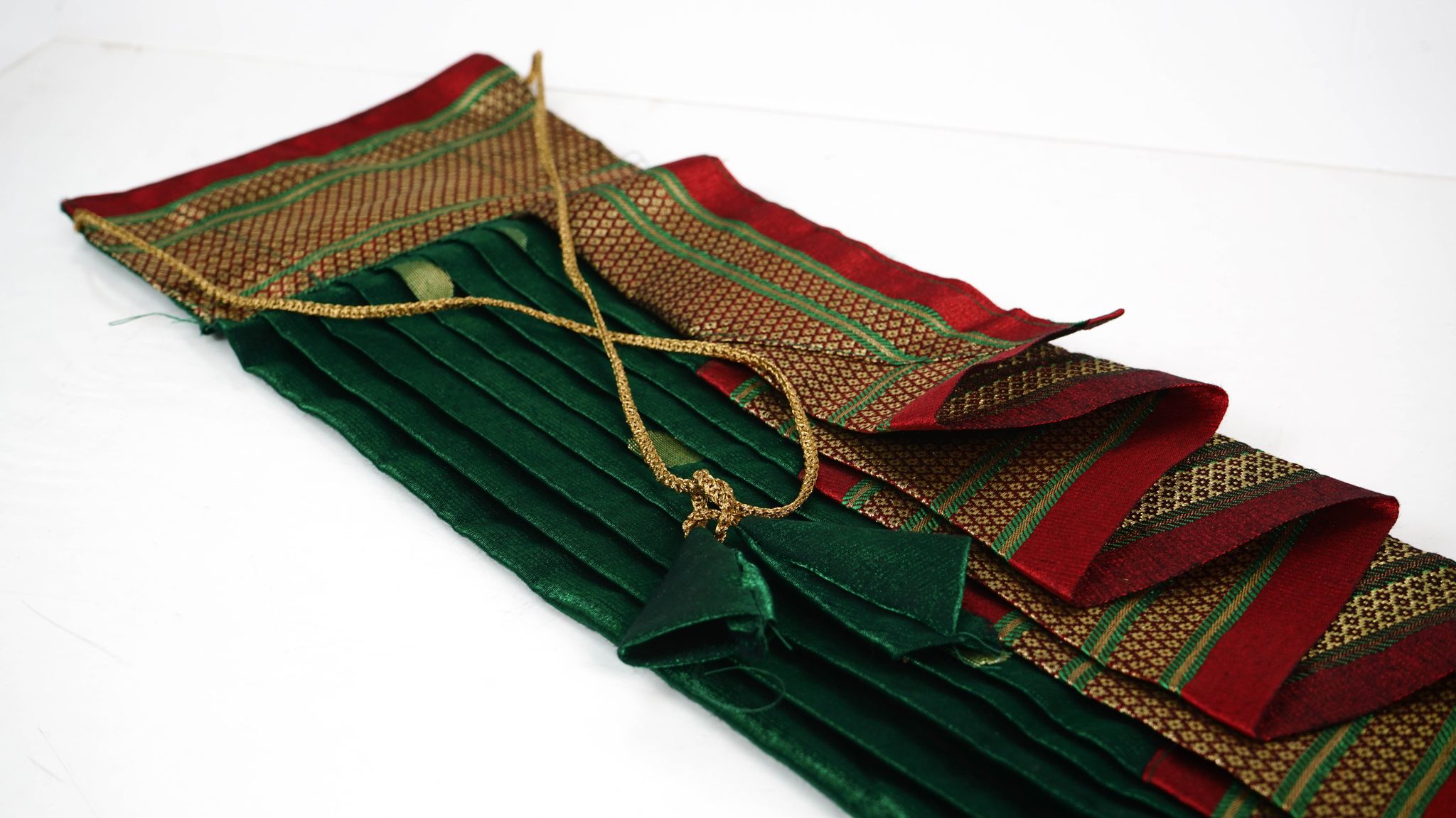
On Gudhi Padwa morning, the bamboo pole goes up at the entrance before anything else — topped with a copper or silver kalash, strung with neem and flowers, and dressed in a length of bright fabric. This is the gudhi, the centrepiece of the Maharashtrian new year, and in most homes it has been dressed in whatever saree or fabric was available — sometimes a repurposed old saree, sometimes a piece of bright cloth bought hurriedly the day before. Sanskruti by Shital's Gudhi Saree is made specifically for this purpose: a fabric piece designed in the right colours, the right border, and the right proportion to dress a gudhi pole properly, packed and ready to use each year without improvisation.
What it looks like
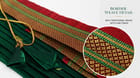
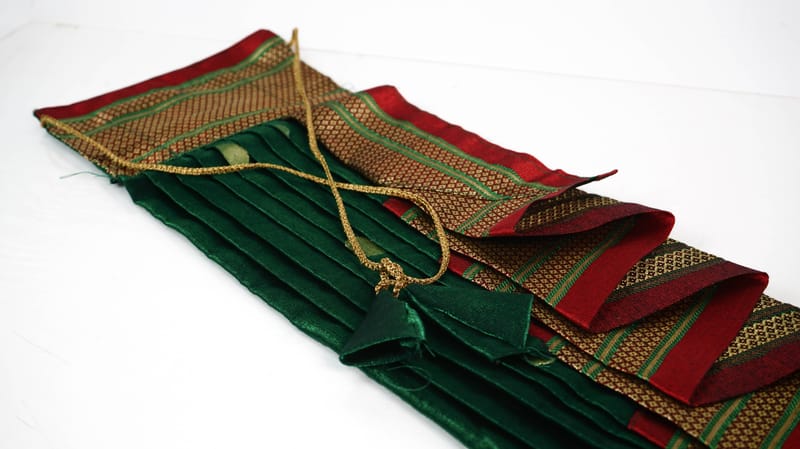
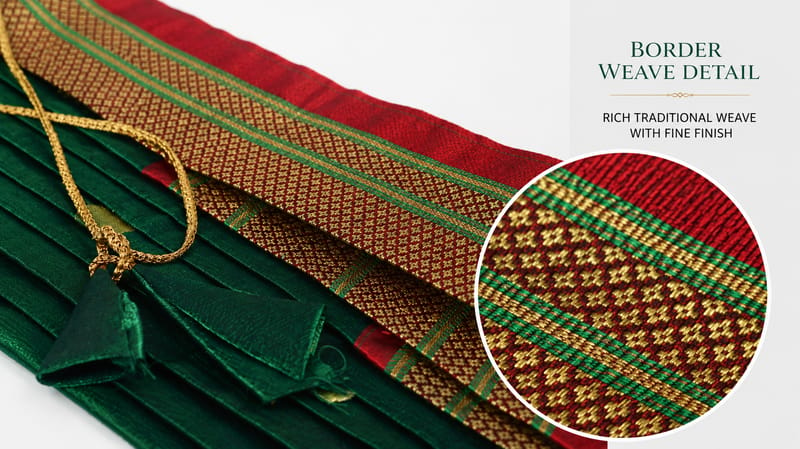
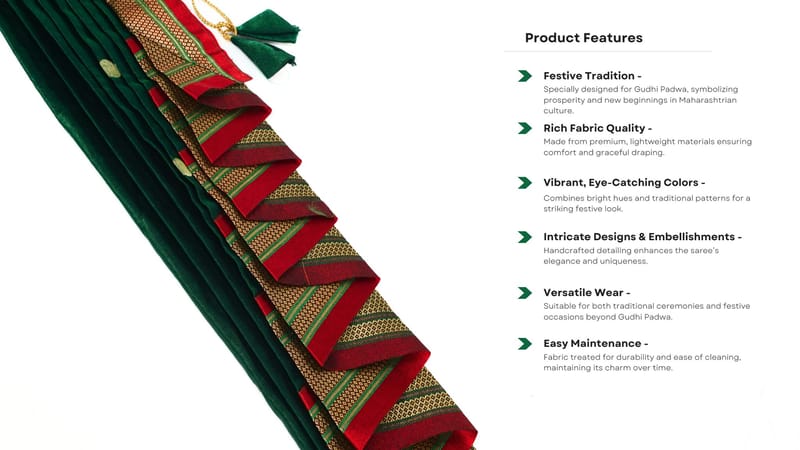
The gudhi saree is made in deep bottle green — the traditional auspicious colour associated with Gudhi Padwa and new beginnings in Maharashtrian culture. The border is woven in red and gold in a dense geometric zari pattern, running along the full length of the fabric. When pleated and draped over the bamboo pole in the way a gudhi is dressed, the border fans out visibly and the gold catches the morning light — the visual effect is exactly what a well-dressed gudhi is meant to achieve.
A gold tassel is attached at the top, adding the finishing detail that completes the look when the fabric is arranged around the kalash at the pole's head. The fabric is pre-pleated or easy to pleat, and the proportions are suited to standard gudhi pole lengths used in home settings.
How it is made
The gudhi saree is crafted by hand. The fabric is cut and finished to the correct dimensions for gudhi dressing, the zari border is woven into the fabric rather than stitched on separately, and the tassel is attached at the appropriate point. The construction uses a wooden stick and adhesive at key points to hold the pleated arrangement in place — making it easier to dress the gudhi neatly without requiring the skill of draping a full wearable saree.
This is a purpose-built object, not a repurposed piece of cloth. The difference shows in the proportions, the finishing, and the ease with which it can be arranged on the pole each year.
When and how to use it
On Gudhi Padwa, the bamboo pole is set up at the main entrance or on the balcony railing facing east. The gudhi saree is draped over the top portion of the pole, pleated into a fan shape with the zari border displayed outward, and the gold tassel placed at the very top alongside or below the inverted copper kalash. Neem leaves, marigold flowers, and sugar crystals are then added according to family tradition.
Because the saree is designed for this specific use and comes pre-assembled or easy to arrange, it takes significantly less time to set up than improvising with a repurposed garment — which matters on a morning when the gudhi is meant to be raised at sunrise.
After Gudhi Padwa, the fabric can be carefully folded and stored in its original pouch for use the following year. The quality of the fabric and border means it does not fade, fray, or lose its appearance through proper storage and annual reuse.
Why a purpose-made gudhi saree is worth having
Most households use a different saree each year, improvise with whatever fabric is bright enough, or dress the gudhi in a way that is functional but not particularly considered. A gudhi saree made specifically for this purpose — in the right colour, with the right border, finished for this one use — allows the gudhi to look the way it is meant to look, without effort or compromise. It also becomes a reusable household item that is brought out with the same intention each year, which is in keeping with how most festival objects are treated in Indian homes.
Specifications
Colour: Bottle green with red and gold zari border
Length: 1 metre
Embellishment: Gold tassel at top
Construction: Handcrafted; fabric, wooden stick, adhesive assembly
Net Weight: 200 g
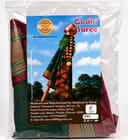
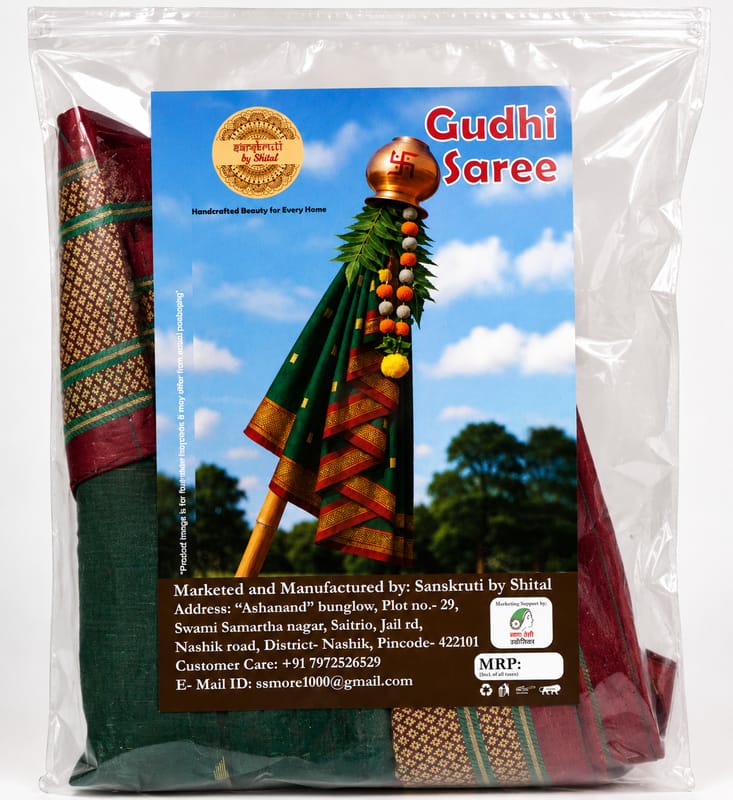
Packaging: Clear zipper pouch, reusable
Occasion: Gudhi Padwa; also suitable for other Maharashtrian festive arrangements
Reusable: Yes
Care
After use, gently remove the gudhi saree from the pole without pulling the zari border. Shake off any dried flowers or neem leaves carefully. Fold along the existing pleats and store flat in the original zipper pouch in a cool, dry place. Do not wash — spot clean with a dry cloth if needed. Store away from moisture and direct sunlight to preserve the colour and zari finish through multiple years of use.
About the Entrepreneur
Sheetal has been making Gudhi sarees for 3 years. There is a tradition of draping a saree on the Gudhi during Gudi Padwa festival, but many people do not know how to drape it. This inspired the business idea and she started this venture. She took digital training at Mann Deshi and spread her business to a large number of people.
| Country of origin | India |
|---|---|
| gender | female |
| brand | Sanskruti by Shital |
| colour | #66FF00 |
| size | 1meter |
| fabric | sarees,glue gun |
| colour name | #66FF00 |
| cancellable | yes |
| time to ship | 2 days |
| seller pickup return | yes |
| return window | 2 days |
| contact details consumer care | Vanita Shinde,[email protected],9607589078 |
| manufacturer or packer name | Sanskruti By Shital |
| manufacturer or packer address | Manndeshi Foundation. Shop no. 106, 107, Harivishva Appartment, Opposite Saint Philomena School, Jail road, Nashik Road, Nashik |
| common or generic name of commodity | Gudhi Saree |
| month year of manufacture packing import | 46143 |
| imported product country of origin | IN |
Other Products from seller Mann Deshi Udyojika Private Limited








Check Estimated Delivery Date

Sold By: Mann Deshi Udyojika Private Limited
Vendor Source:Mann Deshi Udyojika Private Limited