


 Contact Us
 Appliances
 Agri Inputs
 Auto Components & Accessories
 Beauty & Personal Care
 Electronics
 Fashion
 Grocery
 Gift Cards
 Home & kitchen
 Health & Wellness
 Vehicles & Automotives
 Books & Stationary
 Pet Care
 Toys & Games


For Varkari families across Maharashtra, Vitthal is not a distant deity. He is the one you address in the morning, the one whose name comes to mind during hardship, and the one whose idol stands at the centre of the home pooja — not pushed to a co...
Read MorePopular Categories
Support
Language
Our apps
Vitthal Rukmini Murti
For Varkari families across Maharashtra, Vitthal is not a distant deity. He is the one you address in the morning, the one whose name comes to mind during hardship, and the one whose idol stands at the centre of the home pooja — not pushed to a corner but given the main space, as a guest who is always present. The murti chosen for that space is not chosen casually. It carries the relationship.
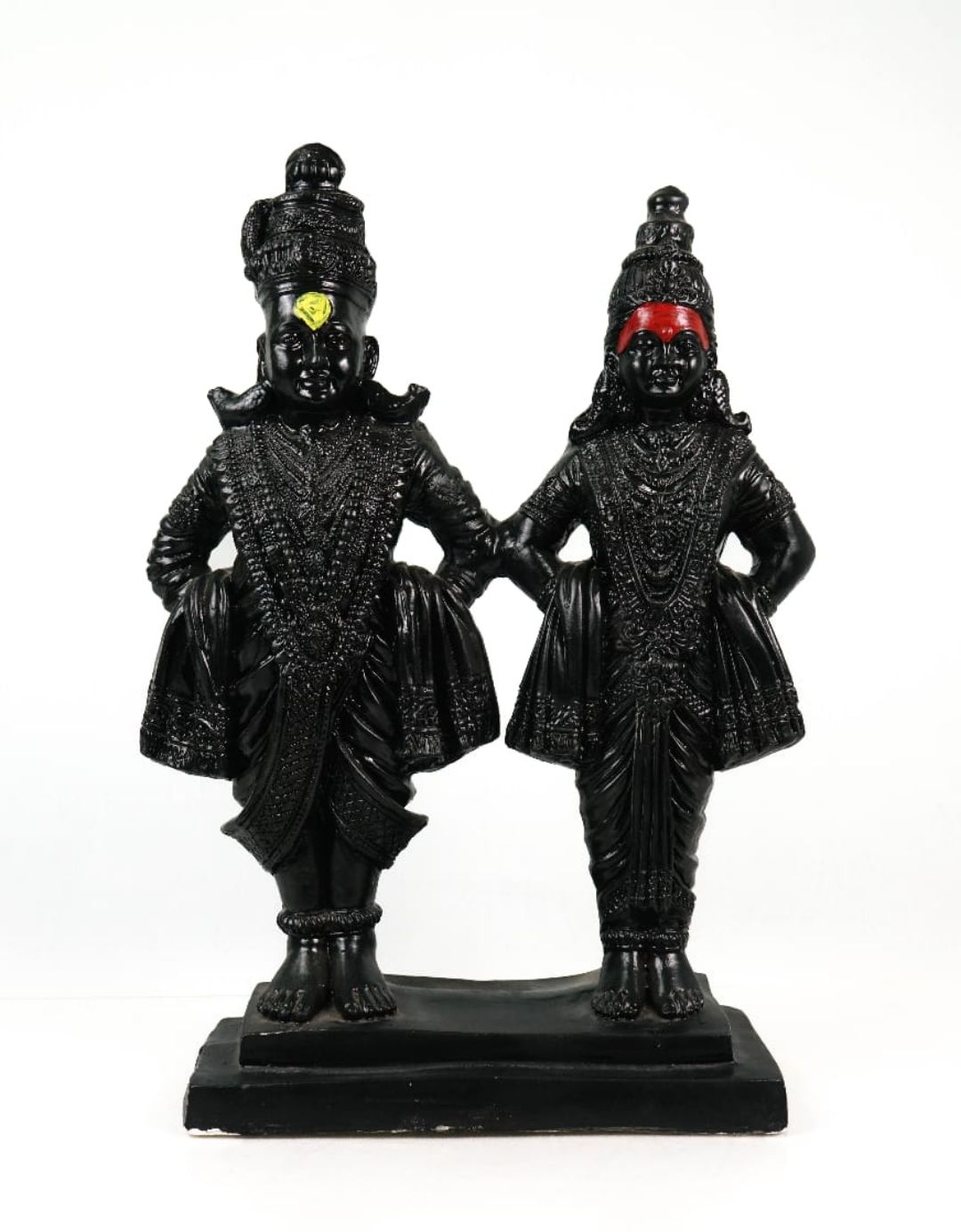
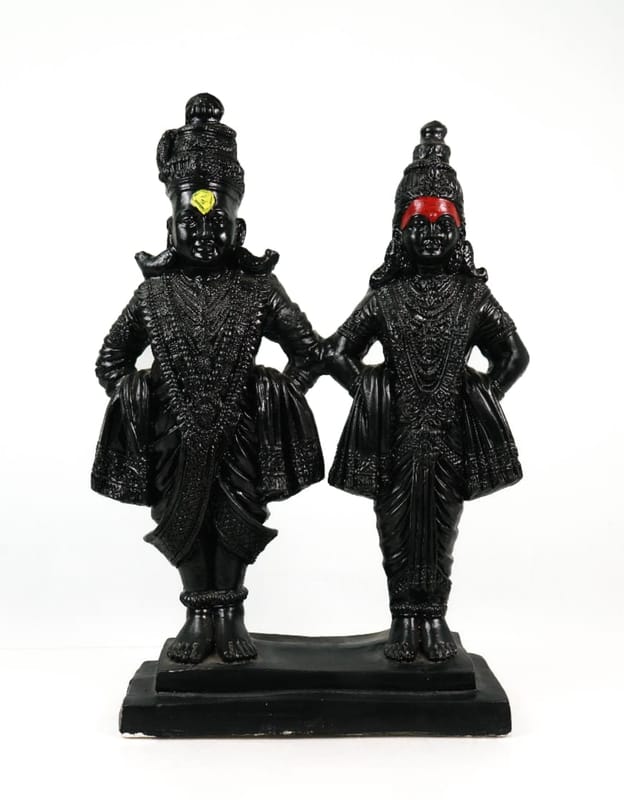
This Vitthal Rukmini Murti by Shree Ganesh Art is made for exactly that kind of daily, devoted use. Not a decorative object that sits behind glass, but a properly crafted devotional murti — substantial in weight, precise in its depiction of the divine couple, and finished with the deep matte black that is most closely associated with the Pandharpur form of Vitthal in Maharashtrian tradition.
Material and Making
The murti is made from Plaster of Paris — a material that has been used for devotional sculpture across India for generations. Mixed with water and binding gum, Plaster of Paris sets into a hard, smooth surface that accepts fine detail during moulding and holds it cleanly once set. The binding gum in the composition improves the structural integrity of the cast, reducing brittleness at fine points like the fingers, crown details, and ornamental edges.
Once set and dried, the surface is painted and finished with varnish — a coating that seals the colour, protects the surface from dust and handling, and gives the murti a consistent, even appearance. The deep matte black used here is not a base coat but the final finish, closely replicating the dark stone appearance of the original Vitthal idol at Pandharpur.
At 3 kilograms, the murti has real weight and presence. It does not shift or tip on a pooja shelf and does not feel lightweight or hollow when handled.
The Figures and Their Detail
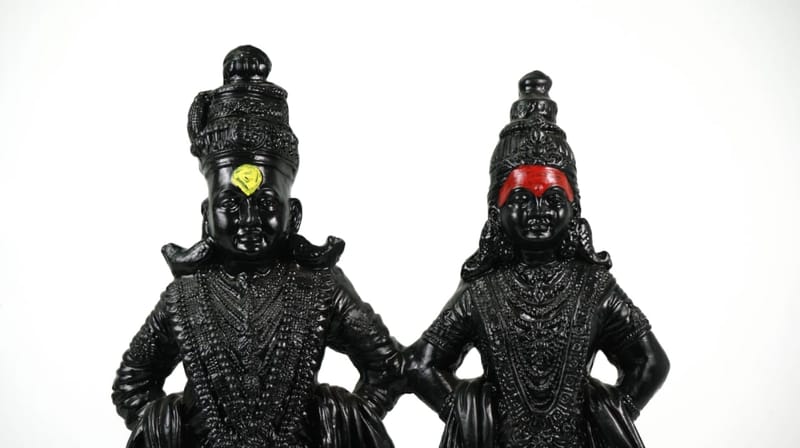
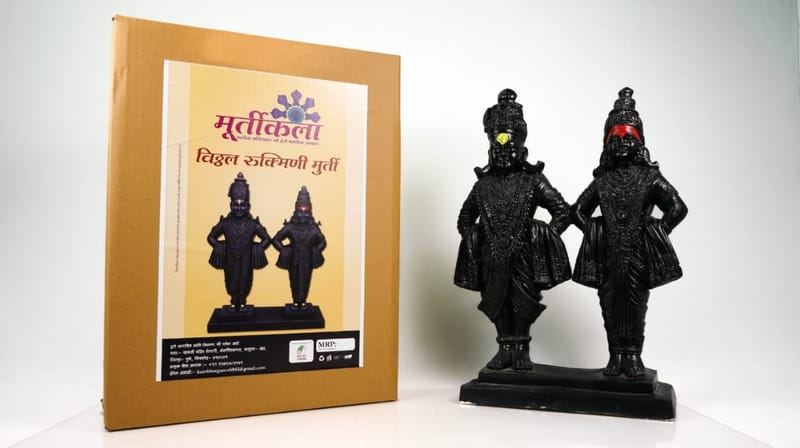
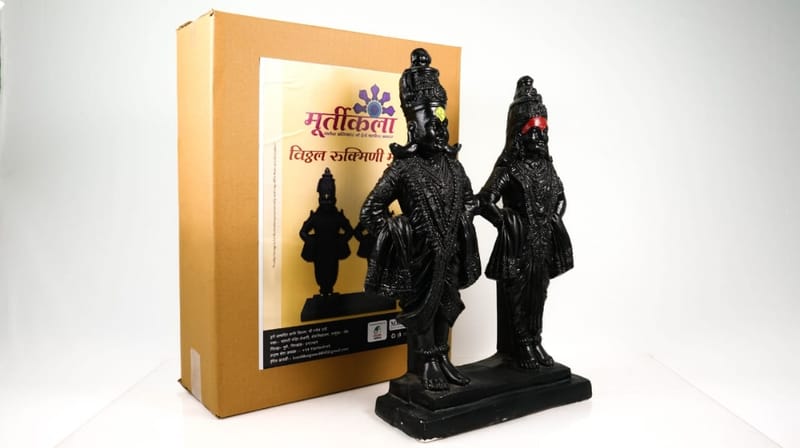
Vitthal stands in his characteristic Yogapeetham posture — both hands resting on the hips, feet together, facing forward with calm authority. The crown — a tall, tiered makuta — rises above the head with layered detail. The traditional vaijayanti mala rests on the chest, and the pitambar — the yellow garment — is suggested through the draping of the sculpted cloth at the legs. A yellow Sudarshana Chakra mark is painted on Vitthal's forehead, and a red kumkum mark on Rukmini's, the only colour on the murti's face that departs from the black finish.
Rukmini stands beside Vitthal in an equally composed posture — hands at the hips, head tilted very slightly, the ornaments and attire of a divine consort rendered in the same moulded detail as Vitthal's own. The crown, necklace, earrings, and draped garments are all present and proportionate.
Both figures share a single rectangular flat base, finished in the same black, which provides stability and defines the murti as a single unified piece rather than two separate figurines placed together.
Where It Belongs
This murti is appropriate for the home pooja room as the primary Vitthal–Rukmini representation, for Ashadhi and Kartiki Ekadashi setups when the murti is given a special place of honour, for new home installations during Griha Pravesh, and as a devotional gift for a newly married couple, a family member's new home, or any occasion where a meaningful, lasting gift is appropriate.
Its size — substantial but not oversized — makes it practical for most home mandir shelves and pooja cabinet spaces without requiring structural adjustment.
Specifications
Material: Plaster of Paris, water, binding gum
Surface finish: Matte black paint with varnish seal
Colour accents: Yellow chakra mark (Vitthal), red kumkum (Rukmini)
Figures: Vitthal and Rukmini in standing Yogapeetham posture
Base: Shared flat rectangular plinth, matte black finish
Size: 15" to 22"
Net Weight: 3 kg
Care
Wipe gently with a soft dry cloth to remove dust — do not use wet cloth or water directly on the surface, as sustained moisture can affect Plaster of Paris over time. Handle by the base rather than by the figures when moving. Keep away from direct water sources, open windows during rain, and areas of high humidity. If the varnish surface dulls over time, a thin coat of clear varnish applied carefully will restore the finish.
About the Entrepreneur
Vaishali Tai has been in the idol-making business for the past 20 years. Since it is her traditional family business, she learned this art from the elders in her home. After joining Mann Deshi, she received training in licensing, packaging and branding, and by getting to know other women in business, marketing her business has become easier.
| Country of origin | India |
|---|---|
| colour | #000000 |
| brand | Shree Ganesh Art |
| material | sand |
| colour name | Black |
| cancellable | yes |
| time to ship | 2 days |
| seller pickup return | yes |
| return window | 2 days |
| contact details consumer care | Vanita Sindhe,[email protected],9607589078 |
| manufacturer or packer name | Shree Ganesh Art |
| manufacturer or packer address | Manndeshi Foundation, Dhayri Jay Complex, Sr no10/1,2/2/2,Nr Kailsh Jeevan Factory, Benkar vasti rd,Dhayri 411041,Block-Dhayri District-pune,Maharashtra |
| common or generic name of commodity | Vitthal Rukmini Murti |
| month year of manufacture packing import | 2026-01-01 23:23 |
| imported product country of origin | IN |
Other Products from seller Mann Deshi Udyojika Private Limited
Check Estimated Delivery Date

Sold By: Mann Deshi Udyojika Private Limited
Vendor Source:Mann Deshi Udyojika Private Limited