

 Contact Us
 Appliances
 Agri Inputs
 Auto Components & Accessories
 Beauty & Personal Care
 Electronics
 Fashion
 Grocery
 Gift Cards
 Home & kitchen
 Health & Wellness
 Vehicles & Automotives
 Books & Stationary
 Pet Care
 Toys & Games
5 Best Multi Store Ecommerce Platforms in India
Multi store
Key Takeaways
- The best multi store ecommerce platforms offer centralised control while allowing individual stores to manage their own branding, pricing and operations.
- Fully managed multi store ecommerce ecosystems with built-in AI, payments, logistics and marketing can reduce dependence on multiple tools and vendors.
- Indian brands can use multi store ecommerce solutions to expand across B2B, D2C, franchise networks, regional stores and dealer-powered hyperlocal commerce.
- India-first capabilities like GST support, multilingual commerce, local logistics and ONDC network connectivity can make multi-store expansion easier.
For Indian brands planning a multi store ecommerce setup, whether it's opening stores across cities, managing multiple brands or bringing franchise and dealer networks online, finding the best multi store ecommerce platform isn't just about launching more websites. It's about keeping everything running smoothly as the business grows.
Think about it. A fashion brand with three labels may want each to have its own identity. A manufacturer selling to dealers and retail customers needs different pricing and buying journeys. A retail chain expanding into new cities needs local inventory, pricing and fulfilment, but hardly wants a separate team managing every store.
This is where choosing the right multi store ecommerce solutions matters. In 2027, brands need more than a common admin dashboard. They need AI-powered tools that take work off their teams, connected selling channels, built-in business services and the flexibility to adapt to India's diverse markets.
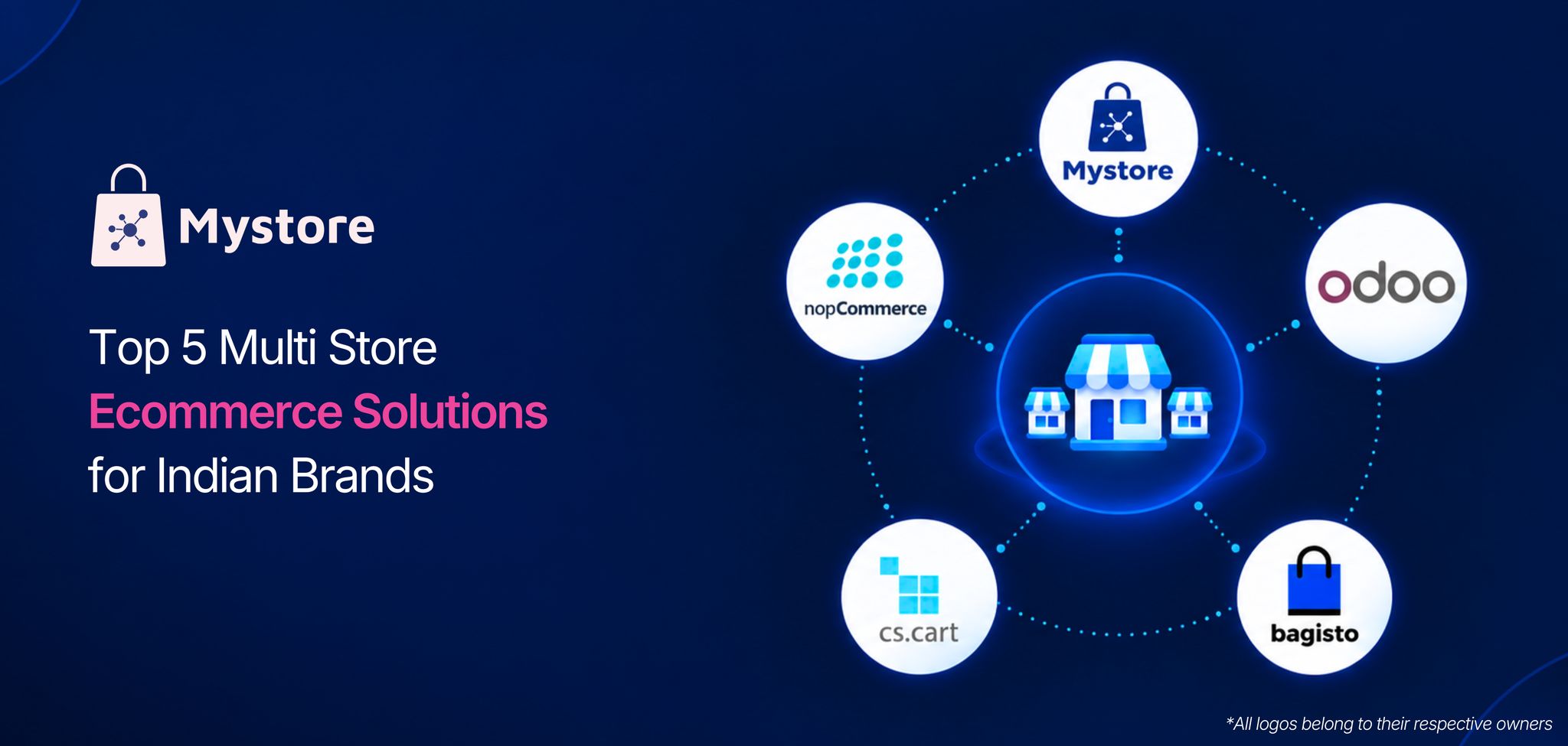
So, which platforms actually deliver? We compare five multi-store solutions for Indian brands, from fully hosted and managed multi store ecommerce ecosystems like Mystore®, designed to get businesses up and running faster, to other options like Odoo, nopCommerce, CS-Cart and Bagisto. We look at their features, pricing, AI capabilities and how well they meet the needs of Indian businesses.
Table of Contents
- A Quick Comparison Of 5 Best Multi Store Ecommerce Solutions in India (2027)
- 5 Best Multi Store Ecommerce Platforms in India (2027): Features, Pricing & Comparison
- 1. Mystore® – Best Fully Managed, AI-Powered Multi Store Ecommerce Ecosystem in India
- 2. Odoo – ERP-Integrated Multi Store Ecommerce
- 3. nopCommerce – Open-Source Multi Store Ecommerce
- 4. CS-Cart - Multi-Store Ecommerce for Brands and Marketplaces
- 5. Bagisto – Open-Source Multi Store Ecommerce for Custom Development
- How to Choose the Right Multi Store Ecommerce Platform in India
- Are Popular Global Ecommerce Platforms the Right Fit for Indian Brands?
- Conclusion
- Frequently Asked Questions About Multi Store Ecommerce Solutions
A Quick Comparison Of 5 Best Multi Store Ecommerce Solutions in India (2027)
The right multi store ecommerce platform should let businesses manage multiple storefronts from one backend while retaining control over individual brands, products, pricing and operations. However, not all platforms offer the same AI capabilities, integrated services or support for Indian business needs.
Here's a quick comparison of five solutions that help brands manage multiple ecommerce stores, with different levels of centralised control, automation and flexibility.

All five platforms can help you manage multiple storefronts, but the difference lies in how much work your team needs to put in to keep everything running. If you're planning to expand across brands, locations and sales channels, a fully managed multi store ecommerce ecosystem with built-in AI, integrated business services and connected operations could save you the effort of managing multiple tools, vendors and integrations.
5 Best Multi Store Ecommerce Platforms in India (2027): Features, Pricing & Comparison
Here's a closer look at what each multi store ecommerce platform offers, from native multi-store management and AI capabilities to integrated services and India-specific features. We've also covered pricing and ideal use cases to help you find the right fit for your business.
1. Mystore® – Best Fully Managed, AI-Powered Multi Store Ecommerce Ecosystem in India
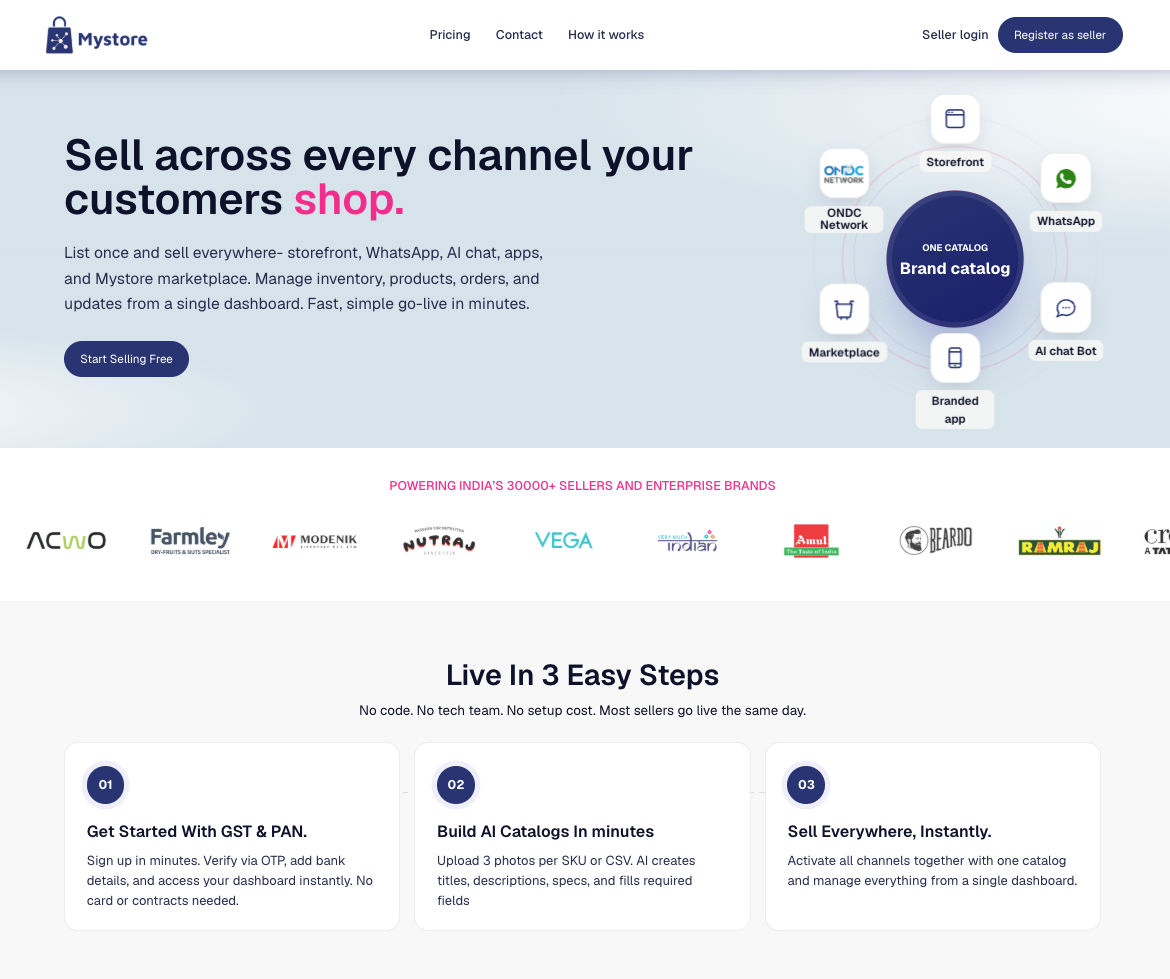 Mystore® is an India-first, fully managed multi store ecommerce ecosystem that helps brands, retailers and enterprises launch and manage multiple stores without juggling separate platforms, tools and service providers. Built on StoreHippo's AI-powered commerce core, Mystore brings native Multistore®, centralised operations, AI capabilities and integrated ecommerce services together in one platform.
Whether you're managing different brands, expanding through regional stores or running B2B and D2C businesses side by side, Mystore lets you keep operations connected while giving each store its own identity. With built-in omnichannel capabilities and ONDC Network connectivity, brands can also reach customers beyond their own websites.
Key Features
- Native Multistore®: Launch branded, regional and business-specific stores from one backend.
- Centralised Management: Control catalogues, inventory, orders, pricing and promotions through one admin.
- AI-Powered Commerce: AI-powered core with complete agentic commerce solutions including AI cataloguing, image editing, store building, search and recommendations, plus two AI superagents: Mitra, with specialised agents for seller operations, and Genie, with agents for shopping, discovery and customer support.
- Fully Managed Ecosystem: Integrated payments, shipping, marketing, GST workflows and order management. Seamless integrations with enterprise ERP, CRM, logistics, marketing nd other software.
- Omnichannel Selling: Sell through websites, WhatsApp, Android/iOS apps, marketplaces and AI shopping channels.
- Multiple Business Models: Run B2B, B2C, B2B2C and marketplace businesses from one platform.
- Multilingual Commerce: Create regional storefronts with language-specific shopping experiences.
- Hyperlocal Commerce: Set up location-based stores with PIN-code serviceability and dealer-led fulfilment.
- ONDC Network Connectivity: Reach buyers across participating ONDC Network buyer apps through built-in connectivity.
- Ease of Use: Launch and manage stores with low-code tools and fully managed infrastructure.
Best For: Indian brands, retailers and enterprises seeking a fully managed, AI-powered multi store ecommerce platform with connected operations and omnichannel selling.
Pricing: Freemium Starter plan, paid plans starting at ₹1,499/month, and Enterprise Multistore® plans starting at ₹22,499/month (billed annually).
2. Odoo – ERP-Integrated Multi Store Ecommerce
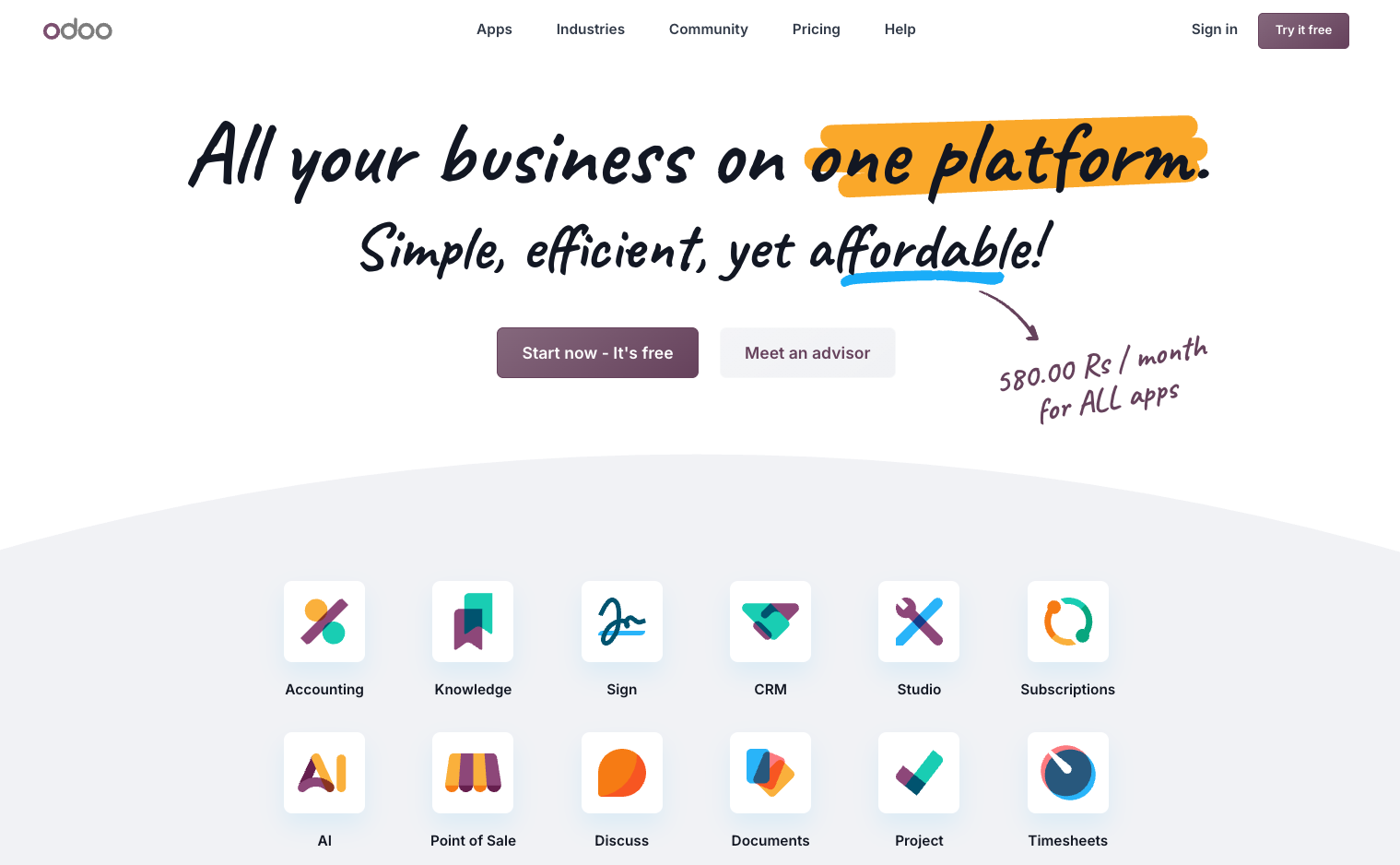 Odoo is an ERP-integrated multi store ecommerce software that lets businesses run multiple online stores from a shared database. It brings ecommerce, inventory, accounting, CRM and other business functions together, making it a practical choice for brands that want their online stores connected with everyday business operations.
With native multi-website capabilities, Odoo allows businesses to create separate storefronts while sharing operational data. However, setting up advanced workflows and India-specific integrations may require additional modules or technical configuration.
Key Features
- Native Multi-Store: Create multiple storefronts with separate domains, designs and store-specific settings.
- Centralised Management: Manage products, inventory, orders and customers through connected applications.
- AI Capabilities: AI-assisted website creation and business automation, with features varying by application.
- ERP-Integrated Ecosystem: Connect ecommerce with accounting, CRM, inventory and sales through integrated modules.
- Omnichannel Selling: Connect online stores with POS and other sales channels through integrations.
- Multiple Business Models: Support B2B and B2C selling with configurable pricing and customer access.
- Multilingual Commerce: Create regional storefronts with multiple languages, currencies and localised settings.
- Hyperlocal Commerce: Location-specific selling and fulfilment may require additional configuration or customisation.
- ONDC Network Connectivity: No confirmed native ONDC Network integration; third-party or custom integration may be needed.
- Ease of Use: Visual website builder, with technical expertise needed for advanced configurations.
Best For: Businesses seeking multi store ecommerce solutions with connected ERP, inventory, accounting and business operations.
Pricing: One App Free plan; Standard and Custom paid plans with per-user subscription pricing.
3. nopCommerce – Open-Source Multi Store Ecommerce
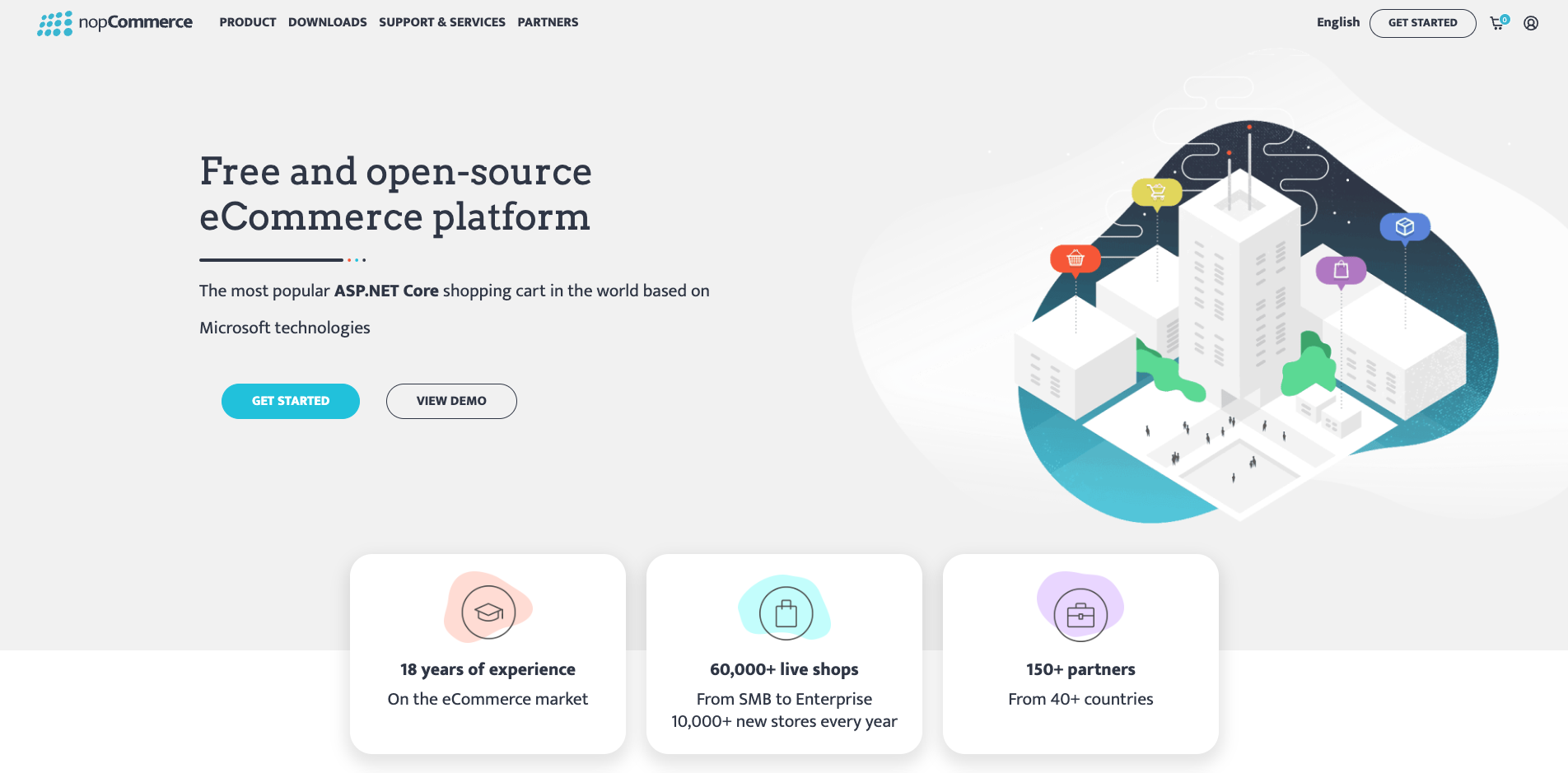 nopCommerce is an open-source multi store ecommerce platform built on ASP.NET Core that gives businesses control over their storefronts, hosting and customisation. Its native multi-store functionality lets brands run multiple websites with separate domains, designs and store-specific settings from one installation.
With built-in commerce features and a wide range of plugins, nopCommerce offers flexibility for businesses with specific technical requirements. However, adding advanced AI, omnichannel capabilities and India-specific integrations may involve additional development and ongoing maintenance.
Key Features
- Native Multi-Store: Run multiple branded storefronts with separate domains and themes from one installation.
- Centralised Management: Manage products, catalogues, orders and store settings through one admin.
- AI Capabilities: Add AI-powered search, content generation and shopping assistants through plugins or custom integrations.
- Ecommerce Ecosystem: Built-in commerce tools with additional payments, shipping and marketing services through plugins.
- Omnichannel Selling: Connect mobile apps, marketplaces and other channels through third-party integrations.
- Multiple Business Models: Support B2B, B2C, multi-vendor marketplaces and dropshipping.
- Multilingual Commerce: Configure multiple languages, currencies and regional storefront settings.
- Hyperlocal Commerce: Location-based selling and fulfilment may require plugins or custom development.
- ONDC Network Connectivity: No confirmed native ONDC Network integration; custom connectivity may be required.
- Ease of Use: Centralised admin, with technical expertise needed for hosting, setup and advanced customisation.
Best For: Businesses with development resources seeking flexible, open-source multi store ecommerce solutions and greater control over their technology setup.
Pricing: Free open-source platform; hosting, premium plugins, custom development and support cost extra.
4. CS-Cart - Multi-Store Ecommerce for Brands and Marketplaces
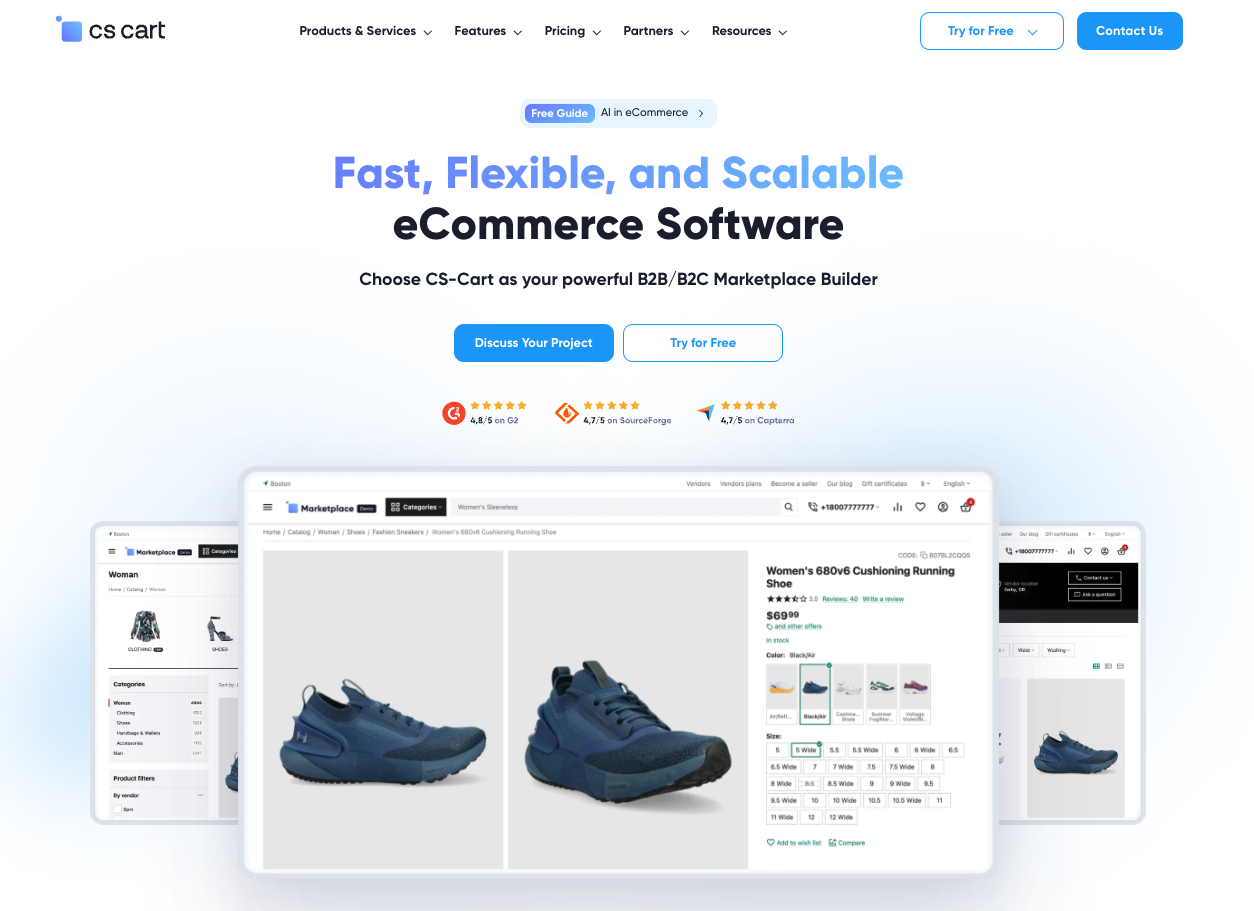 CS-Cart is a multi store ecommerce platform that supports businesses managing multiple brands, storefronts and online marketplaces. Its native multi-store functionality, available in supported editions, allows businesses to create separate storefronts with individual domains, catalogues, pricing and designs while managing them from a central admin.
With flexible storefront configurations and marketplace capabilities, CS-Cart can support expansion across brands, product categories and regional markets. However, advanced AI tools, India-specific integrations and specialised fulfilment workflows may require additional add-ons or customisation.
Key Features
- Native Multi-Store: Create branded or regional storefronts with separate domains and designs in supported editions.
- Centralised Management: Manage products, catalogues, pricing and storefront settings through one admin.
- AI Capabilities: Extend AI-powered content creation, search and automation through available add-ons and integrations.
- Ecommerce Ecosystem: Connect payments, shipping, marketing and business tools through add-ons and integrations.
- Omnichannel Selling: Connect mobile apps and external sales channels through integrations.
- Multiple Business Models: Support B2C, multi-brand commerce and multi-vendor marketplaces, depending on edition.
- Multilingual Commerce: Configure languages, currencies and regional settings for different storefronts.
- Hyperlocal Commerce: Regional fulfilment and advanced location-based routing may require customisation.
- ONDC Network Connectivity: No confirmed native ONDC Network integration; third-party or custom connectivity may be needed.
- Ease of Use: Built-in admin and storefront editors, with technical expertise needed for hosting and advanced customisation.
Best For: Multi-brand retailers and marketplace businesses seeking customisable multi store ecommerce solutions with centralised storefront management.
Pricing: Store Builder Plus starts at $1,490 one-time; multi-store-enabled Ultimate starts at $3,590 one-time. Hosting and additional services may cost extra.
5. Bagisto – Open-Source Multi Store Ecommerce for Custom Development
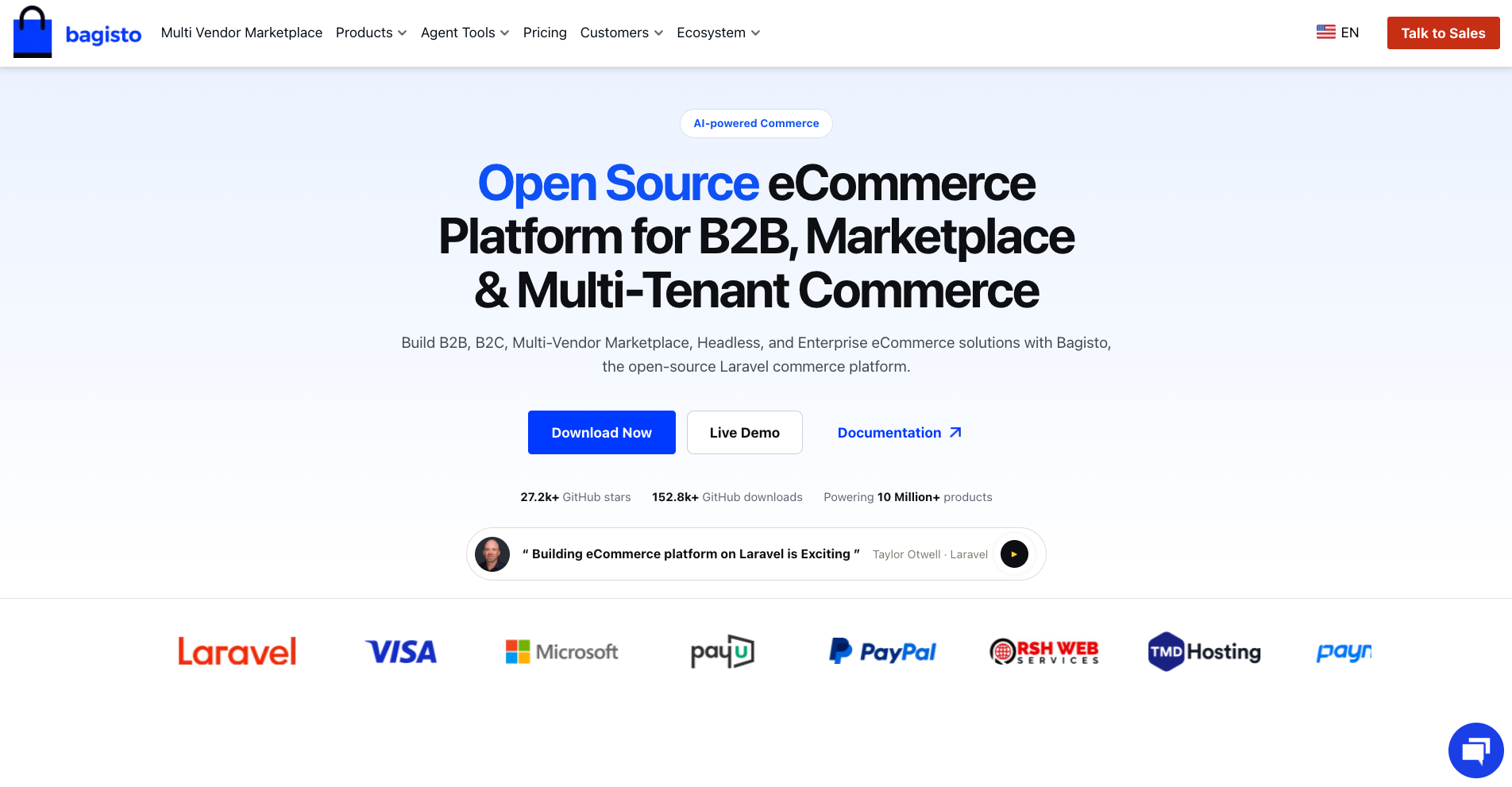 Bagisto is an open-source multi store ecommerce platform built on Laravel that lets businesses build and manage multiple online stores with greater control over their ecommerce setup. Its native multi-channel architecture supports separate storefronts with individual domains, themes, catalogues and regional settings, all managed from one backend.
Bagisto also offers AI-powered tools and extensions to add new capabilities as business needs grow. It's a practical option for brands with in-house developers or technical partners, although advanced features, India-specific integrations and ongoing maintenance may require additional investment.
Key Features
- Native Multi-Store: Create storefronts with separate domains, themes and catalogues from one backend.
- Centralised Management: Manage products, inventory, orders, customers and store settings through one admin.
- AI Capabilities: Magic AI supports content generation and translations, with additional AI tools and integrations available.
- Ecommerce Ecosystem: Connect payments, shipping, marketing and business tools through built-in features and extensions.
- Omnichannel Selling: Extend to mobile apps, marketplaces and other channels through integrations.
- Multiple Business Models: Support B2C, B2B and multi-vendor marketplaces, with specialised features available through extensions.
- Multilingual Commerce: Configure multiple languages, currencies and regional settings for individual storefronts.
- Hyperlocal Commerce: Manage inventory across locations; advanced location-based selling may require customisation.
- ONDC Network Connectivity: No confirmed native ONDC Network integration; third-party or custom connectivity may be needed.
- Ease of Use: Centralised admin, with development expertise needed for hosting and advanced customisation.
Best For: Businesses with development resources looking for open-source multi store ecommerce solutions with flexible storefront customisation and integrations.
Pricing: Free open-source platform; additional costs for hosting, premium extensions, custom development and maintenance.
How to Choose the Right Multi Store Ecommerce Platform in India
Adding another online store should bring more business, not more work. But as brands grow, keeping products, inventory, orders and customer experiences connected across stores can become a challenge.
When comparing multi store ecommerce solutions, look beyond the number of stores you can launch. Here's what really matters as your business expands.
1. Balance Centralised Control With Store-Level Flexibility
Managing multiple stores shouldn't mean managing everything separately. Choose a platform that lets you control catalogues, inventory and orders centrally while allowing each store to have its own branding, pricing, promotions and customer experience.
2. Look for Built-In Services, Not Just Features
Why manage separate tools for payments, shipping, marketing and tax compliance when these can work together? A fully managed multi store ecommerce ecosystem can reduce your dependence on plugins, vendors and multiple integrations.
3. Choose a Platform That Supports Different Business Models
Your next store could be a wholesale portal, a D2C brand or a regional dealer store. Look for built-in support for B2B, B2C, B2B2C and hyperlocal commerce so you can expand without changing platforms.
4. Check How AI Can Make Everyday Work Easier
Managing more stores shouldn't mean hiring more people for repetitive tasks. Look for an AI powered multistore set up with automated cataloguing, image editing, intelligent search, recommendations and AI agents that help sellers and shoppers.
5. Think Beyond Your Online Stores
Customers shop through websites, WhatsApp, mobile apps, marketplaces and increasingly, AI shopping channels. Choose a platform that helps you sell across these channels while keeping operations connected. For Indian brands, built-in ONDC Network connectivity can be an added advantage.
6. Consider the Total Cost of Running Multiple Stores
Look beyond subscription fees. Hosting, maintenance, plugins, integrations and technical support can increase costs as you expand. A fully managed platform can help reduce the effort of maintaining your ecommerce infrastructure.
The bottom line: The right multi store ecommerce platform should make it easier to launch new stores, enter new markets and explore new business models without adding unnecessary costs or operational work.
Are Popular Global Ecommerce Platforms the Right Fit for Indian Brands?
Shopify, Magento (Adobe Commerce) and BigCommerce also offer multi store capabilities. But for Indian brands, running multiple stores involves more than launching websites. Local payments, GST compliance, regional languages, logistics, dealer networks and ONDC Network connectivity can all add to the technology and operational requirements.
So, here are a few things Indian businesses should evaluate before choosing these platforms?
Shopify: Easy to Start, But Multi-Store Management Can Add Up
Shopify offers ease of use and extensive app ecosystem. However, managing multiple brands and stores can introduce additional costs and dependencies.
- Separate Store Operations: Shopify Plus expansion stores don't automatically share products, inventory or settings.
- India Payment Limitations: Shopify Payments isn't available in India, requiring third-party payment gateways.
- Additional App Dependencies: GST workflows, ONDC Network connectivity and specialised fulfilment may need external integrations.
- Multi-Brand Costs: Stores that don't qualify as Shopify Plus expansion stores may require separate subscriptions.
Magento (Adobe Commerce): Flexible, but Technically Demanding
Adobe Commerce supports multiple stores and offers customisation options. However, setting up and managing these stores can require considerable technical expertise and ongoing maintenance.
- Technical Setup: Multi-store deployment and configuration can require experienced developers.
- Ongoing Maintenance: Updates, security and performance optimisation add to technical responsibilities, depending on deployment.
- India-Specific Integrations: Local payments, GST workflows, logistics and ONDC Network connectivity may require extensions or custom development.
- Scaling Considerations: More stores and larger catalogues can increase indexing and performance-management requirements.
BigCommerce: Native Multi-Storefront With Additional Costs
BigCommerce offers multiple storefronts from one dashboard. However, Indian brands should assess the additional costs and services needed to support their local operations.
- Additional Storefront Charges: Extra storefronts have plan-dependent fees and limits.
- Local Commerce Requirements: GST workflows, ONDC Network connectivity and regional logistics may require additional integrations.
- Hyperlocal Operations: Dealer-led fulfilment and location-specific routing may need customisation.
- App Compatibility: Some third-party applications need additional configuration across storefronts.
Key Takeaway
These platforms offer multi-store capabilities, but Indian brands need more than features built for global markets. Local payments, GST workflows, regional languages, logistics and ONDC Network connectivity shouldn't mean adding more apps and integrations at every step.
An India-first, fully managed multi store ecommerce ecosystem brings these services together with built-in AI and centralised operations, helping brands expand across stores, cities and sales channels without the added work of managing multiple vendors.
Conclusion
The right multi store ecommerce solution should help your business grow without adding more work with every new store. Look for a platform that keeps operations connected while giving each store the flexibility it needs.
For Indian brands with established dealer networks, franchises or stores across multiple locations, going online also opens up opportunities for hyperlocal commerce, regional storefronts and dealer-powered fulfilment. A fully managed multi store ecommerce ecosystem with built-in AI and integrated services can make this expansion easier without adding technical overhead.
Ready to take your multi-store business online?Book a demo with Mystore® to explore new opportunities for your enterprise.
Frequently Asked Questions About Multi Store Ecommerce Solutions
1. How long does it take to launch a multi store ecommerce business in India?
The time needed to launch a multi store ecommerce business depends on the platform, number of stores and customisation required. Fully managed platforms can help businesses get started faster. With Mystore®, sellers can register in minutes and use AI-powered tools to create product catalogues. Advanced multi-store setups involving dealers, franchises or custom workflows may take longer.
2. What are the benefits of connecting your online stores to the ONDC network?
Connecting to the ONDC Network can help Indian brands reach buyers beyond their own websites through participating buyer apps. It opens up additional opportunities for product discovery without building a separate presence on every channel. Platforms like Mystore® offer built-in ONDC Network connectivity, making it easier for eligible sellers to expand their reach alongside their existing online stores.
3. Can Indian brands bring their existing dealers and franchise stores online?
Yes. Brands with established dealer, distributor or franchise networks can use multi store ecommerce solutions to create dedicated online storefronts for different locations or partners. With centralised catalogues, store-specific pricing and local fulfilment, businesses can bring their existing network online while retaining control over branding, products and operations.
4. Can I launch location-based ecommerce stores without maintaining separate websites?
Yes. A multi store ecommerce platform with location-based storefront capabilities can help businesses serve different cities or regions from one backend. Customers can be directed to relevant stores based on their location, with local product availability, pricing and fulfilment options. This is particularly useful for retail chains, franchise businesses and brands exploring hyperlocal commerce.
5. How can AI help businesses manage multiple ecommerce stores?
AI can simplify catalogue creation, image editing, product discovery and customer support across stores. An AI powered multistore set up can also use custom agents to assist sellers with onboarding, marketing, analytics and shipping while helping shoppers find products, get recommendations and complete buying journeys.
6. Can one multi-store ecommerce platform support B2B, D2C and hyperlocal commerce?
Yes. A flexible multi store ecommerce platform can support B2B wholesale portals, D2C stores, dealer networks and hyperlocal commerce from a shared backend. Businesses can offer different pricing, catalogues, buying journeys and fulfilment options for each model, depending on the platform's capabilities. Mystore® offers support for multiple business models
7. How much does a multi store ecommerce platform cost in India?
The cost of multi store ecommerce software in India depends on the number of stores, hosting, features and integrations. Open-source platforms may be free initially but involve development and maintenance costs. Fully managed platforms typically charge subscription fees. Compare the total cost, including additional storefronts, integrations, support and transaction charges, before choosing.