


 Contact Us
 Appliances
 Agri Inputs
 Auto Components & Accessories
 Beauty & Personal Care
 Electronics
 Fashion
 Grocery
 Gift Cards
 Home & kitchen
 Health & Wellness
 Vehicles & Automotives
 Books & Stationary
 Pet Care
 Toys & Games
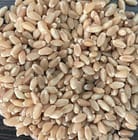
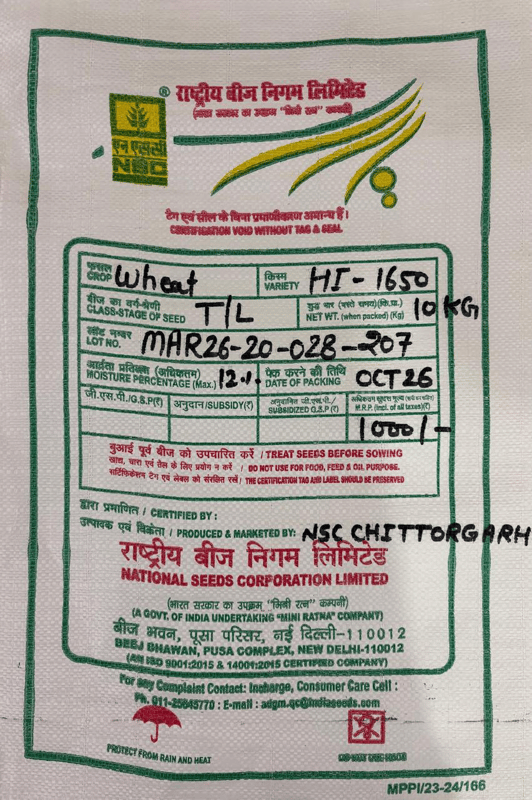
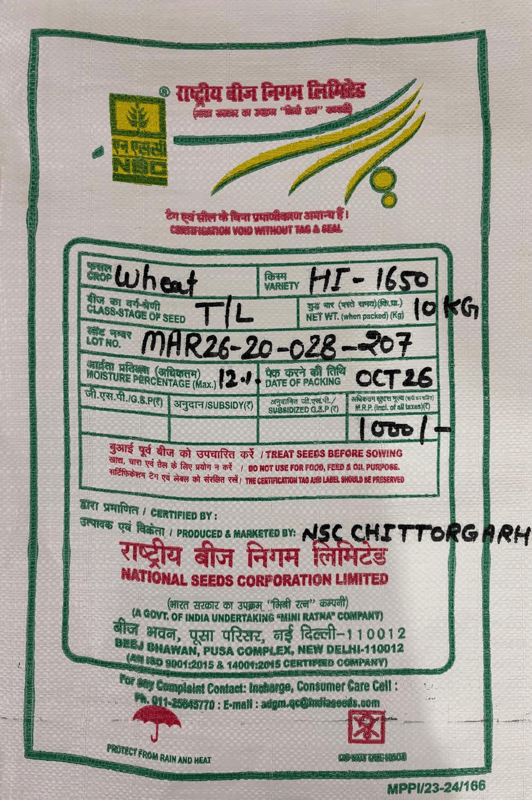
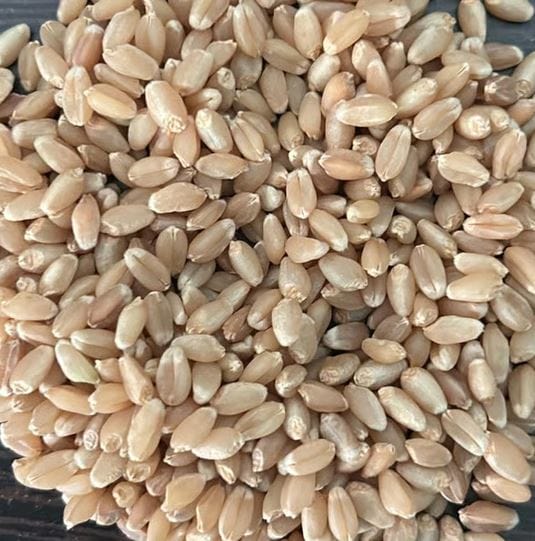
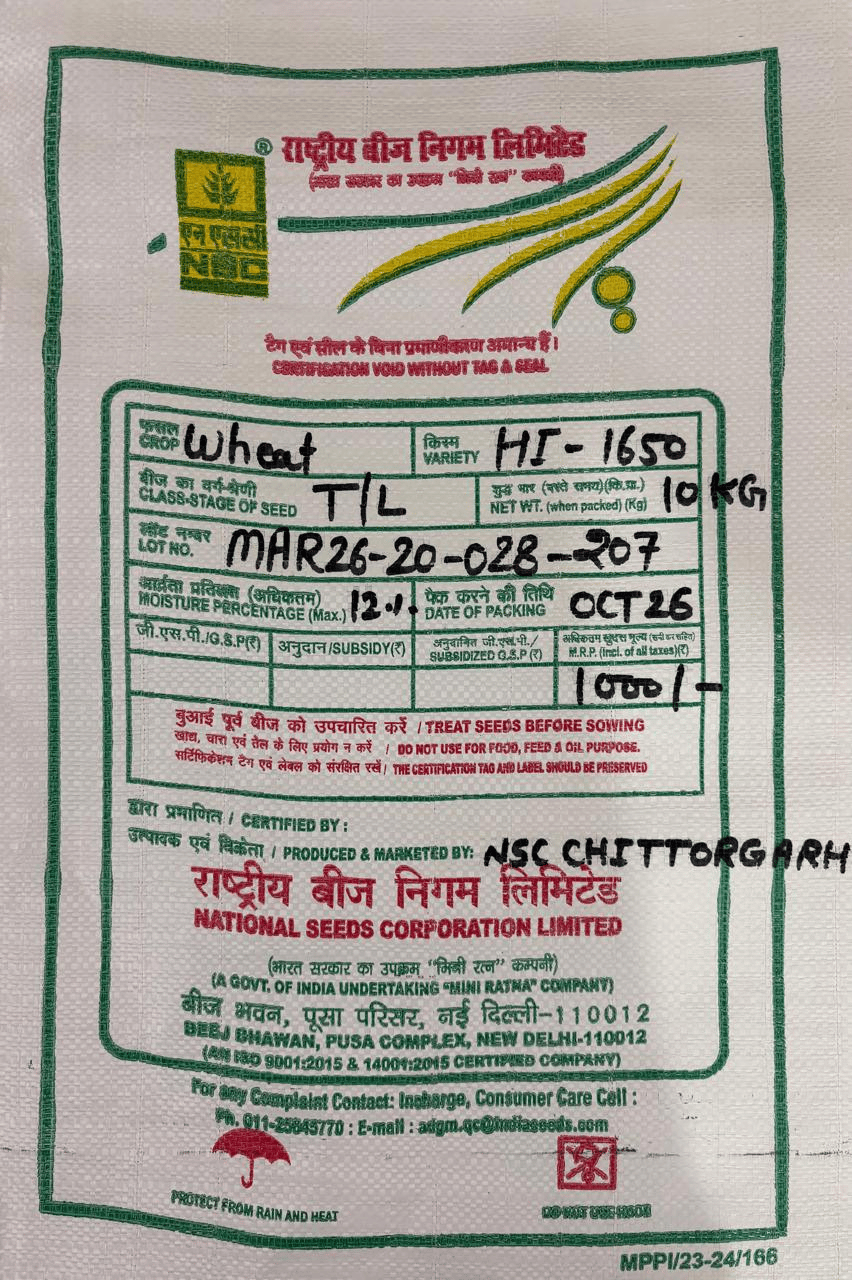
- HI 1650 (also widely known as Pusa Ojaswi) is an advanced, high-yielding, biofortified bread wheat variety developed by the ICAR-IARI Regional Station, Indore. Officially notified in 2023, it has quickly gained widesprea...
Popular Categories
Support
Language
Our apps
Nsc Wheat Variety Hi-1650 T/l 10kg Packing
Key Attributes
| Country of origin | India |
|---|---|
| Brand | ''NSC'' |
| Net Quantity | 10 kilogram |
| Manufacturer or packer name | NSC-Chittorgarh |
- HI 1650 (also widely known as Pusa Ojaswi) is an advanced, high-yielding, biofortified bread wheat variety developed by the ICAR-IARI Regional Station, Indore. Officially notified in 2023, it has quickly gained widespread popularity among farmers looking for a high-performing crop that balances strong yields with minimal resource costs.
Key Agronomic Characteristics
- Crop Duration: It is an early-to-medium maturing variety, typically taking 115 to 120 days to completely mature.
- Plant Height: It grows to a medium height of 89 to 95 cm. Its thick, sturdy stems give it strong lodging resistance, meaning the crop will not fall over easily during heavy winds or late-season rainfall.
- Water & Irrigation Requirement: It is specifically engineered to perform remarkably under timely sown and restricted irrigation conditions
Typically requiring only 3 to 4 irrigations.
Yield Potential
- Average Yield: Around 57.2 quintals per hectare (approx. 23 quintals per acre) under normal field management.
- Maximum Yield Potential: It can touch up to 73.8 quintals per hectare (approx. 30 to 33 quintals per acre) when given optimal fertilizer application, technical management, and highly fertile black cotton soils.
Nutritional Value & Grain Quality
- Biofortification: This variety is rich in vital micronutrients, containing elevated levels of Zinc (42.7 ppm) and Iron (39.5 ppm).
- Grain Quality: The grains are bold, hard, heavy, and amber-coloured with a distinct natural lustre, ensuring they fetch excellent market rates.
- Culinary Use: It has high protein content (around 11.4% to 11.8%) and a top-tier chapati score, making it exceptional for making soft rotis, breads, and biscuits.
Disease Resistance
- HI 1650 provides built-in insurance against major diseases. It boasts a high degree of resistance to Brown (Leaf) Rust and Black (Stem) Rust, while also showing good tolerance to Karnal Bunt and Powdery Mildew.
Recommended Regions & Sowing Window
- Sowing Time: The ideal sowing period is between 1st November and 25th November.
- Geographical Area: It is primarily recommended for cultivation across India's Central Zone, including Madhya Pradesh, Chhattisgarh, Gujarat, the Jhansi division of Uttar Pradesh, and the Kota & Udaipur divisions of Rajasthan.
| Country of origin | India |
|---|---|
| Brand | ''NSC'' |
| Common name | Seed |
| Net Quantity | 10 kilogram |
| Batch number | MAR26-20-028-207 |
| Expiry Date | 07/06/2026 |
| Package Dimension | 60L x 40W x 20H cm |
| Manufacturer or packer name | NSC-Chittorgarh |
| Manufacturer or packer address | SAHANWA ROAD DIAMOND CROSSING CHITTOARGARH |
| Manufacturing Date | 10/26 |
| contact details consumer care | NSC-Chittorgarh, [email protected] |
Other Products from seller NSC-Chittorgarh
₹200₹224 ( 11% OFF )
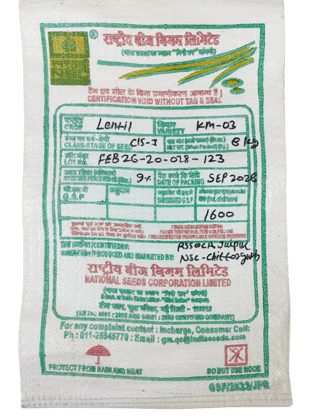
₹1,040₹1,200 ( 13% OFF )
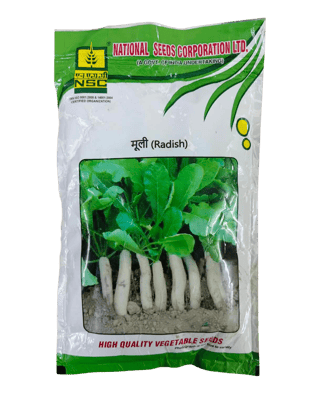
₹150₹175 ( 14% OFF )
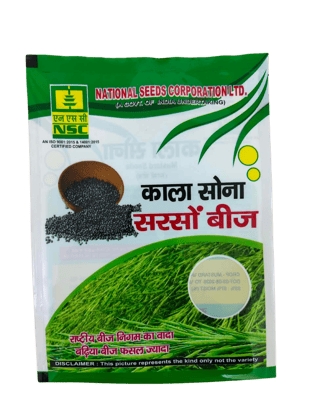

₹300₹400 ( 25% OFF )
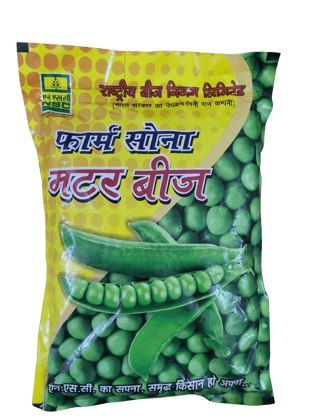
₹290₹300 ( 3% OFF )
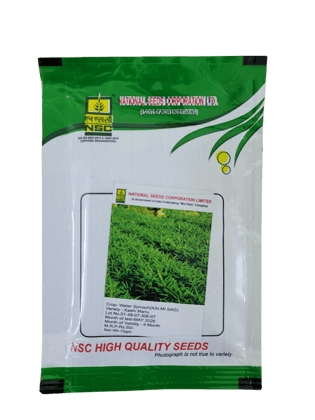
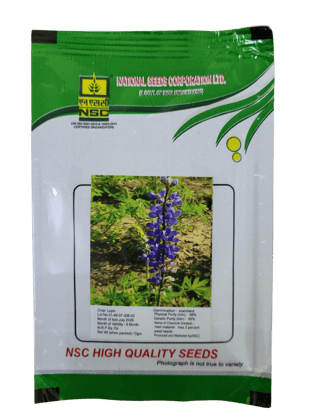
₹65₹70 ( 7% OFF )
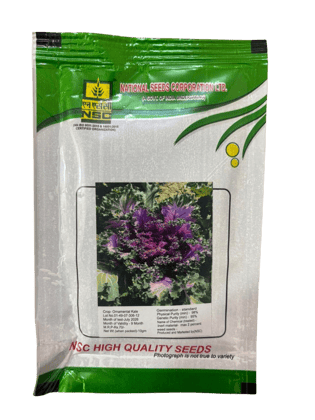
₹60₹70 ( 14% OFF )
₹150₹160 ( 6% OFF )
₹60₹70 ( 14% OFF )
₹90₹100 ( 10% OFF )
₹330₹347 ( 5% OFF )
