


 Contact Us
 Appliances
 Agri Inputs
 Auto Components & Accessories
 Beauty & Personal Care
 Electronics
 Fashion
 Grocery
 Gift Cards
 Home & kitchen
 Health & Wellness
 Vehicles & Automotives
 Books & Stationary
 Pet Care
 Toys & Games
Why WhatsApp Integration is Crucial to Enterprise Omnichannel Commerce Success
ONDC Network for Enterprises
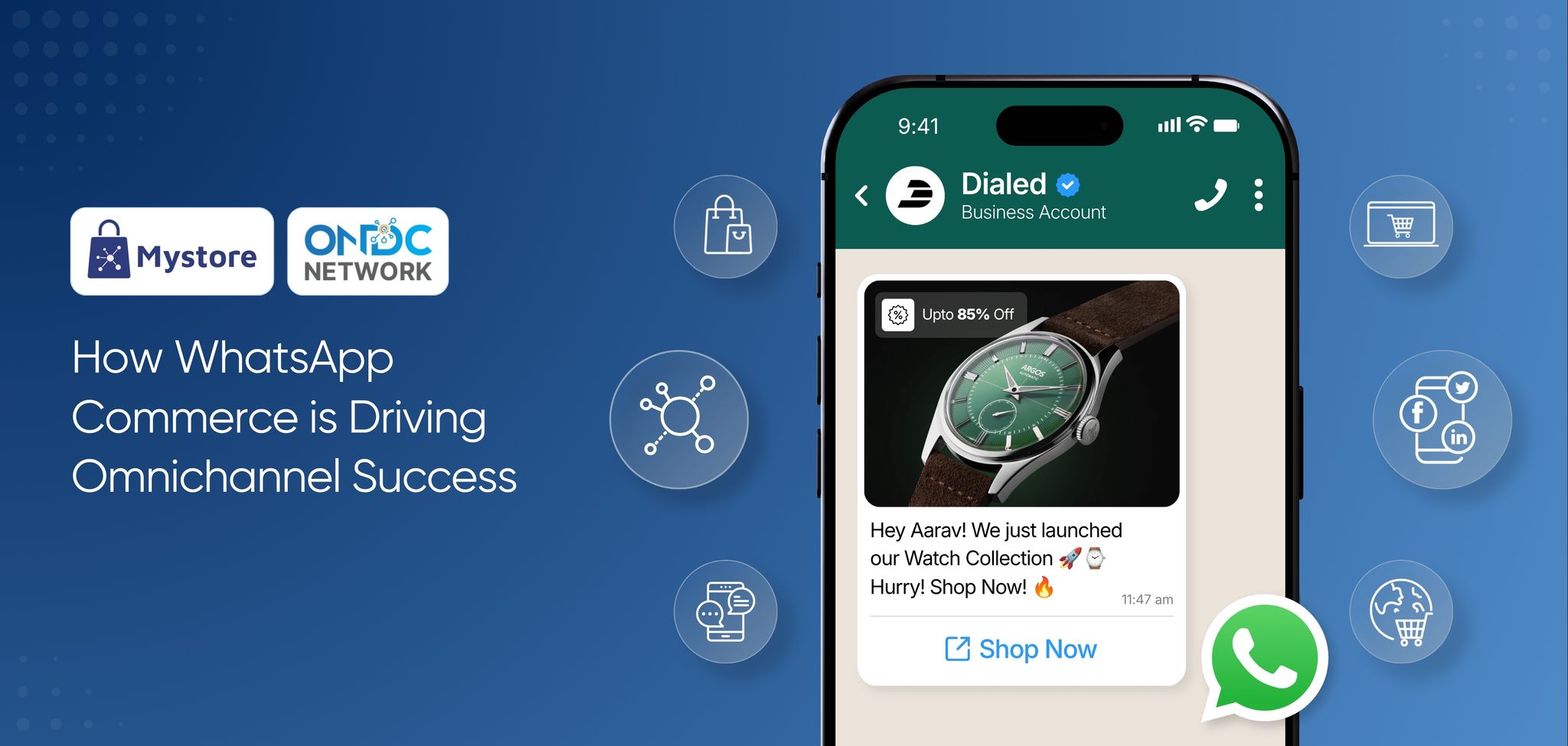
Enterprise commerce has become customer-driven, mobile-first, and conversation-based. Buyers no longer interact with brands through a single channel. They move between websites, marketplaces, mobile apps, social media, and messaging platforms while expecting seamless experiences throughout the buying journey.
This shift is making WhatsApp an essential part of modern omnichannel commerce strategies.
Today, enterprise businesses are not just using WhatsApp for customer support. They are using it to drive sales, automate customer journeys, improve engagement, simplify support, and build stronger customer relationships at scale.
Looking for more reasons to integrate WhatsApp into your business has become crucial for enterprise omnichannel commerce success.
Let's explore.
Table of Contents
- Why WhatsApp Commerce is Becoming a Growth Driver for Indian Enterprises
- 7 Reasons WhatsApp Integration has Become Core to Omnichannel Commerce Strategies
- 1. Customers Prefer Conversational Buying Experiences
- 2. WhatsApp Helps Create Connected Omnichannel Journeys
- 3. Faster Communication Improves Customer Conversions
- 4. WhatsApp Commerce Improves Customer Retention
- 5. Automation Helps Enterprises Scale Customer Engagement
- 6. WhatsApp Supports Mobile-First Commerce Growth
- 7. Integrated WhatsApp Commerce Simplifies Selling and Fulfilment
- How Mystore Helps Enterprises Build WhatsApp-Integrated Commerce Experiences
- Conclusion
Why WhatsApp Commerce is Becoming a Growth Driver for Indian Enterprises
WhatsApp has quickly evolved from a messaging app into a powerful commerce channel, reshaping how Indian enterprises connect with buyers. With rising preference for instant, personalised, and conversational interactions, brands are increasingly using WhatsApp to drive engagement, improve response times, and accelerate conversions across the customer journey.
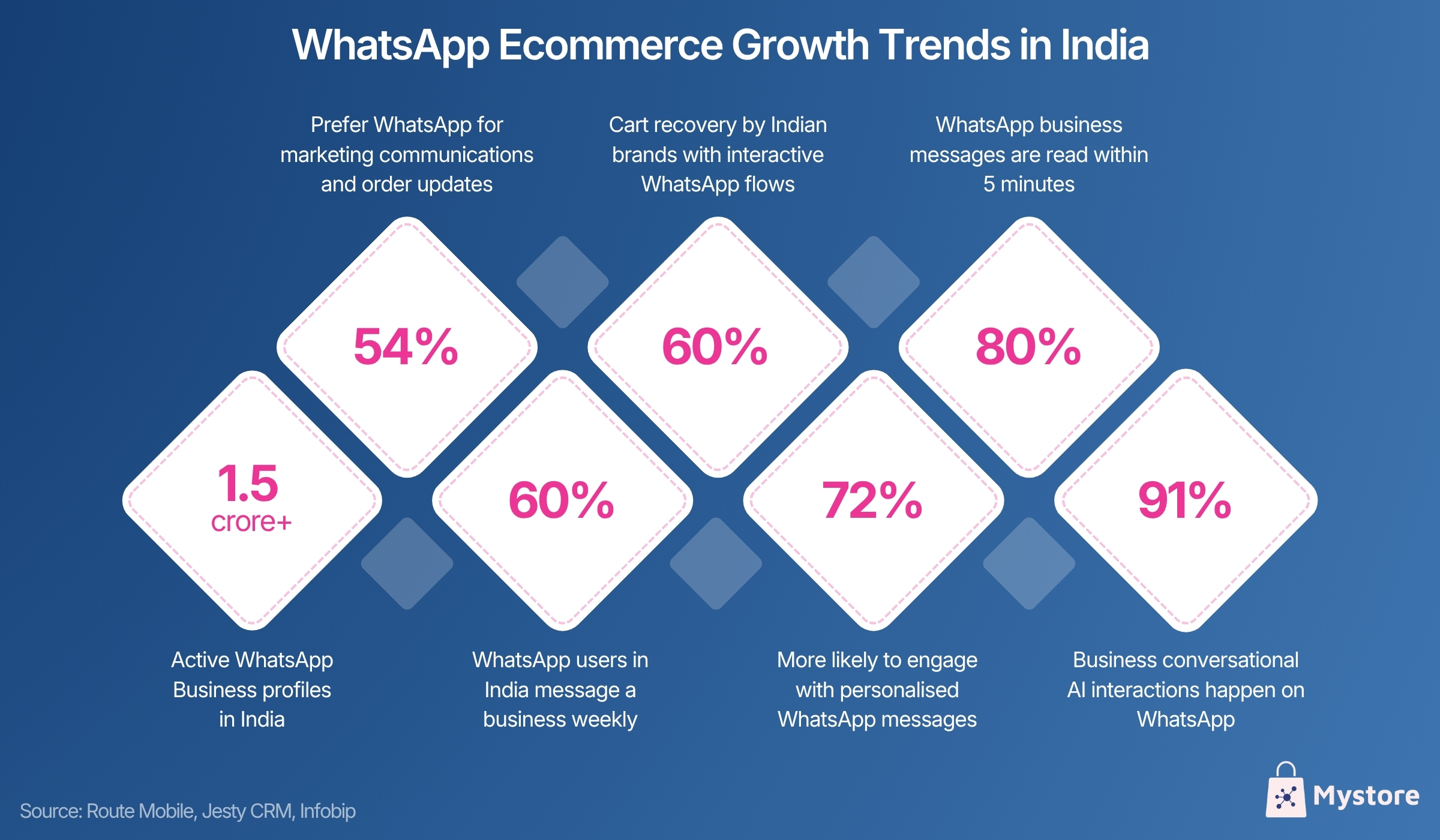
- 60% of WhatsApp users in India message a business weekly
- 54% prefer WhatsApp for marketing communications and order updates
- 72% are more likely to engage with personalised WhatsApp messages
- 80% WhatsApp business messages are read within 5 minutes
- 60% cart recovery by Indian brands with interactive WhatsApp flows
- 1.5 crore+ active WhatsApp Business profiles in India
- 91% of business conversational AI interactions happen on WhatsApp
Source Route Mobile, Jesty CRM, Infobip
These trends clearly show that WhatsApp is no longer just a communication tool but a core growth driver for Indian enterprises, enabling higher engagement, faster decision-making, and stronger conversion outcomes through conversational commerce.
7 Reasons WhatsApp Integration has Become Core to Omnichannel Commerce Strategies
Here are the top 7 reasons for enterprise brands to integrate WhatsApp into their business account: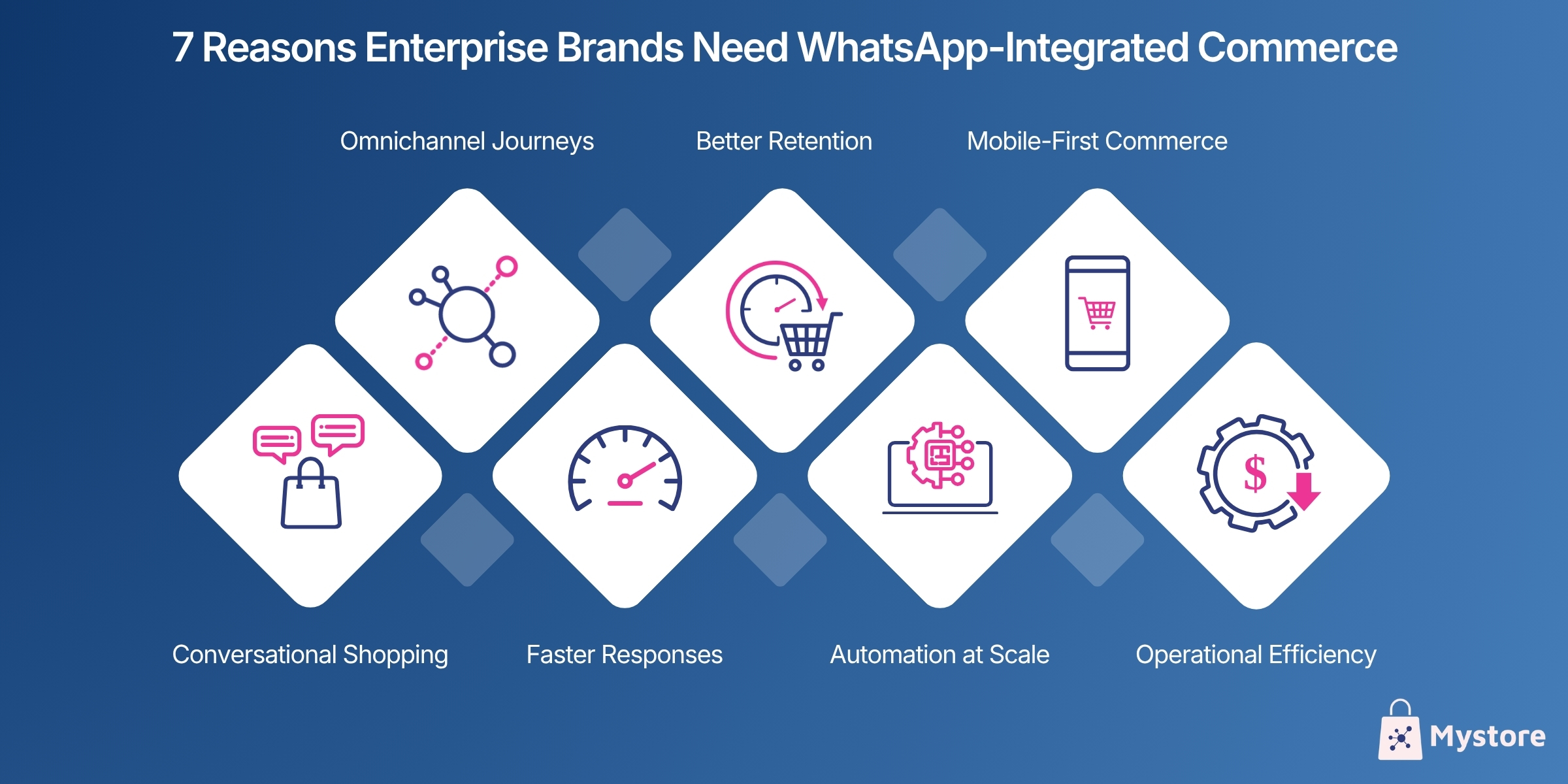
1. Customers Prefer Conversational Buying Experiences
Today, customers want faster and simpler ways to interact with brands. Instead of filling out long forms or waiting for email replies, they prefer quick conversations that help them make decisions instantly. As around 90% of Indians use WhatsApp for daily casual chats, brands are seeing it as a huge opportunity to engage customers directly there. Enterprises today integrate WhatsApp into their business to offer buyers the easiest way to interact with them. From asking questions to check product details, get recommendations, and continue their buying journey without switching platforms, WhatsApp is now one of the most convenient shopping channels for buyers.
Let's take an example of an enterprise brand with a fashion marketplace that runs seasonal campaigns. They noticed that many shoppers were leaving the website before completing purchases because they had sizing and delivery questions. Enterprise then integrates its business with WhatsApp. Customers can now instantly message the brand, receive quick answers, and even get product suggestions based on their preferences. This reduced hesitation and helped the brand improve conversions during high-traffic sale periods.
For enterprise businesses, conversational buying through WhatsApp commercecreates smoother customer journeys, faster decision-making, and stronger engagement across channels.
2. WhatsApp Helps Create Connected Omnichannel Journeys
Modern customers rarely stay on one platform while shopping. They may discover a product on the brand's website, visit its WhatsApp page to ask queries, and finally place the order through a mobile app. If channels are disconnected, the experience becomes frustrating and inconsistent.
WhatsApp integration helps businesses keep every interaction connected. Customers can continue conversations without repeating information, while businesses maintain visibility across the entire journey.
For instance, a consumer electronics brand used WhatsApp to connect its social media campaigns with its ecommerce platform. Customers who clicked product ads on social media were redirected to WhatsApp, where they received product comparisons, warranty details, and store availability information. Many customers later completed purchases through the brand’s website while still receiving order updates and support through WhatsApp. This created a seamless experience across channels and improved customer satisfaction.
3. Faster Communication Improves Customer Conversions
In today's fast-paced market scenario, delays directly lead to lost sales. Customers expect immediate responses when they ask about pricing, stock availability, shipping timelines, or payment options. Slow replies increase the chances of customers moving to other brands that offer instant support and faster buying experiences.
Having an integrated WhatsApp business accountenables teams to respond quickly and keep customers engaged while purchase intent is still high. Fast replies, instant notifications, and real-time support help businesses reduce friction during the buying process.
For example, an enterprise furniture marketplace integrates WhatsApp to provide real-time support during festival sales when customer inquiries increase significantly. Customers instantly confirm product dimensions, delivery timelines, and installation services through WhatsApp instead of waiting for email responses. This reduces drop-offs and helps the business convert more high-value orders during peak demand periods.
Faster communication not only improves conversions but also builds customer confidence during the buying journey.
4. WhatsApp Commerce Improves Customer Retention
Enterprise growth depends heavily on repeat customers and long-term relationships. WhatsApp helps businesses stay connected even after a purchase is completed, making customer engagement more continuous and personal.
Brands can use a WhatsApp business account to send reorder reminders, personalised offers, product care tips, along with upsell offers, and support follow-ups. These interactions help customers feel connected to the brand instead of being contacted only during promotions.
For example, a beauty and wellness brand started using WhatsApp to remind customers about refill purchases based on previous buying patterns. Customers also received personalised skincare recommendations and exclusive loyalty rewards through WhatsApp messages. Over time, the brand saw better repeat purchase rates because communication felt relevant and timely rather than generic.
For enterprises, retention becomes easier when customer engagement feels conversational and helpful instead of purely transactional.
5. Automation Helps Enterprises Scale Customer Engagement
As enterprise operations grow, managing customer conversations manually becomes difficult. Large businesses often deal with thousands of inquiries related to products, orders, returns, and support every day. Without automation, response times slow down, and customer experiences become inconsistent.
Integrated WhatsApp commerce helps enterprises automate many routine interactions while still keeping communication fast and personalised. Businesses can automate order updates (order placed, paid, packed, shipped, delivered, returned). send notifications, cart reminders, answer FAQs, and resolve general support queries without overwhelming customer service teams.
For example, an online grocery platform used WhatsApp automation to handle order confirmations, delivery updates, and frequently asked customer queries during high-demand periods. Instead of depending entirely on support agents, customers automatically received updates and responses in real time. This reduced support workload significantly while improving overall customer experience.
For example, an online grocery platform uses WhatsApp automation to handle order confirmations, delivery updates, and frequently asked customer queries during high-demand periods. Customers receive updates and responses instantly without depending entirely on support agents. This reduces support workload significantly while improving the overall customer experience.
Automation allows enterprise brands to scale communication efficiently without compromising speed or service quality.
6. WhatsApp Supports Mobile-First Commerce Growth
Most customers today shop through smartphones, especially in mobile-first markets like India, where 85.5% of Indian households have at least one smartphone (source: PIB). This growing smartphone usage is changing how customers discover products, communicate with brands, and complete purchases online.
Businesses that simplify mobile interactions are often able to engage customers more effectively and reduce buying friction.
WhatsApp naturally fits into mobile-first commerce because customers already use the platform daily for communication. Instead of asking users to download another app or navigate complicated interfaces, businesses can meet customers where they are already active.
For example, a regional fashion marketplace targeting Tier 2 and Tier 3 cities notices that many customers prefer browsing products directly on mobile. The business then creates its WhatsApp Business account by integrating its ecommerce operations with WhatsApp to share product catalogues, order confirmations, and payment links directly through WhatsApp. This makes the shopping process much easier for mobile users and helps the brand improve engagement in regions where lightweight, mobile-friendly experiences matter most.
For enterprises, WhatsApp creates a more accessible and convenient shopping experience for mobile-first customers.
7. Integrated WhatsApp Commerce Simplifies Selling and Fulfilment
For many businesses, especially those working with dealers, distributors, retailers, field sales teams, or repeat buyers, a large portion of commerce already happens on WhatsApp. The challenge is that orders, inventory checks, customer conversations, and fulfilment often remain disconnected from core business systems.
An integrated WhatsApp commerce solution brings these interactions into the same commerce ecosystem. Customers can browse products, place orders, receive updates, and interact with the brand through WhatsApp, while inventory, pricing, order management, and fulfilment continue to operate from a central platform.
For example, a consumer goods brand can enable dealers to place replenishment orders through WhatsApp, automatically route orders to the nearest fulfilment location, and keep buyers informed throughout the delivery process. Similarly, D2C customers can discover products, complete purchases, and receive support within the same conversational journey.
For enterprises managing multiple channels, locations, and customer segments, integrated WhatsApp commerce becomes more than a communication tool. It becomes a powerful commerce touchpoint that improves order capture, operational efficiency, and customer convenience.
For enterprise brands managing high customer volumes, integrated WhatsApp commerce helps simplify operations while delivering a smoother customer experience.
How Mystore Helps Enterprises Build WhatsApp-Integrated Commerce Experiences
As customer conversations increasingly influence buying decisions, enterprise businesses need commerce systems that connect communication, customer engagement, and order workflows seamlessly. Mystore helps businesses integrate WhatsApp with their ecommerce operations so they can manage customer interactions, automate communication, and simplify buying journeys through one connected platform.
With Mystore, enterprise businesses can:
- Connect their WhatsApp Business Account with the Mystore Seller App
- Share store links and product catalogues directly through WhatsApp conversations
- Help customers discover products and continue purchase journeys through WhatsApp
- Automate order confirmations, shipping updates, and delivery notifications
- Use 50+ ready templates for faster and more consistent communication
- Manage customer chats, templates, and communication workflows from one place
- Track message delivery, read status, and customer engagement activity
- Respond faster using predefined replies and automated messaging workflows
- Reduce repetitive manual communication and simplify customer support coordination
- Create smoother and more connected omnichannel customer experiences
The Mystore Seller App further helps enterprises simplify operations, improve response speed, strengthen customer engagement, and create seamless WhatsApp-powered omnichannel commerce experiences at scale
Conclusion
WhatsApp has rapidly evolved from a simple messaging platform into a core enterprise commerce channel.
As customer expectations shift toward faster, more personalised, and conversation-led experiences, enterprise businesses need integrated omnichannel commerce strategies that connect every touchpoint seamlessly.
WhatsApp integration helps enterprises improve engagement, automate communication, simplify customer journeys, and drive faster conversions at scale.
Businesses that successfully integrate conversational commerce into their omnichannel strategy will be better positioned to improve customer experiences and accelerate digital commerce growth.
Ready to explore how your business can build scalable WhatsApp-powered omnichannel commerce experiences?
Book a demo with Mystore today.