


 Appliances
 Agri Inputs
 Auto Components & Accessories
 Beauty & Personal Care
 Electronics
 Fashion
 Grocery
 Gift Cards
 Home & kitchen
 Health & Wellness
 Vehicles & Automotives
 Books & Stationary
 Pet Care
 Toys & Games
 Contact Us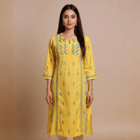
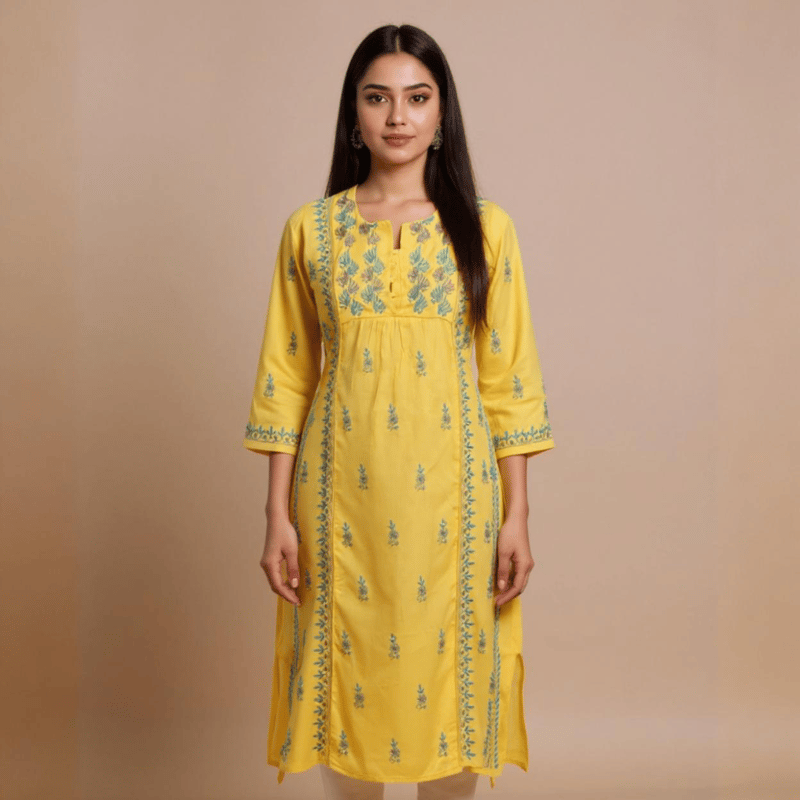
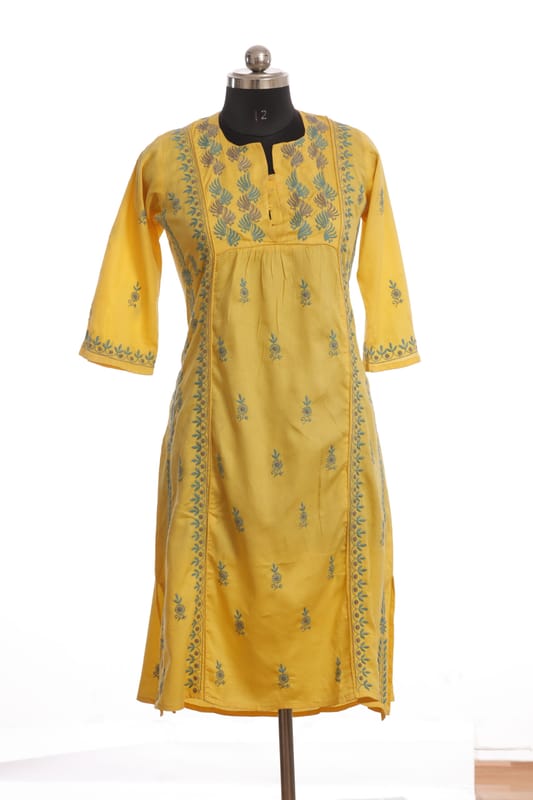
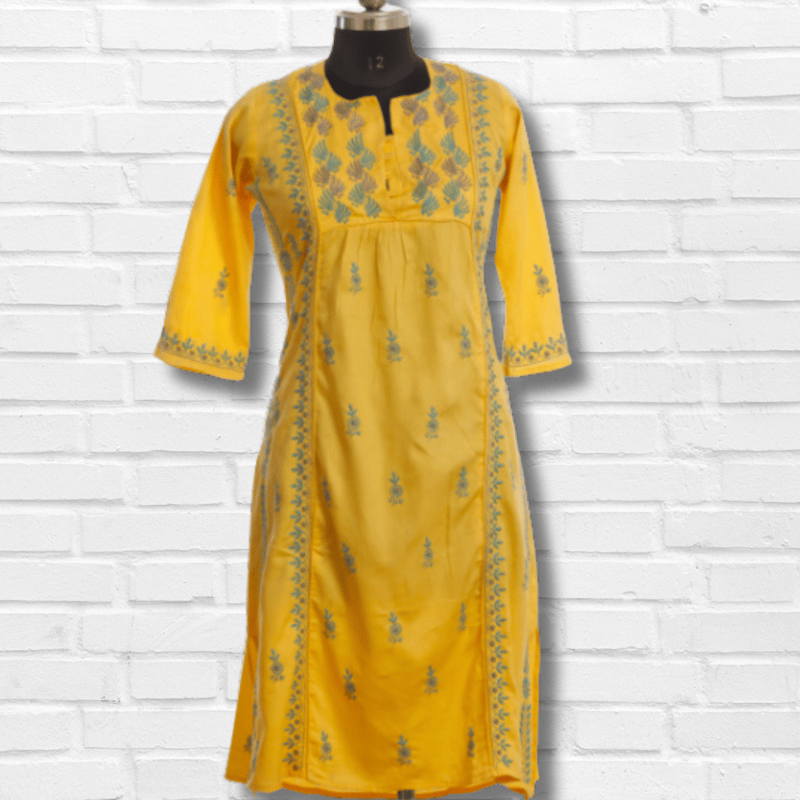
There are garments you wear and garments you remember. The Yellow Yoke Kurti belongs firmly in the second category. From the moment you hold it, something about it feels considered — the weight of the cotton, the warmth of the yellow, the way the ...
Read MorePopular Categories
Support
Language
Our apps
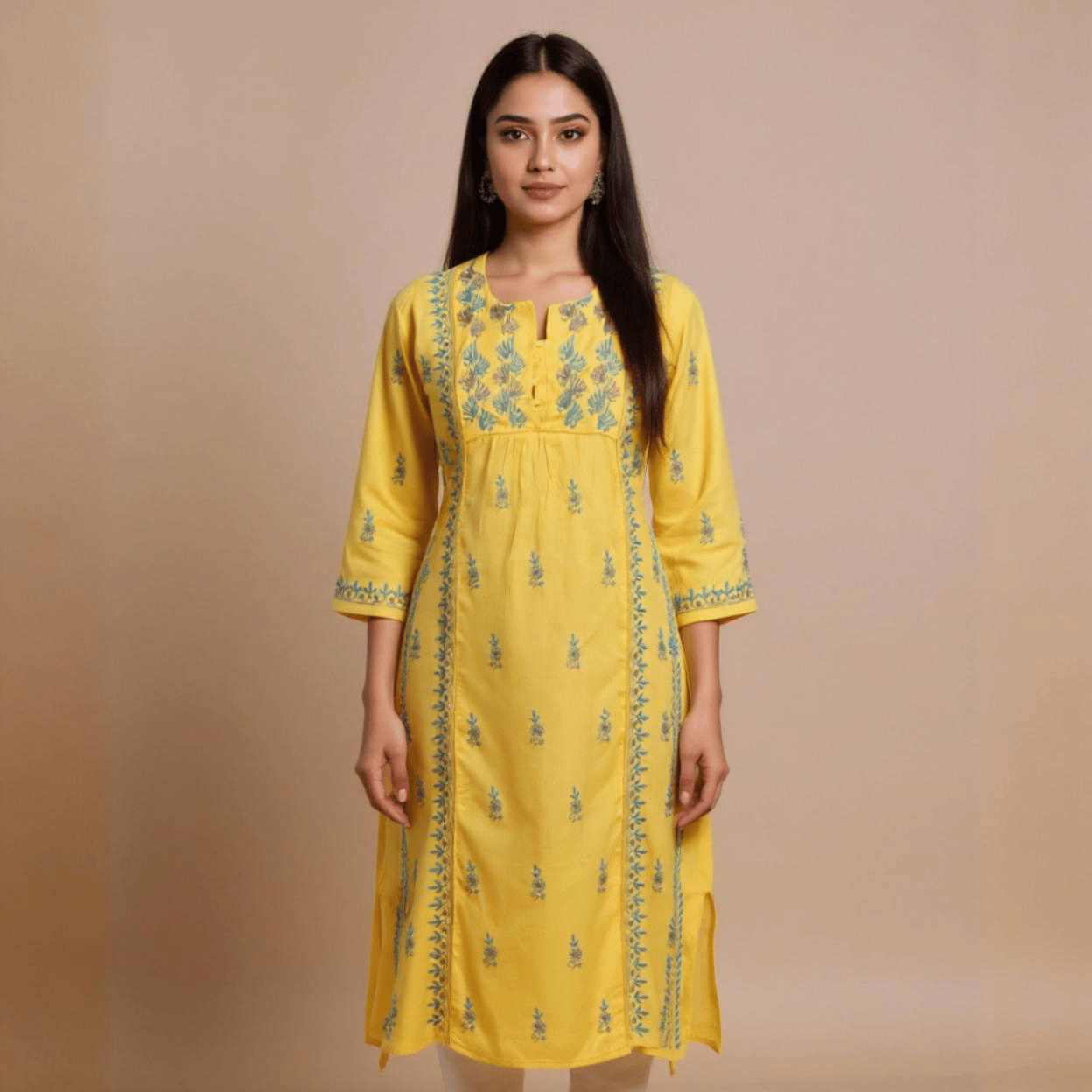
Handcrafted Chikankari A-Line Kurti |Yellow
Key Attributes
| Country of origin | India |
|---|---|
| brand | Non-branded |
| gender | Female |
| colour | #FFFF00 |
| size | M |
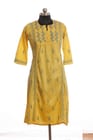
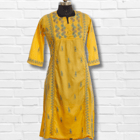
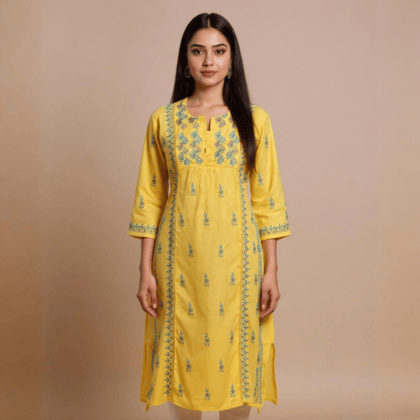
There are garments you wear and garments you remember. The Yellow Yoke Kurti belongs firmly in the second category. From the moment you hold it, something about it feels considered — the weight of the cotton, the warmth of the yellow, the way the embroidered motifs seem to grow naturally out of the fabric rather than sitting on top of it. This is not a kurti that was designed on a screen and stitched by machine in bulk. It was made by hand, in the tradition of Chikankari, one of India's oldest and most revered embroidery crafts, and it carries that history lightly but unmistakably. About the Craft Chikankari traces its roots to Lucknow, in the heart of Uttar Pradesh, where it has been practised for centuries. The craft involves the hand-embroidering of intricate floral and foliate motifs onto fabric using fine thread, with stitches so small and precise that the finished work has the quality of lacework. Traditionally associated with white thread on white muslin, the craft has evolved over generations to embrace colour, and this kurti is a fine example of that evolution — teal and muted gold thread worked onto a vibrant yellow base, producing a contrast that is at once festive and refined. The kurti itself is cut in an A-line shape, a silhouette that is universally flattering and deeply rooted in Indian ethnic fashion. The yoke at the front is where the embroidery is most concentrated — a panel of dense, layered motifs that frames the round neck and front button detailing, giving the garment its signature identity. The three-quarter sleeves carry a border of embroidered vines along the cuff, tying the look together without overwhelming it. Scattered floral bootas run down the body and along the side panels, giving the eye something to follow all the way to the calf-length hem. The fabric is MD Silk, a glace cotton known locally for its slight sheen and smooth drape. It is neither too stiff nor too fluid — it holds the A-line shape well while remaining comfortable against the skin across long hours of wear. Speciality What makes this kurti stand out in a market flooded with machine-printed and digitally embroidered ethnic wear is the human hand behind every stitch. Chikankari is not an embroidery you can hurry. Each motif requires multiple passes with the needle, and the characteristic texture of the craft — that slightly raised, shadowed quality that photographs cannot fully capture — can only be achieved by someone who has spent years learning how thread behaves under tension. The yellow chosen for this piece is not a shy or washed-out tone. It is warm and full, the colour of ripe turmeric or late afternoon sun, and it has a quality of making the wearer visible in the best possible way. Against this, the teal thread embroidery does not compete but complements, adding depth and coolness to what might otherwise be an overwhelming hue. The result is a garment with genuine visual balance — bright but not loud, traditional but not stiff. Glace cotton, the fabric beneath all of this, is another point of distinction. Unlike heavier silks or synthetics that can feel restrictive in warm weather, glace cotton breathes well, drapes naturally, and maintains its sheen wash after wash. It is a practical choice for Indian summers and a thoughtful one for a craft garment that deserves to be worn regularly, not saved for occasions that never quite arrive. How to Care for Your Kurti? Chikankari embroidery is delicate work and deserves to be treated accordingly. With a little attention, this kurti will hold its colour and its stitching beautifully for years. Wash gently by hand in cold water using a mild detergent. Avoid machine washing, which can pull at the embroidery threads and distort the stitching. Do not soak the kurti for extended periods, as prolonged soaking can weaken the thread and cause the yellow dye to bleed unevenly. Dry in shade rather than direct sunlight. Strong sunlight fades the vibrant yellow over time and can bleach the embroidery thread. Iron on a low to medium setting on the reverse side of the fabric to protect the embroidered surface. Avoid ironing directly over the Chikankari motifs. Store folded in a cool, dry place, ideally wrapped in soft muslin cloth. Avoid hanging for long periods, as the weight of the fabric can stretch the shape of the garment. The Yellow Yoke Kurti is, at its heart, a garment about care — the care that went into the embroidery, the care taken in the choice of fabric and colour, and the care required to keep it looking its best. It is not a piece that shouts about itself, but it is one that will be noticed, complimented, and returned to often. Wear it to a morning function, a casual outing, or simply on a day when you want to feel dressed rather than just clothed. Either way, it will deliver. By choosing this kurti, you are also choosing to support the Chikankari craftspeople of Uttar Pradesh — artisans whose skill has been quietly sustaining one of India's most beloved embroidery traditions, one stitch at a time.
| Country of origin | India |
|---|---|
| brand | Non-branded |
| gender | Female |
| colour | #FFFF00 |
| colour name | Yellow |
| size | M |
| fabric | Cotton |
| returnable | yes |
| cancellable | yes |
| return window | 7 days |
| time to ship | 24 hours |
| contact details consumer care | Indiahandmade,[email protected],18001216216 |
| manufacturer or packer name | Avadh Chikankari Producer Company Limited Avadh Chikankari Producer Company Limited |
| manufacturer or packer address | 347/382, Old Tikait Ganj, Tulsidas Marg Lucknow Uttar Pradesh 226004 |
| common or generic name of commodity | Handcrafted Chikankari A-Line Kurti |Yellow |
| month year of manufacture packing import | NA |
| imported product country of origin | IN |
Other Products from seller Indiahandmade Store

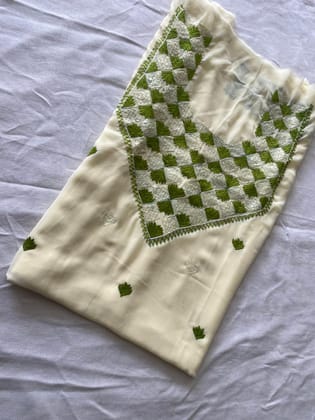

₹500₹700 ( 29% OFF )
₹450₹500 ( 10% OFF )
₹500₹700 ( 29% OFF )
₹2,255₹2,650 ( 15% OFF )
₹700₹750 ( 7% OFF )

Check Estimated Delivery Date

Sold By: Indiahandmade Store
Vendor Source:Indiahandmade Store
Distance: 1.7 km