


 Contact Us
 Appliances
 Agri Inputs
 Auto Components & Accessories
 Beauty & Personal Care
 Electronics
 Fashion
 Grocery
 Gift Cards
 Home & kitchen
 Health & Wellness
 Vehicles & Automotives
 Books & Stationary
 Pet Care
 Toys & Games

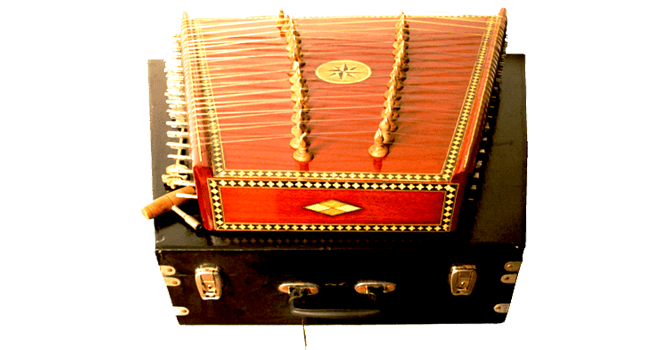
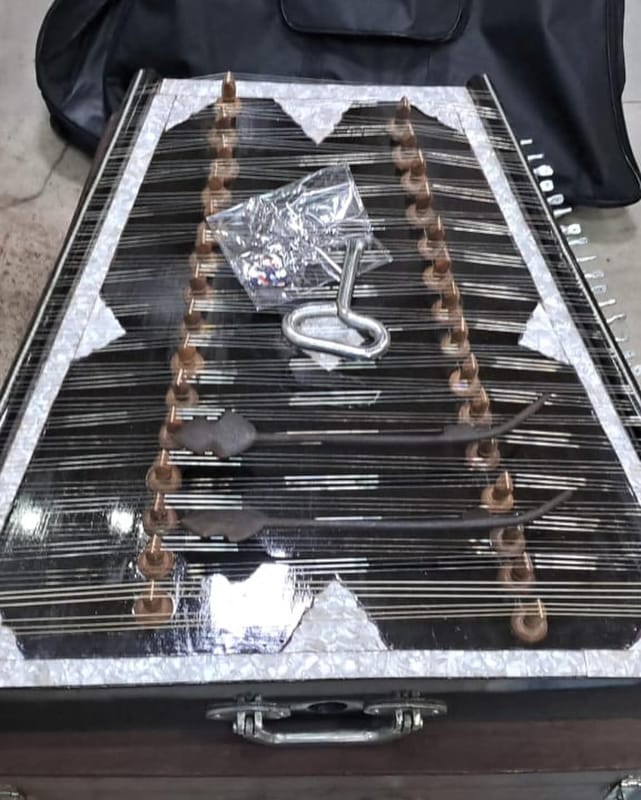
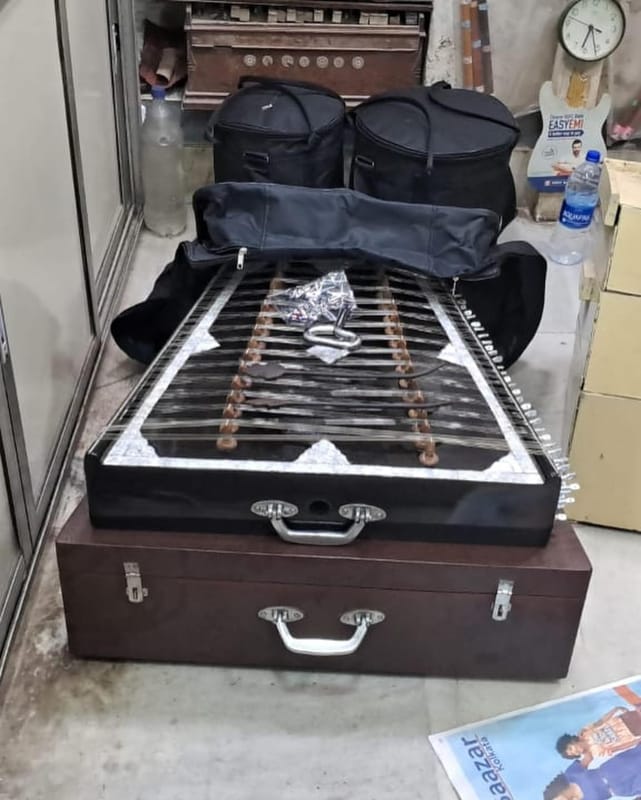
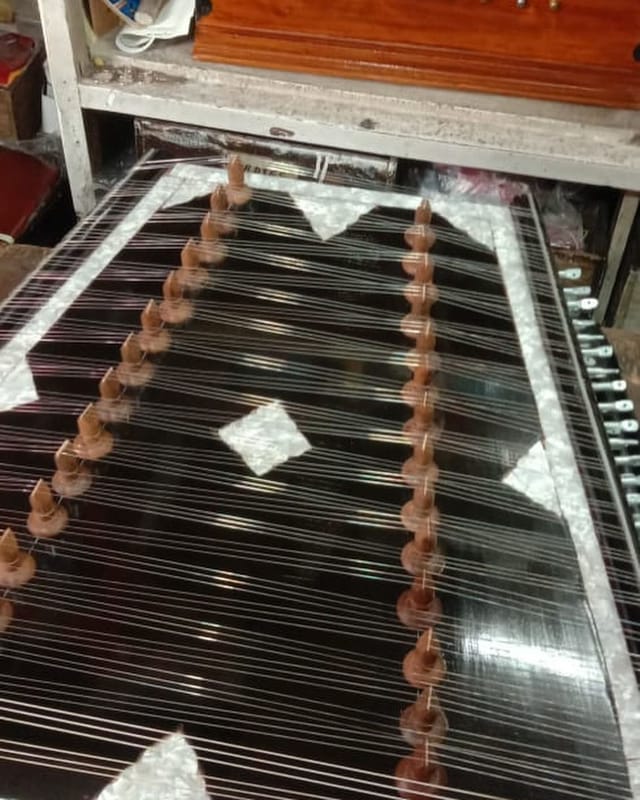
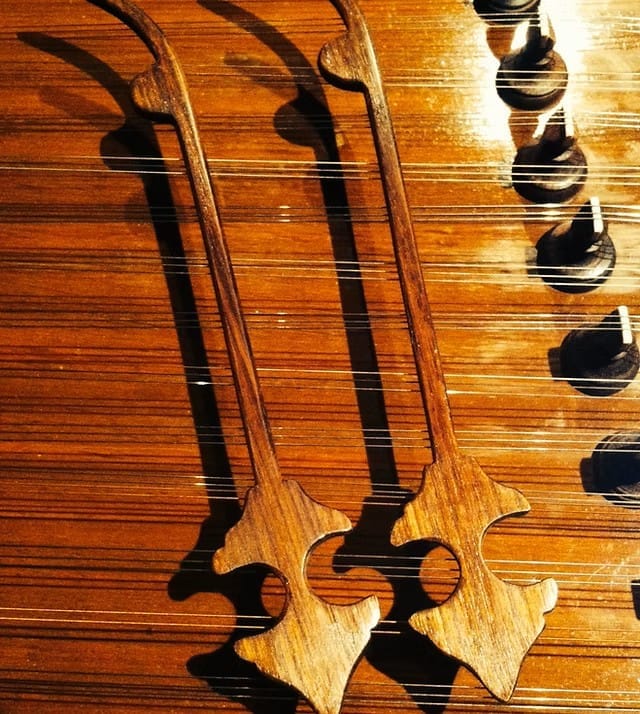
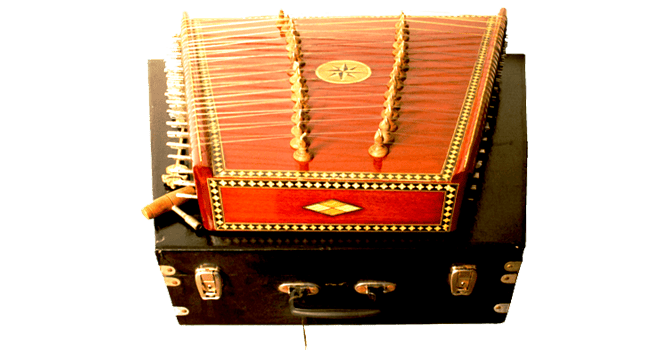
Santoor
Special Features:
Good sound quality, classically tuned.
Delivery Time: 12-15 Working Days after Successful Payment.
Read MoreSantoor
Special Features:
Good sound quality, classically tuned.
Delivery Time: 12-15 Working Days after Successful Payment.
Read More| Country of origin | India |
|---|---|
| Brand | Calutta Musical |
| Net Quantity | 1 piece |
| Manufacturer or packer name | Calcutta Musical Depot |
Santoor
Special Features:
Good sound quality, classically tuned.
Delivery Time: 12-15 Working Days after Successful Payment.
For More information SMS 2700 Name Email Country and Send to +919830066661
N.B: All prices are inclusive of Shipping (International Air Mode)/ Packing/ Tax/ Insurance. No hidden cost. Read our Terms & Conditions, Privacy Policy and Shipping Policy.
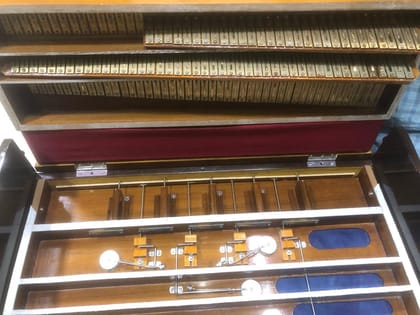
In The Box: Santoor, Tuning Key, Mallets, Wooden Box
From where we get Santoor- Small history below:
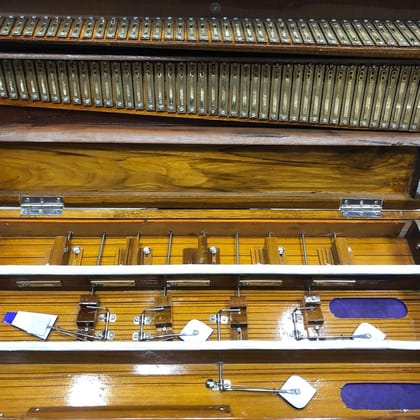
Our knowledge about the Santoor is from Wikipedia. As per Wikipedia, we shared this small history to let our customers know about the Santoor history. The Indian santoor instrument, moreover, features a trapezoid-shaped hammered dulcimer and is a variation of the Iranian santur. Generally, craftsmen make the instrument of walnut and design it with 25 bridges. Specifically, each bridge holds 4 strings, making for a total of 100 strings. In fact, musicians consider it a traditional instrument in Jammu and Kashmir, and it dates back to ancient times. Notably, ancient Sanskrit texts call it Shatha Tantri Veena.
Additionally, ancient Sanskrit texts refer to it as shatatantri vina (100-stringed vina). In particular, in Kashmir, musicians used the santoor to accompany folk music. Consequently, they play it in a style of music known as the Sufiana Mausiqi. Furthermore, some researchers classify it as an improvised version of a primitive instrument played in Mesopotamian times (1600–900 B.C.). For this reason, Sufi mystics used it to accompany their hymns. In the context of Indian santoor playing, musicians hold the specially-shaped mallets (mezrab) lightweight between the index and middle fingers. Typically, a typical santoor features two sets of bridges, providing a range of three octaves. In contrast, the Indian santoor takes on a more rectangular shape and can have more strings than its Persian counterpart, which typically holds 72 strings.
Carpenters generally make the trapezoid framework out of either walnut or maple wood. Additionally, the manufacturer sometimes uses plywood or veneer for the top and bottom boards. Moreover, on the top board, also known as the soundboard, they place wooden bridges to seat stretched metal strings across, this provides a basic history of the instrument.
| Country of origin | India |
|---|---|
| Material | wood |
| Brand | Calutta Musical |
| Common name | Santoor |
| Net Quantity | 1 piece |
| Package Dimension | 76L x 44W x 28H cm |
| Manufacturer or packer name | Calcutta Musical Depot |
| Manufacturer or packer address | 28C, Shyama Prasad Mukherjee Road, Kolkata-700025, WB, India |
| Manufacturing Date | 2025 |
| contact details consumer care | Calutta Musical Depot, [email protected] |