


 Appliances
 Agri Inputs
 Auto Components & Accessories
 Beauty & Personal Care
 Electronics
 Fashion
 Grocery
 Gift Cards
 Home & kitchen
 Health & Wellness
 Vehicles & Automotives
 Books & Stationary
 Pet Care
 Toys & Games
 Contact Us

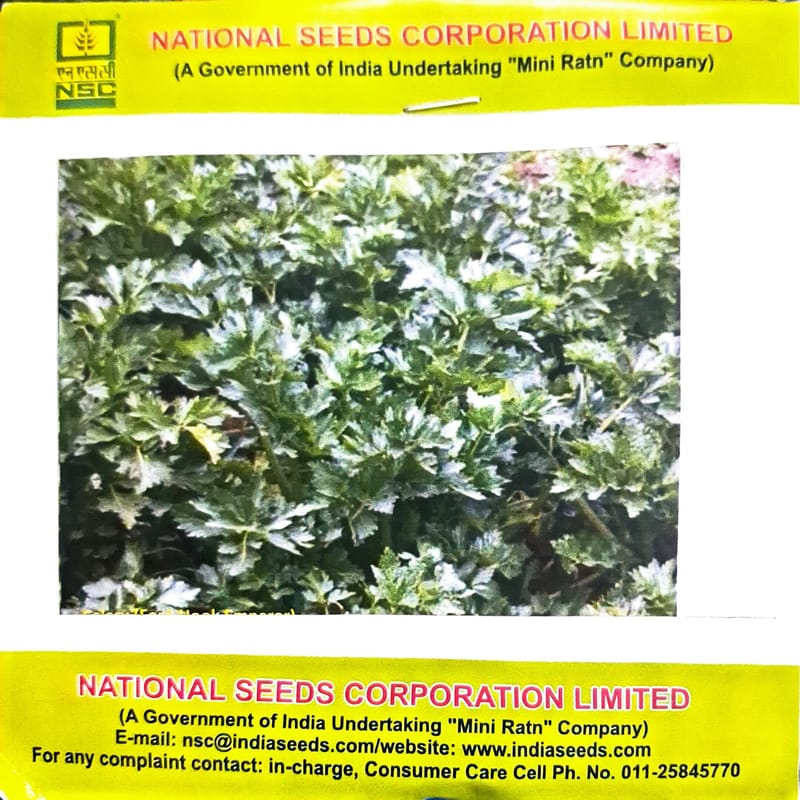
- Celery (Apium graveolens) isa marshland plant belonging to the Apiaceae family, which also includes carrots, parsley, and coriander.
- While it is a biennial plant—living for two years—it is typically gr...
Popular Categories
Support
Language
Our apps
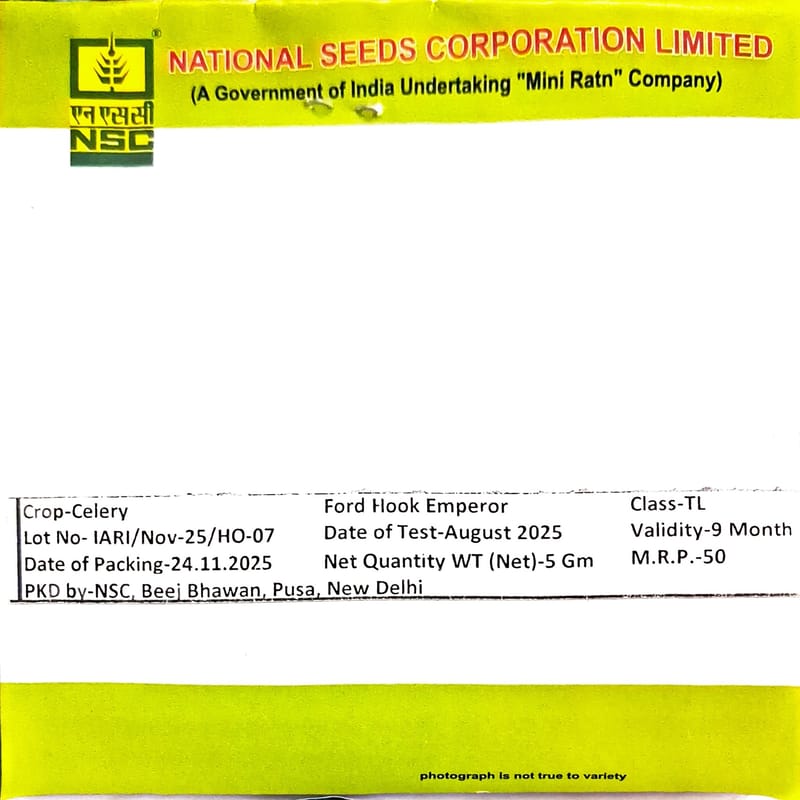
NSC Vegetable Seeds – Celery (Ford Hook Emperor Variety)
Key Attributes
| Country of origin | India |
|---|---|
| Brand | NSC |
| Net Quantity | 5 gram |
| Manufacturer or packer name | NSC New delhi |
- Celery (Apium graveolens) isa marshland plant belonging to the Apiaceae family, which also includes carrots, parsley, and coriander.
- While it is a biennial plant—living for two years—it is typically grown as an annual crop for its stalks.
Plant Characteristics
- Structure: It features long, fibrous, ribbed stalks (technically called petioles) that grow in bunches and are topped with feathery green leaves.
- Height: Cultivated varieties typically reach 30–60 cm (1–2 feet) in height, though some can grow up to 1 metre.
- Flowers & Seeds: In its second year, it produces small, creamy-white flowers in umbrella-shaped clusters called umbels, followed by tiny, aromatic seeds.
- Varieties: There are three main types:
- Stalk Celery (var. dulce): Grown for its crunchy leaf stalks.
- Celeriac (var. rapaceum): Grown for its large, edible bulb-like root.
- Leaf Celery (var. secalinum): Grown for its aromatic leaves used as a herb.
- Climate: It thrives in cool, humid weather with ideal temperatures between 15–21°C. It is sensitive to extreme heat and prolonged cold, which can cause it to "bolt" (flower prematurely).
- Soil: Requires fertile, well-drained soil rich in organic matter (pH 6.0–6.8). It has a shallow root system and is a poor nutrient forager.
- Watering: Critical for success. It needs consistent moisture (roughly 1–2 inches of water per week) to prevent stalks from becoming stringy or bitter.
- Time to Maturity: Typically takes 130–140 days from seed to harvest.
Uses & Nutrition
- Culinary: Used raw in salads, cooked in soups and stews (a core part of the French mirepoix), or juiced.
- Nutritional Value: Very low in calories and 95% water. It is a rich source of Vitamin K and contains Vitamin A, C, potassium, and folate.
- Seeds: Used as a spice (whole or ground) and to make celery salt.
| Country of origin | India |
|---|---|
| Brand | NSC |
| Common name | CELERY |
| Net Quantity | 5 gram |
| Batch number | IARI/Nov-25/HO-07 |
| Expiry Date | 9 MONTHS |
| Package Dimension | 10L x 10W x 1H cm |
| Manufacturer or packer name | NSC New delhi |
| Manufacturer or packer address | BEEJ BHAWAN- PUSA |
| Manufacturing Date | 24-11-2025 |
| contact details consumer care | NSC Tirumangalam (Madurai), [email protected] |
Other Products from seller NSC Tirumangalam (Madurai)
₹100₹125 ( 20% OFF )
₹45₹65 ( 31% OFF )
₹40₹50 ( 20% OFF )
₹90₹100 ( 10% OFF )
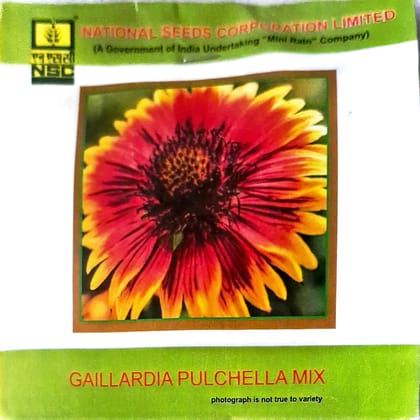
₹60₹65 ( 8% OFF )
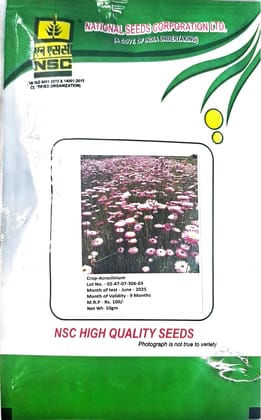
₹95₹100 ( 5% OFF )
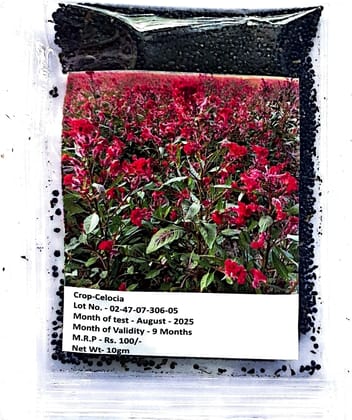
₹95₹100 ( 5% OFF )
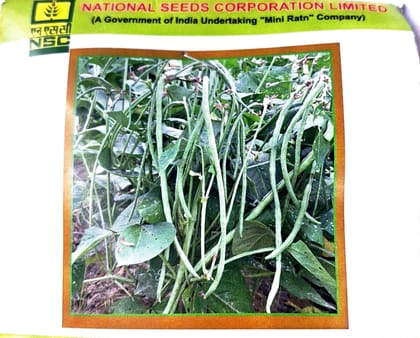
₹40₹50 ( 20% OFF )
₹50₹60 ( 17% OFF )
₹92₹100 ( 8% OFF )
₹100₹125 ( 20% OFF )
₹45₹65 ( 31% OFF )
Delivery by Tuesday, 10 Feb to Delhi